Welcome to Our Blog!
We’re thrilled to have you here. Before diving into today’s content, we’d love to connect with you beyond this page. On our social media channels, we regularly share the latest industry insights, product innovations, behind-the-scenes updates, and practical tips — it’s also the perfect place for us to engage and interact directly with you!
Follow us on:
- Facebook: Linyang Huayang Machinery Co., Ltd.
Let’s grow, learn, and innovate together. Now, let’s jump into the blog — we hope you find the content both insightful and actionable!
Table of Contents
Key Takeaways
- Understand the key differences between common carburetor types for performance tuning
- Identify which carburetor type fits your build (street, track, off-road, or racing)
- Learn how each carburetor affects power, throttle response, and fuel economy
- Compare carburetor types with a clear table to choose faster
- Get practical tuning and installation tips for best performance
- Answer common questions in a Google-friendly FAQ section
Introduction
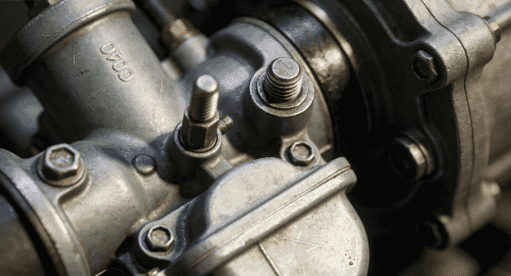
When building a high-performance engine, choosing the right carburetor is more than a “parts” decision—it determines how your engine breathes, responds, and delivers power. There are different types of carburetors designed for specific goals, such as acceleration, top-end power, fuel economy, or high-RPM stability. A mismatch can cause poor throttle response, overheating, or even engine damage.
In performance builds, the carburetor is a crucial component that affects everything from fuel atomization to airflow efficiency, and ultimately, the engine’s output. Whether you’re upgrading a classic muscle car, a motorcycle, or an off-road buggy, knowing the right carburetor type can be the difference between a good build and a great one.
A carburetor is not just a fuel device—it is the “breathing system” of your engine. A performance carburetor must manage air velocity, fuel delivery, mixture strength, and atomization while maintaining stability at different RPMs. That’s why understanding the different types of carburetors is essential.
Single-Barrel Carburetors for Simple Performance Upgrades
What Is a Single-Barrel Carburetor?
A single-barrel carburetor has one throttle bore and one fuel circuit. It is the simplest carburetor type and is often used in small engines and early performance upgrades because it is easy to tune and maintain.
Why Choose a Single-Barrel for Performance?
- Simple and reliable for basic power increases
- Lower cost and easier maintenance
- Good throttle response at low RPM
Technical Notes
Single-barrel carburetors often use a fixed jet and rely heavily on venturi sizing and airflow velocity. They are ideal for smaller displacement engines (less than 1.8L), where simplicity and reliability are more valuable than maximum power.
Best Use Cases
Single-barrel carburetors are best for small displacement engines, vintage builds, and lightweight vehicles where simplicity and reliability are priorities.
Two-Barrel Carburetors for Balanced Power and Efficiency
Understanding Two-Barrel Carburetors
Two-barrel carburetors feature two bores and can provide a better balance between power and fuel economy. They are often found in mid-range performance builds where drivability matters.
Performance Benefits
- Improved fuel distribution compared to single-barrel
- Better mid-range torque for street driving
- More stable idle and smoother acceleration
Practical Data
Most two-barrel carburetors provide 10%–18% better fuel atomization than single-barrel models, depending on tuning and intake design. This makes them a popular choice for street performance engines.
Ideal Applications
Two-barrel carburetors work well for daily-driven performance cars, light trucks, and mild performance motorcycles where balanced power is needed.
Four-Barrel Carburetors for High Power Output
What Makes a Four-Barrel Different?
A four-barrel carburetor has four bores and typically uses primary and secondary circuits. This allows more airflow and fuel delivery when needed, resulting in higher horsepower.
Why Four-Barrel Is Popular in Performance Builds
- Higher airflow capacity for big engines
- Better high-RPM performance
- Strong acceleration and power gain
Real-World Data
In many V8 muscle builds, switching from a two-barrel to a properly tuned four-barrel carburetor can increase horsepower by 15%–25% and improve throttle response by 10%–20% at high RPM.
Common Performance Uses
Four-barrel carburetors are common in muscle cars, drag racing, and large displacement V8 engines where maximum power is the goal.
Double Pumper Carburetors for Fast Throttle Response
What Is a Double Pumper Carburetor?
A double pumper carburetor has two accelerator pumps—one for the primary and one for the secondary. This design improves fuel delivery during sudden throttle changes.
Performance Advantage
- Instant throttle response
- Reduced hesitation during hard acceleration
- Better performance in drag or sprint conditions
Expert Viewpoint
Many performance tuning experts recommend double pumper carburetors for high-performance builds because the dual pumps prevent lean hits during sudden acceleration. The National Institute for Automotive Service Excellence (ASE) also notes that proper accelerator pump design is essential for preventing hesitation and power loss.
Best for Racing and Aggressive Driving
If you frequently use full throttle or quick acceleration, a double pumper carburetor can help prevent lean hits and keep power delivery smooth.
Progressive Carburetors for Street Performance
How Progressive Carburetors Work
Progressive carburetors open the secondary barrel only after the primary reaches a certain throttle position. This improves fuel efficiency and reduces sudden power spikes.
Why Progressive Carburetors Fit Street Builds
- Smooth power delivery
- Improved fuel economy in normal driving
- More controllable performance
Practical Data
A well-tuned progressive carburetor can improve fuel economy by 6%–12% in street driving conditions compared to a four-barrel carburetor of similar size. This is because the secondary barrel remains closed during light throttle conditions.
Best for Daily-Driven Performance Vehicles
Progressive carburetors are ideal for street cars that need strong performance without sacrificing drivability or fuel efficiency.
Compare Different Types of Carburetors for Performance Builds
To make a smart decision, compare carburetor types based on your goals. The table below helps you choose faster.
| Carburetor Type | Best For | Power Focus | Throttle Response | Fuel Efficiency | Ease of Tuning |
|---|---|---|---|---|---|
| Single-Barrel | Small engines | Low to mid | Good | High | Easy |
| Two-Barrel | Balanced street | Mid-range | Smooth | Medium | Medium |
| Four-Barrel | High power | High | Strong | Low | Hard |
| Double Pumper | Drag / sprint | Burst power | Instant | Low | Hard |
| Progressive | Street performance | Balanced | Smooth | High | Medium |
Key Concepts to Understand Before Choosing
Airflow and Venturi Effect
Carburetors rely on airflow speed to create a vacuum that draws fuel. The venturi effect is crucial: higher airflow increases vacuum, improving fuel delivery.
Fuel Atomization and Combustion
A well-atomized fuel spray mixes with air efficiently, producing cleaner combustion and better power output. Performance carburetors focus on optimizing atomization at high RPM.
Jet Sizing and Calibration
Jets control fuel flow. For performance builds, jet sizing must match engine displacement, cam profile, and exhaust setup. Incorrect jets can cause lean or rich conditions.
Carburetor vs EFI: What’s Best for Performance?
EFI (Electronic Fuel Injection) offers more precise fuel control, but carburetors still dominate in many performance circles due to simplicity, cost, and tradition. Many professional tuners still prefer carburetors for specific applications like classic muscle cars and track builds because they can deliver a more “mechanical” throttle feel.
Performance Tuning Tips for Different Types of Carburetors
Matching Carburetor to Engine Size
Choosing a carburetor that is too large can reduce low-end power and throttle response. A too-small carburetor limits top-end performance.
Consider Your Camshaft and Exhaust
Aggressive cam profiles and free-flow exhaust systems usually need more fuel and airflow. This often means a larger carburetor or different carburetor type.
Use a Proper Fuel Pump
High-performance carburetors may require a fuel pump with higher flow rate. A weak fuel pump can cause starvation under load.
Importance of Air Filter and Intake Design
A high-performance carburetor must be paired with an appropriate intake and air filter. Restrictions in airflow will reduce the carburetor’s effectiveness, even if the carburetor is perfect.
Common Mistakes in Choosing Carburetors
Using Too Large a Carburetor
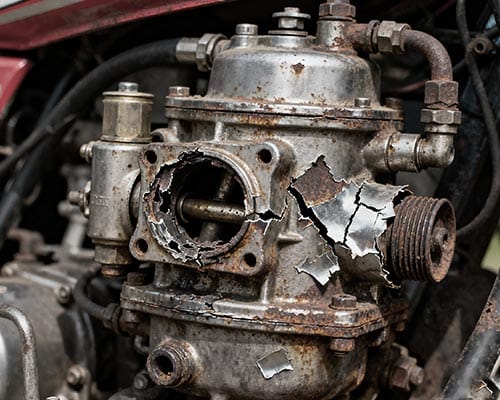
Many builders think bigger means better. However, an oversized carburetor can cause poor low-end torque, rough idle, and difficult tuning.
Ignoring Engine Requirements
Your engine’s displacement, camshaft, and exhaust system determine the correct carburetor. Ignoring these factors leads to poor performance and high fuel consumption.
Overlooking Fuel Quality
Higher performance carburetors may require higher octane fuel. Using low-quality fuel can cause detonation and engine damage.
Poor Maintenance
Carburetors require regular cleaning and adjustment. Dirt and varnish can block jets, causing lean running and misfires.
Conclusion
Different types of carburetors suit different performance goals. For street-driven builds, balanced power and smooth response are key, while racing builds demand maximum airflow and instant throttle response. Understanding how each carburetor type works helps you choose the right one for your engine and driving style.
FAQ
What carburetor type is best for a street performance build?
For street performance, a two-barrel or progressive carburetor is usually best because it balances power and drivability.
Can a four-barrel carburetor work on a small engine?
It can, but it often reduces low-end torque and can make tuning harder. Four-barrel carburetors are best for larger engines.
Why do some carburetors have a second barrel?
Secondary barrels provide extra airflow and fuel for high RPM, improving top-end power.
How do I know if my carburetor is too large?
Symptoms include rough idle, poor low-end response, and hard tuning. A too-large carburetor often feels “lazy” at low RPM.
Do I need a different carburetor for racing?
Yes. Racing often needs a double pumper or high-flow four-barrel carburetor to deliver instant power and stable high-RPM fuel flow.
What is the best carburetor for off-road performance?
Off-road builds often benefit from a progressive carburetor, because it provides smooth power delivery and prevents sudden power spikes that can cause wheelspin or loss of control.
How important is the accelerator pump?
Extremely important. Without proper accelerator pump action, the engine will hesitate during sudden throttle changes, which is a common issue in performance driving.
Can I tune a carburetor myself?
Yes, but tuning requires experience and tools like a vacuum gauge, wideband O2 sensor, and a dyno. Improper tuning can cause damage.