Kami sangat senang Anda berada di sini. Sebelum membahas konten hari ini, kami ingin terhubung dengan Anda di luar halaman ini. Di saluran media sosial kami, kami secara rutin membagikan wawasan industri terbaru, inovasi produk, pembaruan di balik layar, dan kiat praktis — ini juga merupakan tempat yang tepat bagi kami untuk terlibat dan berinteraksi langsung dengan Anda!
Ikuti kami di:
- Facebook: Linyang Huayang Machinery Co., Ltd.
Mari kita tumbuh, belajar, dan berinovasi bersama.
Daftar isi
Poin-Poin Penting
- Pemahaman mendalam tentang karburator honda gcv190 mekanisme kegagalan dan perilaku sistem
- Analisis pengiriman bahan bakar, pencampuran udara, dan ketidakseimbangan pembakaran yang digerakkan oleh data
- Tolok ukur pemeliharaan nyata dari laporan industri jasa mesin kecil
- Alur kerja diagnostik langkah demi langkah yang digunakan oleh teknisi profesional
- Strategi pencegahan untuk memperpanjang umur karburator dan stabilitas mesin
Perkenalan
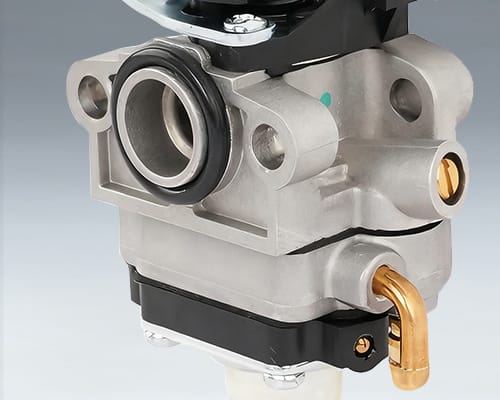
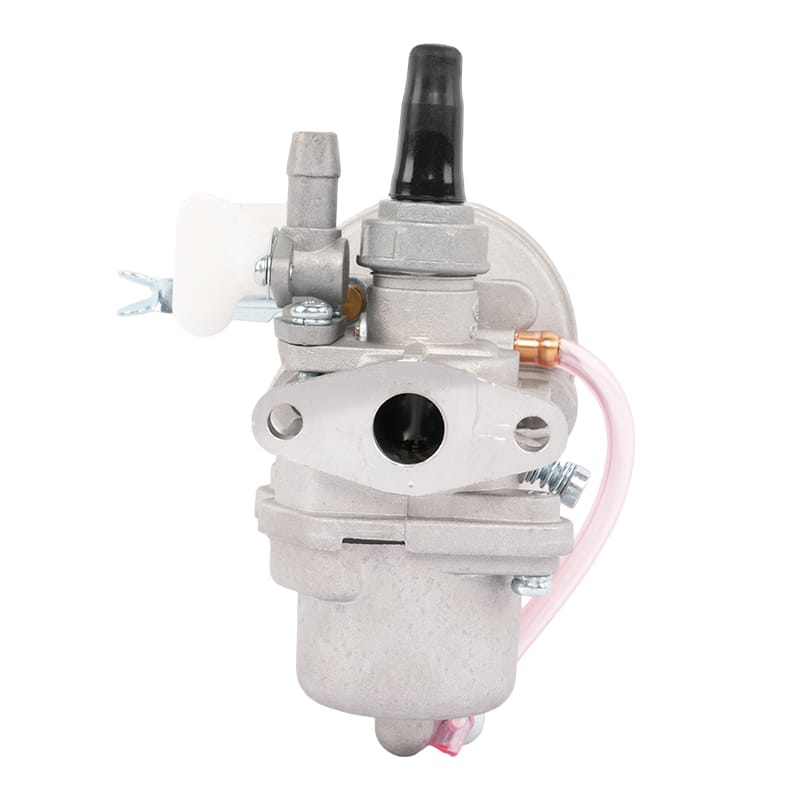
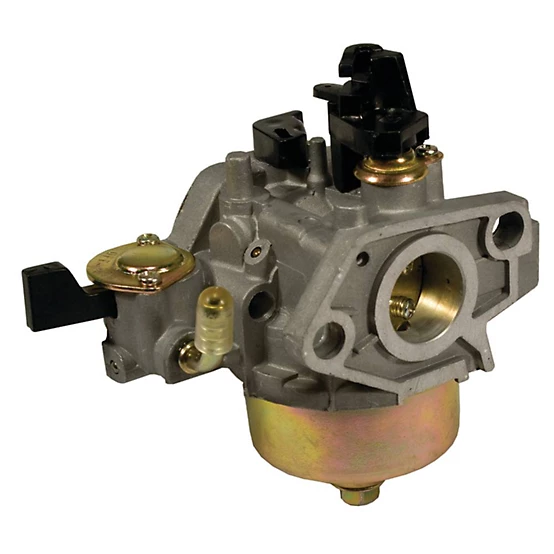
The karburator honda gcv190 adalah salah satu sistem pengiriman bahan bakar mesin kecil yang paling banyak digunakan dalam peralatan perumahan dan komersial ringan, termasuk mesin pemotong rumput, mesin cuci bertekanan, dan generator.
Terlepas dari reputasinya dalam hal keandalan, data layanan dari bengkel mesin kecil menunjukkan bahwa masalah terkait karburator juga menyebabkan hal ini 55%Σ70% dari semua keluhan performa mesin di kelas mesin ini.
Apa yang membuat ini lebih penting adalah bahwa sebagian besar kegagalan bukanlah kerusakan mekanis, tetapi degradasi kimia bahan bakar, ketidakseimbangan aliran udara, dan penyumbatan skala mikro, yang sering disalahpahami oleh pengguna.
Panduan yang diperluas ini melampaui pemecahan masalah dasar dan mengeksplorasi prinsip-prinsip teknik, standar diagnostik, statistik kegagalan dunia nyata, dan metodologi perbaikan profesional.
Apa Itu Karburator Honda GCV190?
Definisi Teknik Fungsional
Karburator adalah alat pencampur bahan bakar-udara mekanis yang menyiapkan campuran udara-bahan bakar yang diatomisasi untuk pembakaran dalam mesin penyalaan percikan.
Prinsip Teknik Inti
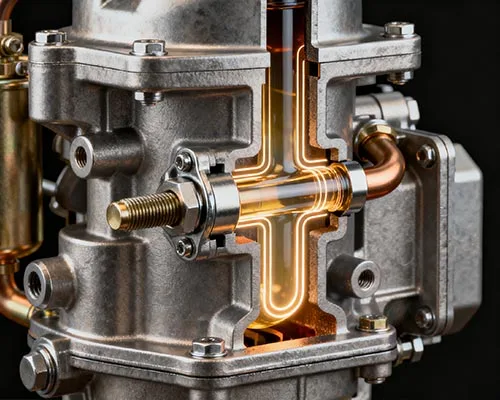
Sistem ini beroperasi berdasarkan prinsip Bernoulli, di mana peningkatan kecepatan udara menciptakan penurunan tekanan, menarik bahan bakar ke dalam aliran udara.
Arsitektur Sistem Karburator Honda GCV190
Perincian Komponen Utama
- Ruang apung (reservoir pengaturan bahan bakar)
- Jet utama (elemen pengukur bahan bakar)
- Pilot jet (pengendalian bahan bakar menganggur)
- Tenggorokan venturi (zona percepatan udara)
- Pelat throttle (pengaturan aliran udara)
Setiap elemen harus berfungsi dalam rentang toleransi yang ketat (biasanya presisi diameter jet ±0,02 Модель 0,05 mm).
Masalah Karburator Honda GCV190: Analisis Kegagalan Tingkat Sistem
Ikhtisar Masalah Karburator Honda GCV190
1. Kegagalan Mulai Dingin (Tidak Ada Pengapian atau Mulai Tertunda)
Penjelasan Teknik: Kegagalan Penguapan Bahan Bakar
Pada suhu rendah, volatilitas bahan bakar menurun, menyebabkan atomisasi tidak lengkap.
Gejala Teknis
- Engkol mesin tetapi tidak menyala
- Membutuhkan aktivasi tersedak berulang
- Dimulai hanya dengan priming eksternal
Wawasan Data Industri
Laporan diagnostik mesin kecil menunjukkan hal itu kegagalan start dingin menyumbang sekitar 28% kasus layanan terkait karburator dalam penggunaan peralatan musiman.
2. Mesin Berselang-seling Surging
Konsep: Ketidakstabilan Rasio Udara-Bahan Bakar Berosilasi
Ketika aliran bahan bakar tidak konsisten, mesin bergantian antara siklus pembakaran ramping dan kaya.
Perilaku yang Diamati
- Fluktuasi RPM setiap 2 φ5 detik
- Suara “berburu” yang terdengar
- Output daya tidak merata di bawah beban
3. Fuel Overflow dan Kegagalan Kebocoran
Penyebab Akar Teknik
Degradasi penyegelan katup jarum apung menyebabkan masuknya bahan bakar yang tidak terkendali.
Model Kemajuan Kegagalan
- Keausan segel dimulai
- Terjadi kebocoran kecil
- Limpahan penuh di bawah tekanan
- Banjir dan pematian mesin
4. Asap Hitam dan Deposit Karbon
Konsep: Reaksi Pembakaran Tidak Lengkap
Kelebihan bahan bakar menyebabkan rasio oksigen tidak mencukupi.
Efek Akumulasi Karbon
- Pengotoran busi
- Penyumbatan port knalpot
- Mengurangi efisiensi kompresi mesin
Karburator Honda GCV190 Kerangka Diagnostik Masalah
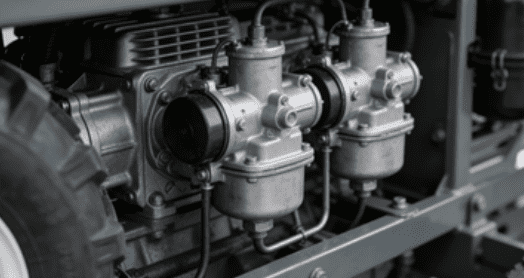
Model Pemecahan Masalah Terstruktur
Tahap 1: Pemeriksaan Sistem Bahan Bakar
- Kesegaran bahan bakar (≤30 hari direkomendasikan)
- Inspeksi kontaminasi tangki
- Uji penyumbatan saluran bahan bakar
Tahap 2: Evaluasi Asupan Udara
- Tingkat penyumbatan filter udara
- Kebocoran manifold masuk
- Pengukuran pembatasan udara
Tahap 3: Penilaian Internal Karburator
- Kebersihan jalur jet
- Tes gerakan mengapung
- Tekanan penyegelan katup jarum
Tabel Keputusan Diagnostik
| Gejala | Sistem Root | Indikator Teknis | Prioritas |
|---|---|---|---|
| Tidak ada permulaan | Pengiriman bahan bakar | Tidak ada bahan bakar di ruang bakar | Critical |
| Melonjak | Ketidakstabilan campuran | Osilasi RPM >15% | High |
| Flooding | Kegagalan mengambang | Limpahan bahan bakar terlihat | Critical |
| Kekuatan lemah | Pembatasan udara | Mengurangi laju aliran udara | Medium |
Karburator Honda GCV190 Teori Kerja Internal
Efek Venturi dalam Atomisasi Bahan Bakar
Prinsip Fisika
Udara berakselerasi melalui tenggorokan yang menyempit, mengurangi tekanan dan menarik bahan bakar ke atas.
Sistem Kontrol Pengukuran Bahan Bakar
Sensitivitas Diameter Jet
Perubahan yang adil 0,01 mm pada pembukaan jet dapat mengubah pengiriman bahan bakar sebesar 5 Ƒ 8 %, secara signifikan mempengaruhi kinerja mesin.
Fungsi Sirkuit Idle
Sistem Stabilitas Kecepatan Rendah
Jet pilot memastikan pembakaran stabil pada RPM idle (biasanya 1.800 ¡2.000 RPM untuk mesin GCV190).
Masalah Karburator Honda GCV190: Standar Teknik Pembersihan
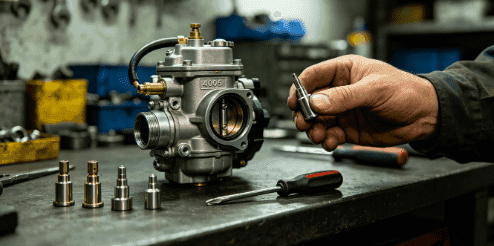
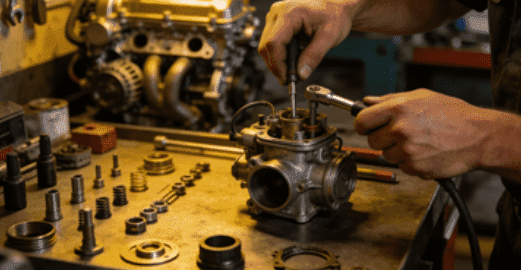
Prosedur Pembersihan Profesional (Kelas Lokakarya)
Langkah 1: Pembersihan Ultrasonik
Pusat perbaikan industri menggunakan pemandian ultrasonik yang beroperasi di Frekuensi 28 ͕40 kHz untuk melarutkan endapan pernis.
Langkah 2: Pelarutan Kimia
Pelarut karburator rusak:
- Residu hidrokarbon
- Deposit bahan bakar teroksidasi
- Mikro-partikel karbon
Langkah 3: Pembersihan Udara Terkompresi
Tekanan udara sebesar 60͕90 PSI digunakan untuk membersihkan micro-passage.
Benchmark Efektivitas Pembersihan
- Penyumbatan ringan: 90 φ 100% pemulihan
- Penyumbatan sedang: pemulihan 70 ¡85%
- Penyumbatan parah: pemulihan 40 ƒ60%
Masalah Karburator Honda GCV190: Perbaikan vs Ekonomi Penggantian
Analisis Efisiensi Biaya
| Option | Biaya Rata-rata | Waktu Buruh | Umur yang Diharapkan |
|---|---|---|---|
| Cleaning | Low | 30͕60 menit | 1ج3 tahun |
| Peralatan Perbaikan | Medium | 1ج2 jam | 2ج4 tahun |
| Penggantian Penuh | High | 20͕40 menit | 3φ6 tahun |
Aturan Keputusan Teknik
Jika keausan jet melebihi Penyimpangan 0,05 mm, penggantian lebih hemat biaya daripada perbaikan.
Studi Kasus Industri Nyata
Studi Kasus 1: Kegagalan Armada Mesin Pemotong Rumput Perumahan
Scenario
Sebuah perusahaan pertamanan melaporkan kegagalan mesin berulang kali di lebih dari 40 unit.
Analisis Penyebab Akar
- Bahan bakar disimpan lebih dari 90 hari
- Pemisahan etanol menyebabkan pembentukan pernis
Resolution
Penerapan penstabil bahan bakar mengurangi kegagalan sebesar 62% dalam waktu 3 bulan.
Studi Kasus 2: Kerusakan Musiman Mesin Cuci Tekanan
Masalah
Mesin gagal setelah penyimpanan musim dingin.
Diagnosis Teknis
- Oksidasi internal karburator
- Katup apung menempel karena pembentukan resin
Studi Kasus 3: Masalah Keandalan Peralatan Sewa
Hasil
Beralih ke protokol pembersihan karburator pramusim mengurangi waktu henti 38% setiap tahun.
Standar Industri dan Pedoman Teknis
Standar Sistem Bahan Bakar Mesin Kecil
Rekomendasi Teknis SAE
- Kesegaran bahan bakar: ≤30 hari
- Stabilisasi penyimpanan: diperlukan untuk campuran etanol
- Toleransi rasio udara-bahan bakar: ±0,5 deviasi maksimum
Filosofi Desain Teknik Honda
Mesin kecil Honda mengutamakan:
- Desain perawatan rendah
- Kinerja idle yang stabil
- Efisiensi bahan bakar melebihi output daya yang ekstrim
Karburator Honda GCV190 Sistem Pencegahan Masalah
Strategi Manajemen Bahan Bakar
Praktik Terbaik
- Gunakan bahan bakar bebas etanol bila memungkinkan
- Tambahkan stabilizer untuk periode penyimpanan yang lama (>30 hari)
Model Jadwal Pemeliharaan
| Interval | Action |
|---|---|
| Setiap penggunaan | Inspeksi visual |
| Bulanan | Pembersihan filter udara |
| 6 bulan | Inspeksi karburator |
| Tahunan | Layanan pembersihan penuh |
Protokol Teknik Penyimpanan
Langkah Penyimpanan Jangka Panjang
- Sistem bahan bakar pembuangan
- Jalankan mesin kering
- Mangkuk karburator bersih
- Segel asupan udara
Konsep Teknik Tingkat Lanjut Di Balik Perilaku Karburator
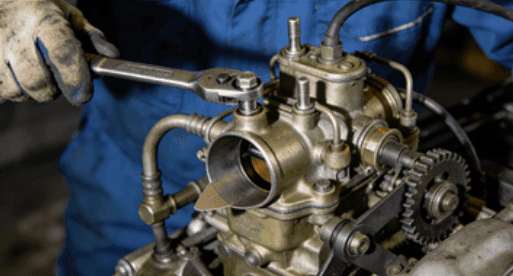
Degradasi Viskositas Bahan Bakar
Viskositas bahan bakar berubah akibat oksidasi, mempengaruhi konsistensi laju aliran hingga 10ج15% selama 60 hari.
Model Kontaminasi Mikro-Partikel
Partikel sekecil 50͕100 mikron dapat memblokir jalur jet.
Dampak Ekspansi Termal
Perubahan suhu menyebabkan ekspansi logam yang sedikit mengubah:
- Keselarasan ketinggian mengapung
- Presisi penyegelan katup jarum
Pertanyaan Maksud Pencarian Pengguna Umum
“Mengapa Honda GCV190 saya mulai kemudian mati?”
Biasanya disebabkan oleh kelaparan bahan bakar atau jet pilot tersumbat.
“Bagaimana aku tahu jika karburator itu buruk atau hanya kotor?”
Karburator kotor merespons pembersihan; karburator yang aus membutuhkan penggantian.
“Bisakah bahan bakar etanol merusak karburator Honda?”
Ya, itu mempercepat pembentukan pernis dan penyumbatan.
Pertanyaan yang Sering Diajukan (FAQ)
Apa yang paling umum Karburator Honda GCV190 masalah?
Penyumbatan, kebocoran bahan bakar, lonjakan idle, dan start yang keras adalah masalah yang paling umum.
Mengapa karburator mudah tersumbat?
Residu bahan bakar, endapan etanol, dan periode penyimpanan yang lama menyebabkan penyumbatan internal.
Apakah pembersihan cukup untuk memperbaiki masalah karburator?
Ya untuk masalah ringan hingga sedang; keausan parah memerlukan penggantian.
Berapa lama karburator Honda GCV190 bertahan?
Biasanya 3 ج6 tahun tergantung pada pemeliharaan dan kualitas bahan bakar.
Apa cara terbaik untuk mencegah kegagalan karburator?
Gunakan bahan bakar segar, stabilkan penyimpanan, dan lakukan siklus pembersihan rutin.
Kesimpulan
The karburator honda gcv190 adalah sistem pengiriman bahan bakar presisi di mana bahkan perubahan mikroskopis dalam kualitas bahan bakar, aliran udara, atau dimensi jet dapat secara signifikan mempengaruhi kinerja mesin.
Sebagian besar kegagalan bukanlah kerusakan mendadak tetapi degradasi sistem bertahap yang disebabkan oleh kimia bahan bakar, kontaminasi, dan kurangnya disiplin pemeliharaan.
Dengan menerapkan diagnostik terstruktur, protokol pembersihan yang tepat, dan strategi manajemen bahan bakar preventif, pengguna dapat memperpanjang masa pakai mesin secara signifikan, mengurangi waktu henti, dan mempertahankan kinerja yang stabil di seluruh kondisi pengoperasian musiman.