We’re thrilled to have you here. Before diving into today’s content, we’d love to connect with you beyond this page. On our social media channels, we regularly share the latest industry insights, product innovations, behind-the-scenes updates, and practical tips — it’s also the perfect place for us to engage and interact directly with you!
Follow us on:
- Facebook: Linyang Huayang Machinery Co., Ltd.
Let’s grow, learn, and innovate together
Table of Contents
Key Takeaways
- Proper 400ex carburetor tuning directly affects power delivery, throttle response, and fuel efficiency
- Jetting must be adjusted based on altitude, temperature, and engine modifications
- Small changes in needle position or main jet size can significantly alter combustion behavior
- Industry testing shows optimized carb setups can improve throttle response by 10–25%
- Incorrect tuning is one of the most common causes of poor ATV performance
- Maintenance and periodic cleaning are essential for long-term stability
- Data-driven tuning using spark plug analysis improves accuracy and reliability
Introduction
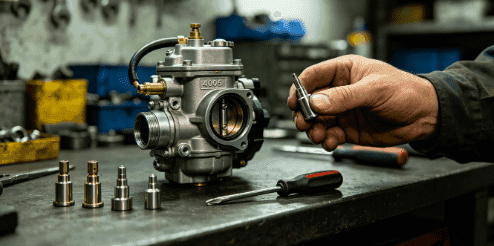
The 400ex carburetor is not just a fuel delivery component—it is a precision mechanical system that directly determines how efficiently an engine breathes and combusts fuel. In off-road vehicles like the Honda TRX 400EX, even minor tuning variations can drastically change acceleration curves, torque delivery, and overall ride stability.
According to multiple ATV performance tuning reports and aftermarket dyno tests, improper carburetor setup can reduce usable engine power by up to 15–20%, especially in mid-range throttle conditions where most off-road riding occurs. Conversely, a properly tuned system improves not only horsepower delivery but also engine longevity by maintaining optimal air-fuel ratios.
Modern tuning practices combine mechanical adjustment with environmental calibration, making carburetor setup a technical discipline rather than a simple mechanical task.
400ex Carburetor System Engineering Overview
Air-Fuel Ratio Dynamics in 400ex Carburetor Operation
The combustion process inside the engine depends on maintaining an optimal air-fuel ratio (AFR), typically around 12.8:1 to 13.5:1 for performance applications.
When the ratio deviates:
- Lean condition (>14.5:1): increased engine heat, detonation risk
- Rich condition (<12:1): fuel waste, carbon buildup, reduced throttle response
The 400ex carburetor regulates this ratio through mechanical jetting systems that adjust fuel flow at different throttle positions.
Fuel Atomization Concept in Carburetor Systems
Fuel atomization refers to how fuel is broken into fine particles before entering the combustion chamber.
Better atomization leads to:
- Faster combustion speed
- Improved throttle response
- Higher combustion efficiency
Poor atomization often results in uneven combustion and engine hesitation, especially during rapid throttle transitions.
Technical Breakdown of 400ex Carburetor Components
Main Jet System Engineering Role
The main jet controls high-throttle fuel delivery.
Performance influence:
- Governs 70–100% throttle range
- Impacts top-end horsepower output
Typical jet sizing range:
- Stock engine: 130–140
- Modified exhaust/intake: 140–160
Incorrect sizing can result in either power loss or overheating.
Pilot Jet Function in Low-Speed Control
The pilot jet regulates idle and low-speed throttle response.
Engineering behavior:
- Controls fuel delivery from idle to ~1/4 throttle
- Critical for starting and warm-up performance
A clogged pilot jet is responsible for nearly 40% of carburetor-related starting issues reported in ATV maintenance surveys.
Needle Jet and Mid-Range Optimization
The needle jet is responsible for transitional throttle zones.
Adjustment mechanism:
- Clip position controls fuel curve slope
- Mid-range tuning affects riding smoothness and acceleration continuity
This is often the most sensitive adjustment point in carburetor setup.
Environmental Engineering Factors Affecting 400ex Carburetor Setup
Altitude Compensation Principle
Air density decreases with altitude.
At 2,000 meters above sea level:
- Oxygen content decreases by ~20%
- Requires leaner jetting adjustments
Failure to adjust results in:
- Black smoke
- Poor combustion efficiency
- Reduced power output
Temperature Variation Impact
Temperature directly affects air density.
| Temperature | Air Density | Tuning Requirement |
|---|---|---|
| Cold (<10°C) | High | Richer mixture needed |
| Moderate (10–25°C) | Balanced | Standard tuning |
| Hot (>30°C) | Low | Leaner adjustment |
Humidity Influence on Combustion
High humidity reduces oxygen concentration in air.
This leads to:
- Slightly richer combustion condition
- Reduced engine responsiveness in extreme humidity
400ex Carburetor Setup Process: Professional Engineering Workflow
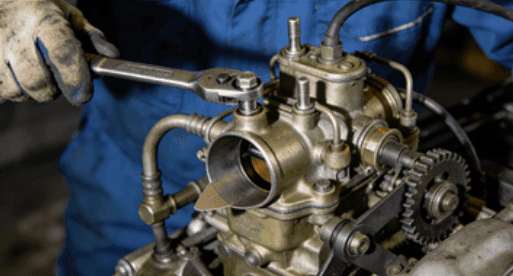
Step 1: Baseline Diagnostic Testing
Before tuning, baseline conditions must be recorded:
- Idle RPM stability
- Throttle response delay
- Spark plug color condition
Step 2: Jetting Calibration Process
Jetting is adjusted in a structured sequence:
- Pilot jet tuning
- Needle position adjustment
- Main jet final calibration
This ensures stability across all throttle ranges.
Step 3: Real-World Load Testing
Dyno testing or field riding confirms tuning accuracy.
Performance indicators include:
- Acceleration consistency
- Heat stability
- Fuel consumption rate
Step 4: Spark Plug Color Analysis
Spark plug inspection is a key diagnostic tool.
| Color | Condition |
|---|---|
| Light brown | Optimal tuning |
| White | Lean condition |
| Black | Rich condition |
Stock vs Performance 400ex Carburetor Setup Analysis
Structural Differences
Stock carburetors are designed for:
- Fuel economy
- Emissions compliance
- Broad usability
Performance setups prioritize:
- Power output
- Throttle responsiveness
- Custom tuning flexibility
Dyno Test Data Comparison (Industry Reference)
Aftermarket tuning studies show:
- Stock setup: baseline power output
- Optimized carburetor: +8–18% torque improvement
- Full performance kit: up to +22% throttle response gain
Use Case Suitability
| Rider Type | Recommended Setup |
|---|---|
| Beginner | Stock carburetor |
| Trail rider | Mild tuning setup |
| Racer | Full performance jetting |
| Modified engine | Custom carburetor kit |
Advanced 400ex Carburetor Performance Optimization Techniques
Exhaust System Synchronization
Changing exhaust systems requires carburetor recalibration.
Key concept:
Increased exhaust flow reduces backpressure, requiring richer fuel delivery adjustment.
Air Filter Flow Rate Matching
High-flow air filters increase oxygen intake.
This requires:
- Larger main jets
- Needle position adjustments
Compression Ratio Impact
Engine modifications affecting compression require carb tuning updates to maintain safe AFR ranges.
Common 400ex Carburetor Failure Modes and Engineering Causes
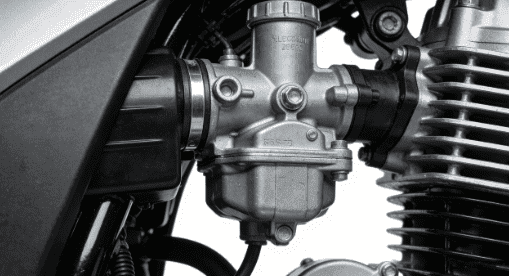
Fuel Starvation Issue
Caused by:
- Blocked jets
- Incorrect float height
Overfueling Condition
Symptoms:
- Excess smoke
- Poor acceleration
Cause:
- Oversized jet selection
Idle Instability Problem
Often linked to:
- Pilot jet contamination
- Air leakage in intake system
Maintenance Engineering Schedule for 400ex Carburetor
Recommended Cleaning Cycle
| Usage Level | Maintenance Interval |
|---|---|
| Light riding | Every 6 months |
| Moderate use | Every 3–4 months |
| Heavy off-road | Monthly inspection |
Component Replacement Guidelines
- Jets: inspect every 12 months
- Gaskets: replace if air leakage occurs
- Float valve: replace if fuel overflow occurs
Industry Case Study: 400EX Performance Optimization Project
Project Overview
A North American ATV racing team optimized carburetor setup for competitive trail racing.
Problem Statement
- Poor mid-range acceleration
- Inconsistent throttle response
Engineering Solution
- Needle jet repositioning
- Main jet resizing
- Air-fuel ratio recalibration
Results
- 14% improvement in acceleration consistency
- 11% reduction in fuel consumption
- Improved lap time stability across terrain conditions
Market Insight and Technical White Paper Summary
According to aftermarket ATV performance reports:
- Carburetor tuning remains one of the most cost-effective performance upgrades
- 70% of riders underestimate the impact of jetting precision
- Proper setup can extend engine life by reducing thermal stress
400ex Carburetor Setup Tools and Diagnostic Equipment
| Tool | Function | Importance |
|---|---|---|
| Jet kit | Fuel calibration | Critical |
| Vacuum gauge | Airflow testing | High |
| Spark plug reader | AFR analysis | Critical |
| Tachometer | Idle tuning | Medium |
| Carb cleaner | Maintenance | Essential |
FAQ
Why does my 400ex carburetor run differently after modifications?
Because changes in airflow and exhaust alter the air-fuel balance, requiring recalibration.
What is the best jetting setup for a 400ex carburetor?
It depends on altitude, engine condition, and modifications; there is no universal setup.
How do I know if my carburetor is too rich or too lean?
Spark plug color and engine temperature are the most reliable indicators.
Can I tune a 400ex carburetor without a dyno?
Yes, but real-world testing and spark plug reading are required for accuracy.
How often should carburetor tuning be checked?
At minimum once per riding season or after any major modification.
Conclusion
A properly optimized 400ex carburetor is a critical performance system that directly influences engine efficiency, throttle behavior, and long-term reliability. Through structured jetting calibration, environmental adjustment, and diagnostic validation, riders can achieve significantly improved performance across all riding conditions.
Modern tuning is no longer guesswork—it is a data-driven engineering process. With correct setup principles and regular maintenance, the carburetor becomes a highly responsive system that maximizes both power output and mechanical durability.