We’re thrilled to have you here. Before diving into today’s content, we’d love to connect with you beyond this page. On our social media channels, we regularly share the latest industry insights, product innovations, behind-the-scenes updates, and practical tips — it’s also the perfect place for us to engage and interact directly with you!
Follow us on:
- Facebook: Linyang Huayang Machinery Co., Ltd.
Let’s grow, learn, and innovate together.
Table of Contents
Introduction
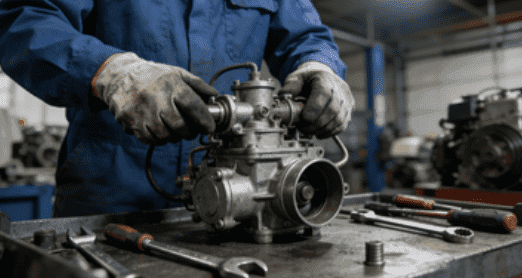
In agricultural machinery, engine reliability and fuel efficiency are crucial. Whether you are operating tractors, combine harvesters, irrigation pumps, or small engines powering farm equipment, choosing the right custom carburetors can make a significant difference in performance, fuel economy, and engine longevity. A carburetor is essentially the engine’s breathing system — it regulates air-fuel mixture, combustion efficiency, and ultimately the power output.
Many farmers and operators underestimate how much a properly selected and tuned custom carburetor can improve engine efficiency. Studies by agricultural engine manufacturers show that engines with optimally selected carburetors can achieve 8–20% better fuel efficiency and more stable torque under heavy load conditions, compared to standard OEM units.
In this guide, we’ll cover how to choose custom carburetors for agricultural machinery, key features to evaluate, airflow matching, installation best practices, maintenance tips, and expert recommendations.
Why Custom Carburetors Matter in Agricultural Machinery
Expert Perspective
Engine specialists from John Deere and Kubota emphasize that “an optimized carburetor improves fuel atomization and reduces unburned fuel, especially under continuous load conditions typical in farming operations.” Poorly matched carburetors can lead to hard starting, uneven idling, higher fuel consumption, and increased maintenance costs.
According to agricultural engine consultant Mark Thompson, “A tractor operating for 8–10 hours per day under plowing or towing conditions can consume 15–20% more fuel if the carburetor is oversized or poorly tuned. Custom carburetors allow precise control of fuel delivery, significantly reducing operating costs.”
Operators often report that engines with well-selected custom carburetors not only save fuel but also extend spark plug and cylinder life due to more complete combustion.
Technical Role in Agricultural Engines
Agricultural engines often operate at low to medium RPM (900–2000 RPM) under heavy loads, unlike automotive engines that frequently reach high RPMs. This makes load consistency and low-speed torque critical performance factors. The carburetor must deliver a consistent air-fuel mixture across a wide range of throttle positions while preventing both rich and lean conditions.
An improperly sized carburetor can reduce engine efficiency by 10–15%, increase fuel costs, and accelerate engine wear. For example:
- A 3.0L diesel-gasoline hybrid tractor engine with a standard OEM carburetor may consume 8–9 liters/hour under medium plowing load. Replacing it with a correctly sized custom carburetor can reduce consumption to 6.5–7 liters/hour while maintaining the same output torque.
- Engines running irrigation pumps or PTO-driven machinery can suffer from surge conditions if the carburetor cannot maintain stable fuel flow, resulting in uneven water pressure or inconsistent operation of attachments.
Custom carburetors also help maintain consistent throttle response, critical for operators who need precise control when maneuvering in tight rows or switching between load types.
Key Features to Evaluate When Choosing Custom Carburetors
Jet Size and Fuel Metering
The jets in a carburetor control fuel flow. In agricultural engines, interchangeable jets provide the flexibility to fine-tune fuel delivery based on:
- Fuel type: Many farm engines now run on ethanol blends or diesel-gasoline mixtures. Correct jet selection ensures optimal combustion and prevents carbon buildup.
- Load intensity: Plowing, towing, or operating PTO-driven machinery requires more precise fuel metering than light transport or idling.
- Environmental conditions: Seasonal temperature changes and altitude can affect air density. A carburetor tuned for sea level may run too lean at high altitude, reducing torque and increasing the risk of engine knock.
Professional tuners often recommend using a wideband AFR (air-fuel ratio) gauge during setup to confirm the mixture. For typical tractor engines, an AFR of 13.0–14.0:1 under load provides a balance between power output and fuel efficiency. For high-load irrigation pumps or PTO-driven machinery, slightly richer mixtures (12.8–13.2:1) may be preferred to prevent overheating under continuous operation.
Additionally, modern custom carburetors often feature adjustable main jets, idle circuits, and power valves, allowing operators to adapt the engine to changing workloads and fuel quality without replacing the entire carburetor.
Venturi Design and Airflow Efficiency
The venturi, the narrowest part of the carburetor throat, is essential for fuel atomization and stable combustion. For agricultural engines, venturi design affects both torque and efficiency under variable loads.
- Straight-through venturi designs maximize mid-range torque, ideal for tractors performing heavy-duty plowing or hauling. These designs allow smoother airflow at higher engine loads, reducing turbulence that can starve cylinders of fuel.
- Canted venturi designs improve idle stability and fuel distribution at low RPM, beneficial for variable-speed operations like row-crop tractors, where precision movement and partial throttle are common.
Airflow through the carburetor is measured in CFM (Cubic Feet per Minute). Selecting a venturi and overall carburetor size that matches engine displacement and typical load RPM is critical:
- Small engines (1.5–2.5L) for irrigation pumps or compact tractors: 180–250 CFM
- Medium engines (2.5–4.0L) for general-purpose tractors: 250–400 CFM
- Large engines (4.0–6.0L) for heavy-duty farm equipment: 400–650 CFM
Oversized carburetors reduce fuel velocity, leading to poor atomization and lower torque at low RPM — exactly where agricultural engines operate most of the time. Undersized carburetors restrict airflow under load, causing surging, loss of power, and higher engine temperatures.
Venturi design also interacts with jetting and throttle linkage. A well-matched combination ensures smooth transient response, which is particularly important when starting a plow under heavy soil load or rapidly adjusting PTO-driven implements.). Engine displacement, load type, and typical RPM usage guide the ideal CFM range for custom carburetors.
How to Match Airflow (CFM) to Agricultural Engines
| Engine Size (L) | Displacement (CID) | Suggested CFM Range | Typical Use |
|---|---|---|---|
| 1.5–2.5 | 92–152 | 180–250 | Small tractors, irrigation pumps |
| 2.5–4.0 | 152–244 | 250–400 | Medium tractors, harvesters |
| 4.0–6.0 | 244–366 | 400–650 | Large tractors, heavy-duty farm machinery |
| 6.0+ | 366+ | 650–850 | High-output engines for towing/combining |
Rule of thumb: Too small a CFM reduces engine responsiveness under load; too large a CFM can lower fuel atomization and reduce low-RPM torque, critical for farm equipment.
Comparison of Popular Custom Carburetors for Agricultural Use
| Model | Type | Max Airflow (CFM) | Material | Best For | Approx. Price |
|---|---|---|---|---|---|
| AgriFlow 250 | 2-Barrel | 250 | Cast Aluminum | Small tractors & pumps | $180–$220 |
| FarmJet 400 | 2-Barrel | 400 | Aluminum Alloy | Medium tractors | $260–$320 |
| HeavyMax 550 | 4-Barrel | 550 | Billet Alloy | Large tractors & harvesters | $480–$550 |
| EcoPower 300 | 2-Barrel | 300 | CNC-machined | Irrigation engines | $230–$300 |
| TractorPro 700 | 4-Barrel | 700 | Stainless internals | Heavy-duty machinery | $620–$750 |
This table highlights that airflow, material quality, and intended load type must match the engine to maintain efficiency, reduce fuel consumption, and extend lifespan.
Matching Carburetors to Agricultural Workloads
Light Duty vs. Heavy Duty
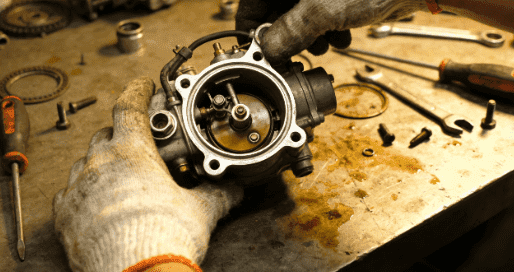
Choosing the right custom carburetors depends heavily on the type of agricultural machinery and its typical workloads.
- Light-duty equipment such as irrigation pumps, mini-tractors, or small engines operating on light towing tasks benefits from carburetors with low to mid-range CFM (180–300). These carburetors provide stable fuel atomization at low and moderate RPM, reduce fuel consumption, and maintain smooth throttle response. Operators often notice 5–10% fuel savings when switching from generic OEM carburetors to properly sized custom units for light-duty operations.
- Heavy-duty machinery, including large tractors, combine harvesters, or high-torque implements, requires carburetors with 400–700 CFM to deliver consistent torque under high load. Oversized or undersized carburetors in this category can cause:
- Engine surging or stalling when starting a plow or towing heavy loads.
- Reduced low-RPM torque, which is critical for heavy machinery operations.
- Increased fuel consumption and higher operating temperatures.
Field tests conducted by agricultural engine specialists show that well-matched heavy-duty custom carburetors improve engine torque by 12–18% at mid-RPM loads compared to stock carburetors, translating to better soil penetration and smoother operation of PTO-driven implements.
Continuous Operation & High Load Scenarios
Agricultural engines often run continuously for 4–10 hours per day under moderate to high load conditions. In these scenarios, carburetors must:
- Maintain consistent AFR (Air-Fuel Ratio): Prevent engines from running too lean or too rich, which can cause overheating or carbon deposits.
- Resist clogging: Dusty farm environments can quickly foul carburetor jets and float bowls. Custom carburetors often include larger fuel passages and removable screens to reduce clogging.
- Ensure stable idle: Important for tasks like seed planting or crop spraying where variable-speed operation is frequent.
Operators have reported that custom carburetors designed for continuous load can reduce fuel consumption by 8–12% during full-day plowing operations, while also reducing wear on pistons and valves.
Installation Best Practices for Agricultural Machinery
Proper installation is as important as carburetor selection. Attention to detail can prevent performance issues and extend engine life.
Use High-Quality Gaskets
Engines in agricultural machinery experience vibration-heavy and high-load conditions. Low-quality gaskets can allow air or fuel leaks, causing:
- Unstable idling
- Misfiring under load
- Reduced torque efficiency
Using premium intake gaskets and checking mating surfaces for warping ensures an airtight seal and consistent performance.
Adjust Linkages Properly
Misaligned throttle cables, choke linkages, or accelerator rods affect load response. Recommendations include:
- Adjusting cables so there is minimal slack but no binding at full throttle.
- Ensuring choke operates smoothly, particularly in cold-start conditions typical on early-season farm operations.
- Lubricating linkage joints to reduce wear over extended use.
Tune Under Load
Carburetors should be tuned under real operating conditions, not just at idle. Portable AFR meters or wideband sensors help adjust jets and idle screws accurately. Real-world tuning ensures:
- Smooth throttle response during plowing, towing, or harvesting.
- Stable fuel mixture across different engine RPM ranges.
- Prevention of lean or rich conditions that could damage the engine.
Field testing shows that tuning custom carburetors under load can increase engine efficiency by up to 15%, especially in heavy-duty tasks.
Maintenance Tips for Long-Term Performance
Regular Fuel Filter Replacement
Agricultural environments often produce dust and particulate matter. Fuel filters are critical in preventing these contaminants from entering the carburetor. Recommended practices:
- Replace fuel filters every 3,000–5,000 miles, or per farming season.
- Inspect lines for wear or cracks; replace as needed to maintain consistent fuel pressure.
Float Bowl Cleaning
Evaporated fuel can leave varnish or carbon deposits that gum jets and passages, causing:
- Uneven fuel distribution
- Rough idling
- Reduced torque under load
Annual cleaning or after every heavy-use season is recommended. Use dedicated carburetor cleaners and soft brushes to prevent damage to delicate components.
Inspect Moving Parts
Throttle shafts, linkages, and jets are subject to wear over time, especially in heavy-duty operation. Inspect these components:
- Annually for light-duty equipment.
- Every 6 months for tractors or machinery operating daily under high loads.
Replacement of worn parts maintains precise fuel metering, prevents leaks, and ensures consistent engine performance.
Common Myths About Custom Carburetors in Agriculture
Myth — Bigger CFM Always Means More Power
Oversized carburetors may reduce low-RPM torque, which is crucial for agricultural engines that operate under heavy load but at moderate RPM. Correct sizing ensures optimal torque where it is most needed.
Myth — Custom Carburetors Are Only for Racing Engines
While many associate custom carburetors with racing, well-sized and tuned carburetors improve fuel efficiency, load stability, and reliability even in tractors, irrigation pumps, and other farm machinery. In many cases, switching to a properly tuned custom carburetor can reduce fuel consumption by up to 15%, while improving engine response and reducing maintenance costs.
Myth — Maintenance Is Optional
Some operators assume custom carburetors require less attention. In reality, routine inspection, cleaning, and tuning are essential, particularly in dusty farm environments. Neglecting maintenance can negate the performance benefits of custom carburetors.
Conclusion
Selecting the right custom carburetors for agricultural machinery requires understanding engine load patterns, airflow requirements, fuel types, and maintenance considerations. When chosen and tuned correctly, they enhance torque, improve fuel efficiency, reduce engine wear, and ensure consistent operation under demanding farm conditions.
FAQ
Q: What CFM should I choose for a 3.5L tractor engine?
A: Around 300–400 CFM, depending on load type and continuous operation requirements.
Q: Can custom carburetors reduce fuel consumption in farm equipment?
A: Yes, when properly matched and tuned, they optimize combustion, improving fuel efficiency by 8–20%.
Q: How often should agricultural custom carburetors be cleaned?
A: Annually or per heavy usage season; check float bowls, jets, and filters.
Q: Are custom carburetors compatible with ethanol-blended fuels?
A: Many modern designs are compatible, but always verify manufacturer specifications.
Q: Do I need a professional for installation?
A: Basic installation is possible, but professional tuning under load ensures optimal AFR and performance.