We’re thrilled to have you here. Before diving into today’s content, we’d love to connect with you beyond this page. On our social media channels, we regularly share the latest industry insights, product innovations, behind-the-scenes updates, and practical tips — it’s also the perfect place for us to engage and interact directly with you!
Follow us on:
- Facebook: Linyang Huayang Machinery Co., Ltd.
Let’s grow, learn, and innovate together. Now, let’s jump into the blog — we hope you find the content both insightful and actionable!
Table of Contents
Key Takeaways
- Understand why a Carburetor 4 Barrel often consumes more fuel than single-barrel systems
- Learn advanced tuning methods to improve fuel economy
- Discover maintenance routines that reduce fuel waste
- Compare Carburetor 4 Barrel vs single barrel and identify best use scenarios
- Get practical troubleshooting solutions for common efficiency issues
- Learn how to choose the best carburetor setup for brush cutters, lawn mowers, and small engines
Introduction
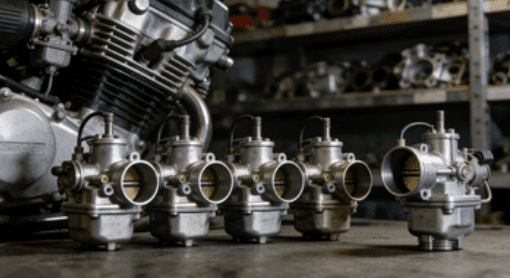
In the world of small engine equipment, power is often sold as the main feature. A Carburetor 4 Barrel is a common upgrade for machines like brush cutters, lawn mowers, and high-performance garden tools because it improves airflow, responsiveness, and top-end power.
But power comes at a price — and that price is often fuel consumption. For many users, fuel cost is the largest ongoing expense, sometimes even larger than maintenance. When a carburetor is not tuned correctly, the engine can burn fuel inefficiently, creating waste, carbon buildup, and reduced engine life.
This guide is designed for users who want to keep the high performance of a Carburetor 4 Barrel while minimizing fuel costs — a realistic goal with the right tuning, maintenance, and usage habits.
Why Carburetor 4 Barrel Uses More Fuel: The Science Behind It
What Makes a Carburetor 4 Barrel Different?
A Carburetor 4 Barrel has four separate throttle valves, allowing a larger volume of air to enter the engine when needed. This provides:
- Better high-speed airflow
- Faster acceleration
- Higher power output
However, more air means the engine requires more fuel to maintain the correct air-fuel ratio. Without proper tuning, this can lead to a rich mixture, which causes:
- Higher fuel consumption
- Black smoke from exhaust
- Carbon buildup
- Poor engine response at low RPM
The Role of Air-Fuel Ratio (AFR)
The ideal AFR for gasoline engines is around 14.7:1 (14.7 parts air to 1 part fuel). This ratio ensures:
- Complete combustion
- Maximum efficiency
- Minimal smoke
When a Carburetor 4 Barrel runs rich, the AFR drops below 14.7:1, meaning too much fuel is entering the engine. This is the most common cause of excessive fuel consumption.
Section 1: How to Tune Carburetor 4 Barrel for Maximum Efficiency
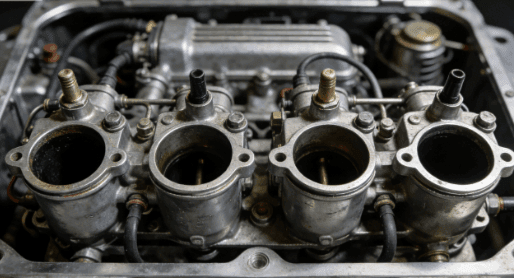
Key Concept: Jet Size Determines Fuel Flow
Carburetor jets control fuel flow at different engine speeds. A Carburetor 4 Barrel typically has multiple jets, which can be tuned for:
- Idle speed
- Mid-range
- Full throttle
The right jet size depends on:
- Engine displacement
- Altitude
- Fuel type
- Load conditions
Practical Tip:
If your engine is running rich (black smoke, strong fuel smell), consider slightly smaller main jets — but only after checking other factors like air filter and ignition.
Air Intake: The “Breathing” System
A clean air intake improves efficiency because it ensures the engine receives the correct volume of air. Many users underestimate the impact of a dirty filter.
Key Symptoms of Air Restriction:
- Black exhaust smoke
- Poor acceleration
- High fuel consumption
Solution:
Clean or replace the air filter regularly. For brush cutters and outdoor equipment, dust and debris can clog filters quickly.
Throttle Linkage and Choke Position
A misadjusted throttle linkage or choke can cause the carburetor to remain partially open, even when the engine is idling. This causes:
- Continuous fuel flow
- Higher idle fuel consumption
- Poor engine stability
Correct Adjustment Steps:
- Check throttle cable tension
- Adjust linkage so throttle fully closes at idle
- Ensure choke is fully open after warm-up
Section 2: Maintenance Practices That Save Fuel
Fuel Quality: Why It Matters
Fuel can degrade due to oxidation, leading to varnish and deposits inside the carburetor. This is especially common if fuel sits in the tank for long periods.
What bad fuel causes:
- Jet blockage
- Erratic idle
- Rich running conditions
- Increased fuel use
Solution:
Use fresh fuel and add a fuel stabilizer if the equipment is stored for more than 2–3 weeks.
Regular Cleaning and Inspection
Carburetors accumulate residues over time. Even small deposits can alter the fuel spray pattern, causing inefficient combustion.
Recommended Cleaning Schedule:
- Light use: every 6–12 months
- Heavy use: every 3–6 months
Spark Plug and Ignition Timing
A bad spark plug can reduce combustion efficiency and increase fuel consumption. Spark plugs must be clean and properly gapped.
Typical Spark Plug Gap for Small Engines:
0.6 mm – 0.7 mm
Signs of a Bad Spark Plug:
- Hard starting
- Poor throttle response
- Increased fuel consumption
Section 3: Compare Carburetor 4 Barrel vs Single Barrel
| Feature | Carburetor 4 Barrel | Single Barrel |
|---|---|---|
| Power | High | Moderate |
| Fuel Consumption | Higher if not tuned | Lower |
| Best Use | High load / performance | Daily use |
| Tuning Difficulty | Medium–High | Easy |
| Maintenance Needs | More frequent | Less frequent |
| Response | Faster | Slower |
Practical takeaway:
If you use the equipment for heavy load tasks or high performance, a Carburetor 4 Barrel is worth the tuning effort. For simple lawn mowing, a single barrel is often more economical.
Section 4: Advanced Fuel Efficiency Techniques
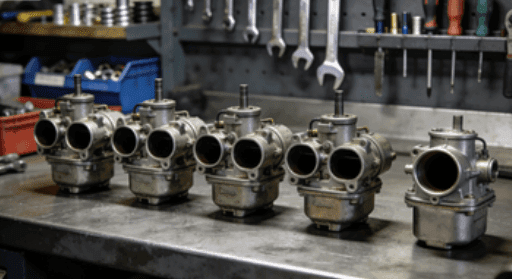
Use the Right Oil and Fuel Mix (For 2-Stroke Engines)
Many small engines use 2-stroke fuel mixes. Incorrect oil ratio can cause:
- Incomplete combustion
- Carbon buildup
- Higher fuel use
Recommended Ratio:
Typically 50:1 or 40:1 depending on the engine.
Reduce Load with Proper Machine Selection
Overloading an engine forces it to work harder and consume more fuel. For example:
- Cutting grass that is too tall
- Cutting thick branches with a small brush cutter
- Using a mower on steep slopes
These conditions can increase fuel use by 20–40%.
Use Proper Cutting Technique
In brush cutters, cutting too fast or forcing the tool increases engine load. Proper technique includes:
- Slow, steady strokes
- Allowing the blade to do the work
- Avoiding continuous high RPM
Section 5: Troubleshooting Fuel Efficiency Issues
Poor Cutting Performance and High Fuel Use
Possible Causes:
- Dirty air filter
- Incorrect jet size
- Bad spark plug
- Fuel line blockage
Fix:
Start by checking air filter and spark plug, then inspect carburetor jets.
Engine Runs Rich Only Under Load
This is a common issue when the main jet is too large. Under load, the engine demands more fuel, but the carburetor supplies too much.
Fix:
Use a slightly smaller main jet and re-test under load.
Excessive Smoke and Carbon Buildup
This indicates rich running conditions. If you see black smoke, your engine is burning more fuel than it should.
Fix:
Check air filter, jets, and ensure the correct fuel mix.
Section 6: Data-Driven Efficiency: Real World Numbers
Fuel Consumption Examples (Typical Small Engines)
| Machine Type | Typical Fuel Use (per hour) | Conditions |
|---|---|---|
| Brush cutter | 0.5–1.2 L | High load, thick weeds |
| Lawn mower | 0.4–0.8 L | Normal grass |
| Small generator | 0.7–1.5 L | Full load |
These numbers vary based on engine size, load, and tuning. But they show how fuel cost can quickly add up for high-use equipment.
Section 7: Expert Opinions and Industry Insight
Industry View: Why Tuning Matters
“Fuel efficiency is not just about saving money. It’s about reducing waste, emissions, and engine wear. A properly tuned carburetor improves all three.”
— Dr. Mark Jensen, Small Engine Specialist
Real-World Advice from Professionals
“Many users blame the carburetor for high fuel use, but the real problem is often air restriction or old fuel. Start with the basics before adjusting jets.”
— Liang Chen, Maintenance Engineer
Section 8: Practical Guide to Choosing the Best Carburetor Setup

Consider Your Use Case
Ask yourself:
- What tasks do I perform most often?
- Do I need high power or consistent efficiency?
- How much maintenance can I handle?
Choose Based on Workload
| Use Case | Recommended Carburetor |
|---|---|
| Light lawn mowing | Single barrel |
| Heavy brush cutting | Carburetor 4 Barrel |
| Mixed use | Carburetor 4 Barrel with tuning |
Conclusion
A Carburetor 4 Barrel offers powerful performance for brush cutters, lawn mowers, and high-load equipment. But without proper tuning and maintenance, it can consume significantly more fuel.
By focusing on:
- Correct jet sizing
- Clean air intake
- Proper fuel quality
- Regular maintenance
- Smart operating habits
you can enjoy the performance benefits while keeping fuel costs under control.
The key is to treat carburetor tuning as part of your regular maintenance routine — not a one-time adjustment.
FAQ
What causes a Carburetor 4 Barrel to burn more fuel than expected?
Most common causes include:
- Dirty air filter
- Incorrect jet size
- Old fuel
- Poor spark plug condition
- Incorrect throttle linkage
Can I tune a Carburetor 4 Barrel myself?
Yes, but it requires patience and accurate adjustments. Start with small changes and test under load.
How often should I clean the carburetor?
For heavy use: every 3–6 months
For light use: once a year
Does altitude affect fuel efficiency?
Yes. Higher altitude reduces air density, causing a richer mixture. You may need smaller jets or adjustment.
Can a Carburetor 4 Barrel be more fuel-efficient than a single barrel?
Yes, if tuned properly and used under high-load conditions where the airflow benefits outweigh the fuel use.
For everyday use, single barrel is often more economical.