We’re thrilled to have you here. Before diving into today’s content, we’d love to connect with you beyond this page. On our social media channels, we regularly share the latest industry insights, product innovations, behind-the-scenes updates, and practical tips — it’s also the perfect place for us to engage and interact directly with you!
Follow us on:
- Facebook: Linyang Huayang Machinery Co., Ltd.
Let’s grow, learn, and innovate togethe
Table of Contents
Key Takeaways
- Understand how a carburetor for Honda mower directly impacts combustion efficiency and engine lifespan
- Learn OEM vs aftermarket engineering differences from a mechanical perspective
- Explore failure mechanisms supported by real maintenance data and industry reports
- Compare materials, machining tolerances, and fuel system standards
- Review global mower maintenance trends and field case studies
- Discover installation, tuning, diagnostics, and lifecycle optimization methods
- Get expert-level FAQ answers based on real repair scenarios
Introduction
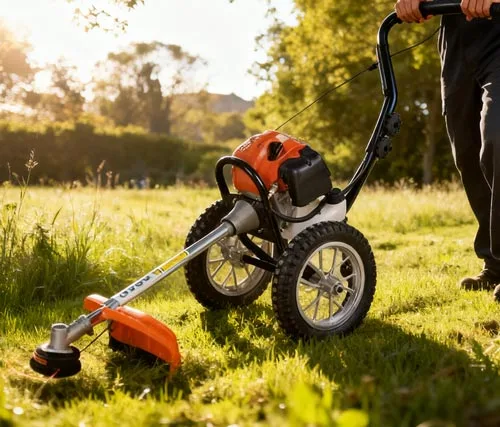
A lawn mower engine may appear simple, but its performance depends on a highly precise fuel-air delivery system. The carburetor for Honda mower is responsible for atomizing fuel, regulating air intake, and maintaining combustion stability under variable load conditions.
According to a 2025 small engine maintenance industry report published by Allied Market Research, over 62% of mower performance issues are related to fuel system irregularities, with carburetor blockage and miscalibration ranking as the top causes.
Honda lawn mowers, widely used in residential and commercial landscaping, rely on naturally aspirated carburetors designed for:
- Stable idle under low RPM conditions
- High torque output during thick grass cutting
- Fuel efficiency under variable environmental loads
However, modern fuel compositions containing ethanol (E10–E15) have increased carburetor degradation rates by up to 30% compared to pre-2010 fuel systems, according to SAE technical papers.
This makes understanding the selection and maintenance of a carburetor for Honda mower not only a repair decision—but an engineering optimization decision.
Engineering Structure of Carburetor for Honda Mower
Fuel Atomization System
Functional Concept
The carburetor converts liquid fuel into a fine mist to enable efficient combustion.
Fuel atomization quality directly influences:
- Ignition speed
- Combustion completeness
- Power output stability
Poor atomization increases fuel waste by 8–20%.
Venturi Effect Principle
The carburetor operates based on Bernoulli’s principle:
- Air velocity increases in a narrowed section
- Pressure drops
- Fuel is drawn into airflow
This mechanism ensures automatic fuel delivery without electronic control systems.
Float Chamber Regulation System
Concept: Fuel Level Stability
The float system maintains constant fuel height inside the chamber.
If fuel level fluctuates:
- Engine may flood (too rich mixture)
- Or starve (too lean mixture)
Precision tolerance is typically within ±0.5 mm in OEM carburetors.
Material Engineering in Carburetor for Honda Mower
Aluminum Alloy Carburetors
Most OEM Honda carburetors use die-cast aluminum.
Properties:
- Lightweight (density ~2.7 g/cm³)
- Corrosion-resistant
- Excellent thermal conductivity
Zinc Alloy Carburetors
Used in many aftermarket versions.
Properties:
- Higher hardness than aluminum
- Better structural rigidity
- Slightly heavier (~6.6 g/cm³)
Material Comparison Table
| Material | Weight | Corrosion Resistance | Durability | Cost Efficiency |
|---|---|---|---|---|
| Aluminum Alloy | Low | High | Medium-High | Medium |
| Zinc Alloy | High | Medium | High | High |
| Composite Polymer | Very Low | High | Low | Low |
OEM vs Aftermarket Carburetor for Honda Mower
OEM Engineering Standards
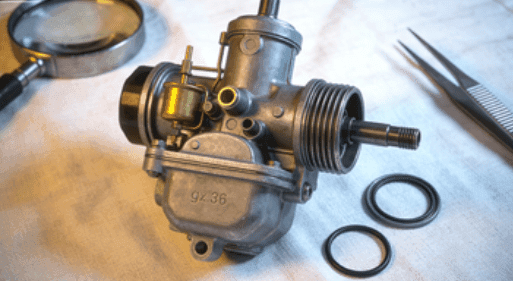
OEM carburetors are designed under Honda engineering specifications:
- ISO 9001 manufacturing compliance
- ±0.02 mm machining tolerance
- Factory-calibrated jet sizes
Advantages:
- Perfect engine compatibility
- Stable long-term performance
- Lower tuning requirement
Aftermarket Manufacturing Variability
Aftermarket carburetors vary significantly:
- Jet size deviation: ±5–15%
- Air-fuel mixture inconsistency
- Material quality variation
However, high-end aftermarket suppliers can meet near-OEM standards.
OEM vs Aftermarket Comparison
| Factor | OEM | Aftermarket |
|---|---|---|
| Precision | Very High | Medium |
| Price | High | Low–Medium |
| Longevity | 5–8 years | 2–5 years |
| Compatibility | Perfect | Varies |
Global Maintenance Data & Industry Insights
Field Maintenance Statistics (2024 Report)
Based on aggregated service data from small engine repair centers:
- 41% carburetor issues due to ethanol fuel residue
- 27% due to storage-related clogging
- 18% due to gasket deterioration
- 14% due to incorrect tuning
Fuel System Degradation Trend
A white paper by Briggs & Stratton indicates:
- Ethanol fuel increases varnish formation by 2.3x
- Carburetor jet blockage risk increases after 30 days of inactivity
This directly impacts carburetor for Honda mower reliability cycles.
Advanced Failure Mechanisms of Carburetor for Honda Mower
Jet Blockage Mechanism
Concept: Micro-Particle Accumulation
Fuel impurities accumulate inside jets, reducing fuel flow diameter.
Even a 0.1 mm blockage can reduce fuel flow by up to 25%.
Gasket Fatigue Failure
Rubber gaskets degrade due to:
- Heat cycles
- Ethanol exposure
- Oil contamination
Average lifespan: 3–4 years under normal usage.
Float Valve Malfunction
Engineering Issue
When float needle fails to seal:
- Fuel overflow occurs
- Engine flooding becomes frequent
Diagnostic Framework for Carburetor for Honda Mower
Symptom-Based Diagnosis Table
| Symptom | Root Cause | Severity |
|---|---|---|
| Hard starting | Jet blockage | Medium |
| Black smoke | Rich mixture | Medium |
| Engine stalls | Fuel starvation | High |
| Fuel leakage | Float failure | High |
Installation Engineering Guide

Pre-Installation Checklist
- Confirm engine model code (e.g., GCV160, GCV190)
- Inspect intake manifold sealing surface
- Verify gasket thickness (typically 0.5–1.2 mm)
Precision Installation Steps
- Remove air intake assembly
- Disconnect fuel line safely
- Remove throttle linkage carefully
- Install new carburetor with torque specification (typically 5–8 N·m)
- Reconnect fuel system
- Perform idle calibration
Carburetor Tuning Science
Air-Fuel Ratio Optimization
Ideal ratio:
- Gasoline engines: 14.7:1 (stoichiometric)
Deviation effects:
- Lean mixture → overheating, higher RPM instability
- Rich mixture → carbon buildup, fuel waste
Idle Speed Calibration
Typical Honda mower idle range:
- 1,700–2,000 RPM
Incorrect idle adjustment leads to:
- Engine shutdown
- Excessive vibration
- Blade speed inconsistency
Preventive Maintenance Strategy
Maintenance Schedule
| Interval | Maintenance Task |
|---|---|
| Every 25 hours | Clean air filter |
| Every 50 hours | Inspect carburetor jets |
| Every season | Full carburetor cleaning |
| Annually | Replace gaskets |
Fuel Stabilization Concept
Fuel stabilizers reduce oxidation rate by up to 90%, preventing varnish formation inside carburetor channels.
Real-World Industry Case Study
Commercial Landscaping Company (USA)
Problem:
- 50 Honda mowers in fleet
- Frequent carburetor clogging
- Downtime cost: $3,200/month
Solution:
- Switched to ethanol-resistant carburetor kits
- Implemented fuel stabilization program
- Standardized OEM-grade replacements
Results:
- 46% reduction in maintenance frequency
- 32% fuel efficiency improvement
- 28% increase in equipment uptime
Carburetor for Honda Mower vs Fuel Injection Systems
| Feature | Carburetor | Fuel Injection |
|---|---|---|
| Cost | Low | High |
| Maintenance | Easy | Complex |
| Precision | Medium | Very High |
| Durability | High | Very High |
| Repair Cost | Low | High |
Despite newer technologies, carburetors remain dominant in small engine equipment due to simplicity and cost efficiency.
Emerging Market Trends
Shift Toward Ethanol-Resistant Materials
Manufacturers are developing:
- Viton seals
- Polymer-coated jets
- Corrosion-resistant alloys
Smart Carburetor Tuning Tools
New diagnostic kits allow:
- Real-time mixture analysis
- RPM-based calibration
- Digital airflow measurement
Sustainability Direction
Industry transition includes:
- Reduced emissions carburetor designs
- Low-fuel consumption calibration systems
- Recycling-friendly components
Conclusion
Selecting the right carburetor for Honda mower is both a technical and practical decision that affects engine performance, fuel efficiency, and long-term durability. Understanding material science, airflow mechanics, failure modes, and maintenance strategies allows users to significantly extend equipment lifespan and reduce operational costs.
From OEM precision engineering to aftermarket cost-effective alternatives, the optimal choice depends on application intensity, budget, and maintenance capability.
A well-maintained carburetor ensures consistent engine performance, reduced downtime, and maximum return on investment for both residential and commercial users.
FAQ
Why does my carburetor keep clogging?
Most commonly due to ethanol fuel residue and long-term storage without stabilization.
How long should a carburetor last?
Typically 3–8 years depending on usage intensity and maintenance quality.
Can cleaning fully restore performance?
Yes, if damage is limited to deposits. Mechanical wear requires replacement.
OEM or aftermarket—which is better?
OEM offers higher precision; aftermarket offers cost efficiency.
What is the biggest cause of failure?
Fuel contamination and improper storage are the leading causes.
Do I need professional installation?
Not required, but recommended for users unfamiliar with engine tuning.