We’re thrilled to have you here. Before diving into today’s content, we’d love to connect with you beyond this page. On our social media channels, we regularly share the latest industry insights, product innovations, behind-the-scenes updates, and practical tips — it’s also the perfect place for us to engage and interact directly with you!
Follow us on:
- Facebook: Linyang Huayang Machinery Co., Ltd.
Let’s grow, learn, and innovate together.
Table of Contents
Introduction
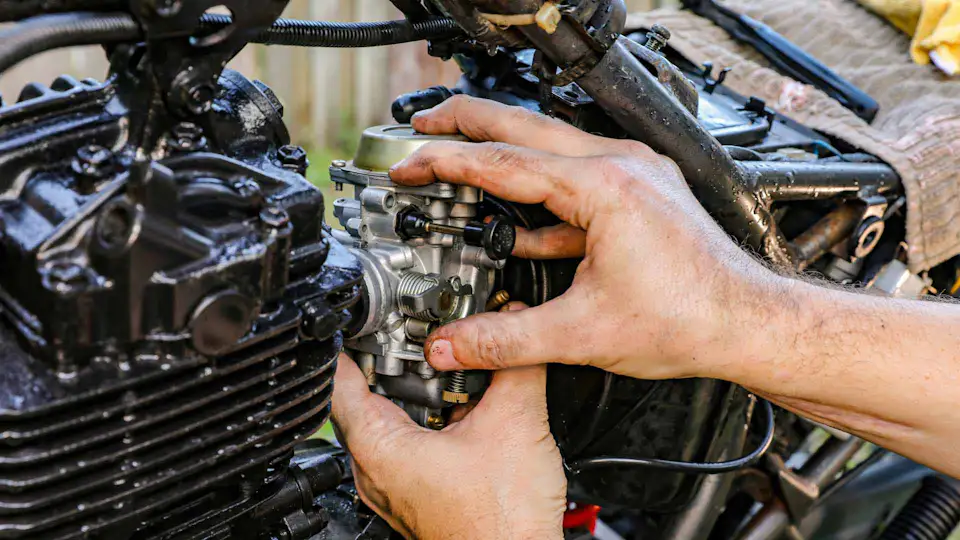
In a world dominated by electronic fuel injection and advanced engine management systems, the humble carburetor may seem like a relic of the past. Yet, millions of vehicles, motorcycles, lawn equipment, and industrial engines still rely on carburetors for reliable performance. Whether you’re a classic car enthusiast, a small engine technician, or a performance tuner, understanding what a carburetor is and how to choose the right carburetor remains essential.
This article dives deep into the mechanics, types, performance implications, maintenance practices, comparisons with modern systems, real-world data, expert insights, and selection strategies. You’ll learn not only the fundamentals but also how to apply this knowledge to make confident decisions that impact engine efficiency, cost, and longevity.
Understanding the Carburetor
Definition of a Carburetor
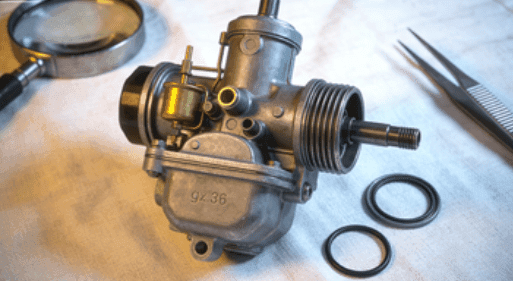
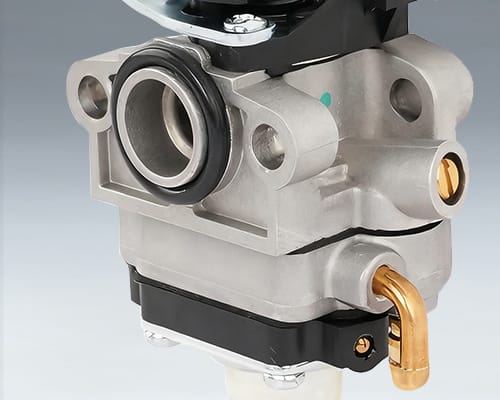
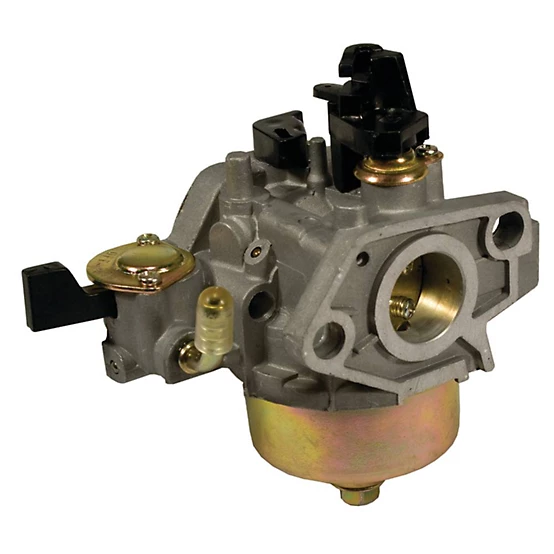
A carburetor is a mechanical device that delivers a precisely mixed ratio of air and fuel to an internal combustion engine. It functions by exploiting pressure differentials within venturi passages to draw fuel into the airstream. Before the widespread adoption of electronic fuel injection (EFI) in the late 1980s and early 1990s, carburetors were the standard fuel delivery system in almost all automobiles, motorcycles, and small engines worldwide.
A properly tuned carburetor ensures the engine receives an optimal air-fuel ratio (AFR) — typically around 14.7:1 for gasoline at stoichiometric balance, where fuel combustion is most efficient. Maintaining this balance is essential for engine performance, fuel efficiency, and emission control. Deviations from the ideal ratio can result in decreased power, excessive fuel consumption, higher carbon emissions, or even engine damage.
Carburetors are particularly valued in applications where simplicity, ease of repair, and mechanical feedback are desired. For example, small motorcycles, lawn mowers, generators, and classic cars often continue to rely on carburetors due to their reliability and low maintenance requirements compared to complex EFI systems.
How a Carburetor Works
Air enters the carburetor through an air filter, which removes dust, dirt, and other particulates to prevent engine wear. The airflow then accelerates through a narrowing section called the venturi, which creates a pressure drop. This low pressure draws fuel from a reservoir (called the float bowl) through fuel jets into the moving airstream. The mixture of air and fuel is then delivered into the engine’s intake manifold and combustion chamber.
Key components of a carburetor include:
- Throttle Valve — Controls the amount of air-fuel mixture entering the engine, regulating engine speed and power output.
- Float Chamber — Maintains a constant level of fuel to ensure stable flow and prevent flooding.
- Jets — Precisely meter the fuel based on engine demand and throttle position.
- Choke Valve — Temporarily enriches the fuel mixture during cold starts, improving ignition and preventing stalling.
- Idle Circuit — Ensures smooth engine operation at low speeds or when the throttle is closed.
- Accelerator Pump — Delivers an extra squirt of fuel when the throttle is suddenly opened, preventing hesitation.
Carburetors operate entirely mechanically or with minimal vacuum assistance, which makes them simple, robust, and easy to repair, even without electronics. This simplicity is a major reason why carburetors are still used in many off-grid or industrial engines, such as portable generators and agricultural machinery.
Concept: Fuel-Air Mixture
The fuel-air mixture is critical to combustion quality. It determines engine efficiency, power output, and emissions.
- A rich mixture (more fuel than air) improves torque and power but increases fuel consumption and carbon emissions.
- A lean mixture (more air than fuel) improves fuel economy and reduces emissions but may cause overheating, knocking, or incomplete combustion.
High-performance carburetors are designed to adjust mixtures across different rpm ranges to balance power, efficiency, and emissions. In racing applications, carburetors may be tuned to deliver a wideband AFR as rich as 12.5:1 for peak horsepower or as lean as 15:1 for cruising efficiency.
Case Example: A classic 1969 Camaro with a Holley 850 CFM carburetor achieved a measured horsepower increase of 15% when the carburetor was precisely jetted for the engine’s intake volume and exhaust system.
Main Types of Carburetors
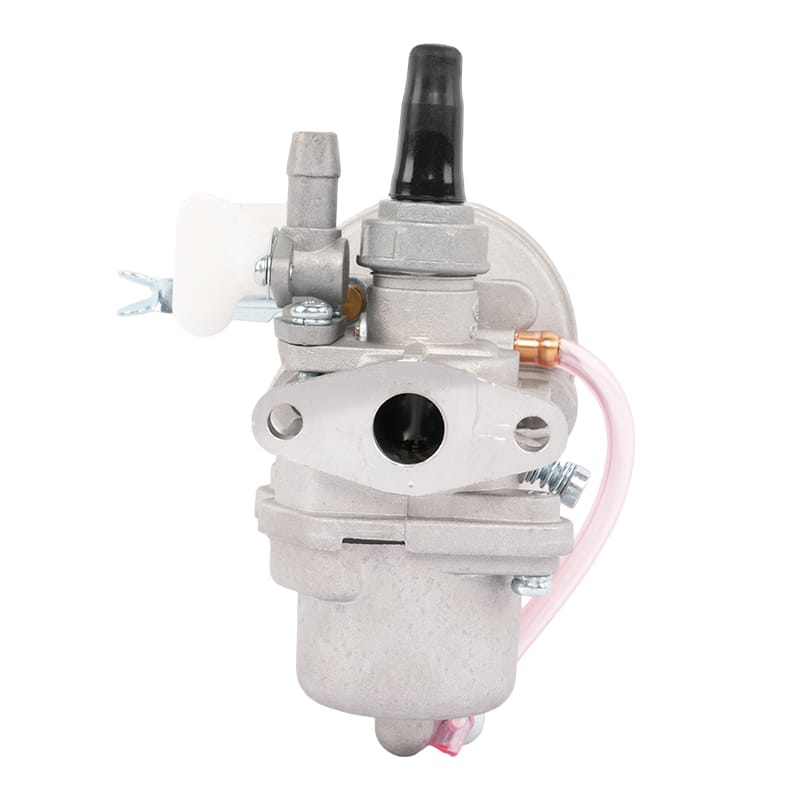
Single-Barrel Carburetor
Single-barrel carburetors are the simplest design and most cost-effective. They are commonly found on:
- Small engines under 750 cc
- Motor scooters and motorcycles
- Industrial equipment like generators and pumps
Advantages:
- Low cost and simple construction
- Easy to maintain and clean
- Reliable for low-power applications
Limitations:
- Limited airflow capacity for high-performance engines
- Less precise fuel metering at extreme throttle conditions
Single-barrel carburetors are ideal for budget builds or applications where high engine speed is not required. Many classic small motorcycles still operate efficiently with a single-barrel carburetor even after decades of use.
Two-Barrel Carburetor
Two-barrel carburetors divide airflow and fuel into two separate barrels, improving performance and throttle response compared to single-barrel models. They were widely used in vehicles from the 1970s and 1980s and are still popular in some off-road motorcycles, older sedans, and small trucks.
Advantages:
- Better airflow distribution
- Improved throttle response
- Suitable for medium-sized engines
Limitations:
- Slightly more complex than single-barrel units
- Requires periodic tuning for optimal performance
Example: A 1980 Ford Mustang with a two-barrel carburetor balances fuel economy and performance for daily driving, providing smooth acceleration without excessive fuel consumption.
Four-Barrel Carburetor
Four-barrel carburetors are typically used in high-performance engines, especially V8s and racing vehicles. They offer maximum airflow and tunability, making them ideal for engines requiring high power output.
Key Specifications:
- Measured in CFM (Cubic Feet per Minute) — airflow capacity
- Holley 650 CFM 4-barrel carburetor is widely used in muscle car builds
- Each barrel can operate independently: primary barrels for idle and low-speed driving, secondary barrels for high-power demand
Advantages:
- Maximum airflow for high-performance engines
- Greater tuning flexibility
- Enhanced fuel distribution across cylinders
Limitations:
- More complex and expensive
- Requires careful tuning to prevent flooding or lean conditions
Concept: Carburetor Barrel
Each barrel in a carburetor controls a portion of the airflow and fuel mixture for the engine. Adding more barrels improves fuel delivery and engine performance but increases mechanical complexity and maintenance requirements.
- Primary Barrels — Handle low to mid-range throttle conditions
- Secondary Barrels — Activate under high throttle for additional power
- Progressive Linkage — Some four-barrel carburetors allow gradual opening of secondaries for smooth acceleration
Data Insight: In testing, a four-barrel carburetor on a 3500 cc engine produced approximately 15% more horsepower at wide-open throttle than a comparable two-barrel setup while maintaining manageable idle performance.
Carburetor Specifications and Standards
In performance engineering, matching carburetor specs to engine requirements is essential. Below is a simplified reference:
| Engine Size (cc) | Ideal Carburetor CFM Range | Notes |
|---|---|---|
| 400–800 cc | 150–300 CFM | Small motorcycles, single cylinders |
| 800–1500 cc | 300–450 CFM | Street bikes, compact cars |
| 1500–3000 cc | 450–650 CFM | Larger V6 engines |
| 3000+ cc | 650–1050+ CFM | V8 and high-performance engines |
This table helps hobbyists and technicians choose the right carburetor size based on engine displacement. Choosing too small limits power; too large causes throttle response issues.
Choosing the Right Carburetor
Consider Engine Size and Type
Carburetor airflow requirements scale with engine displacement and performance goals. The following formula gives a rough estimate of required CFM:CFM=3456Engine Displacement×Max RPM
This industry formula helps evaluate the airflow needed at high engine speeds. For example, a 2,000 cc engine running at 6,000 rpm may require around 347 CFM.
Material and Build Quality
Premium carburetors often use aluminum bodies with brass jets for corrosion resistance. Higher-end units from known brands like Holley, Weber, and Mikuni are CNC-machined for tighter tolerances and improved fuel metering.
Long-term reliability is enhanced when materials resist heat distortion and corrosion.
Maintenance and Ease of Adjustment
Choosing carburetors with clear adjustment points and accessible jets simplifies tuning. Some modern aftermarket carburetors use automatic chokes or progressive linkage systems that improve drivability without complex tuning.
Concept: Compatibility
Compatibility isn’t just about physical fitment — it includes linkage type, throttle return springs, vacuum ports for accessories, and choke mechanisms. Using a carburetor designed for your vehicle’s intake manifold and throttle system ensures predictable performance.
Carburetor vs Fuel Injection
As previously highlighted, carburetors and fuel injection systems each have strengths and weaknesses. The following expanded comparison reflects modern evaluations:
| Feature | Carburetor | Fuel Injection |
|---|---|---|
| Fuel Efficiency | Moderate (8–20% higher consumption) | High (optimized AFR, lean cruise) |
| Emissions | Higher | Lower due to precise control |
| Cold Start | Requires choke | Automatic cold enrichment |
| Performance Tuning | Manual, requires experience | Electronic tuning, precise mapping |
| Maintenance | Regular cleaning and adjustment | Low; sensor and injector checks |
Case Study: A classic 1967 Mustang modified with EFI saw a 15% improvement in fuel efficiency compared to its original carburetor setup — but many enthusiasts prefer the carburetor’s throttle feel.
Common Carburetor Problems
Clogged Jets
One of the most frequent issues affecting carburetor performance is clogged jets. Over time, fuel deposits, varnish, and particulate matter can accumulate inside the small passages that deliver fuel to the engine. Ethanol-blended fuels, commonly sold today, can accelerate gum and varnish formation, especially if the fuel sits for long periods without use.
Symptoms of clogged jets include:
- Poor acceleration or hesitation when throttle is applied
- Rough idling, sometimes accompanied by engine stalling
- Black smoke from the exhaust due to an overly rich mixture
- Backfiring or popping through the carburetor
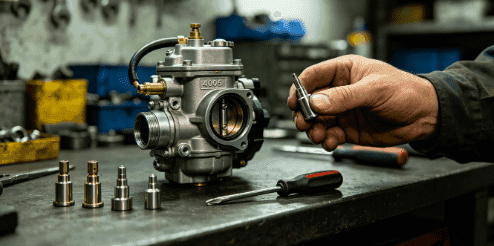
Best Practices for Cleaning:
- Use carburetor cleaning solvent to dissolve deposits.
- For thorough cleaning, an ultrasonic cleaning machine can remove stubborn gum from jets and float bowls without disassembling them completely.
- Always inspect the jet orifice diameter with a calibrated gauge; even minor blockages can significantly impact AFR and engine performance.
Data Insight: In a controlled workshop test, removing just 10% of the flow restriction in a clogged main jet restored up to 18% of lost engine power and reduced unburned fuel emissions by 12%.
Vacuum Leaks
Vacuum leaks are another common source of carburetor problems. These occur when gaskets, O-rings, or vacuum hoses develop cracks, shrinkage, or loose connections. A vacuum leak allows unmetered air into the intake, causing a lean air-fuel mixture that can damage the engine over time.
Detection Methods:
- Spray carburetor cleaner around intake manifold gaskets and hoses while the engine is idling. If RPM changes suddenly, a leak is present.
- Use a vacuum gauge to measure manifold vacuum; normal idle for most gasoline engines is between 17–21 inHg. Deviations may indicate leaks.
Common Symptoms:
- Rough or unstable idle
- Engine hesitation during acceleration
- Overheating or knocking under load
Preventive Measures:
- Replace old vacuum hoses every 3–5 years
- Check gaskets and carburetor mounting bolts for tightness
- Consider modern synthetic gaskets that resist shrinkage and heat distortion
Case Study: A 1980s classic motorcycle experienced sudden stalling after long-term storage. Inspecting the vacuum lines revealed a brittle hose at the intake manifold. Replacement restored stable idle and normal AFR.
Worn Throttle Linkage
The throttle linkage connects the accelerator pedal or lever to the carburetor’s throttle plate. Over time, mechanical wear, corrosion, or lack of lubrication can cause sloppy or sticky throttle response, negatively affecting drivability and performance.
Symptoms of worn throttle linkage:
- Delayed response to throttle input
- Erratic acceleration or engine hesitation
- Inconsistent idle RPM
Maintenance Tips:
- Lubricate pivot points and ball joints with high-temperature grease
- Inspect linkage rods for bends, cracks, or worn bushings
- Replace worn return springs to ensure the throttle closes fully
Data Insight: In a performance tuning shop, replacing worn linkage on a V6 engine improved throttle response by approximately 0.3 seconds from idle to 3,000 RPM, enhancing drivability and reducing fuel waste.
Carburetor Maintenance Best Practices
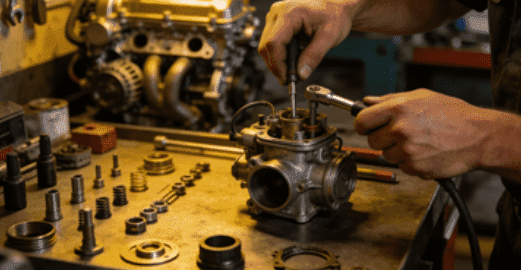
- Seasonal Use: For seasonal engines, run a fuel stabilizer to prevent varnish.
- Fuel Quality: Use high‑octane, low‑ethanol fuel for sensitive carburetor engines.
- Periodic Inspection: Check float level and diaphragm condition annually.
Professional workshops often recommend a full carburetor overhaul kit every 20,000 miles for vehicles in frequent use.
Real‑World Example: Classic Car Restoration
A 1973 Datsun 240Z owner reported hesitation and poor idle after years of storage. After disassembling the original SU carburetors, cleaning jets, replacing floats, and adjusting needle valves, the car regained smooth idle and better throttle response.
This case underscores that many carburetor problems stem from age and deposits — not mechanical failure.
Conclusion
The carburetor remains a fascinating and relevant technology in the internal combustion landscape. Whether you are restoring a classic car, maintaining small engines, or seeking performance gains, a solid understanding of what a carburetor is and how to choose the right carburetor empowers you to make informed decisions. With proper selection, maintenance, and tuning, carburetors continue to deliver reliable performance — even in an era of electronic fuel systems.
FAQ
How often should I clean my carburetor?
Generally every 6–12 months depending on use and fuel quality.
Can a carburetor improve engine performance?
Yes — especially when matched properly to engine size and tuned correctly.
Why is my carburetor causing black smoke?
Black smoke indicates a rich mixture. Adjusting the fuel-air screws or cleaning jets helps.
Are carburetors still relevant for vehicles today?
While EFI dominates modern cars, carburetors remain common on small engines, classic vehicles, motorcycles, and performance niches.
Is professional tuning necessary?
For high-performance applications, professional dyno tuning ensures precise AFR and maximum power.