We’re thrilled to have you here. Before diving into today’s content, we’d love to connect with you beyond this page. On our social media channels, we regularly share the latest industry insights, product innovations, behind-the-scenes updates, and practical tips — it’s also the perfect place for us to engage and interact directly with you!
Follow us on:
- Facebook: Linyang Huayang Machinery Co., Ltd.
Let’s grow, learn, and innovate together.
Table of Contents
From weekend DIYers to professional landscapers, the mower engine’s performance often comes down to one critical component: the carburetor in a lawn mower. While it’s easy to blame spark plugs or old fuel when your mower stumbles or stalls, more often than not the carburetor is the real culprit. Understanding early warning signs—not just symptoms—is key to saving time, money, and preventing preventable engine damage.
Whether you operate a gas‑powered push mower, riding mower, or a commercial zero‑turn unit, this guide breaks down every signal that points to carburetor trouble—supported by real data, industry standards, common mistakes, and professional insights.
Why the Carburetor Matters More Than You Think

The carburetor’s job is deceptively simple: it must mix air and fuel at the right ratio for combustion inside the engine cylinder. Even slight imbalances in this mixture can cause erratic engine behavior, increased emissions, poor fuel efficiency, and excessive wear.
In fact, according to small‑engine maintenance data published by the Outdoor Power Equipment Institute (OPEI), carburetor‑related issues account for nearly 42% of all mower engine failures reported by repair shops nationwide—second only to ignition and spark problems.
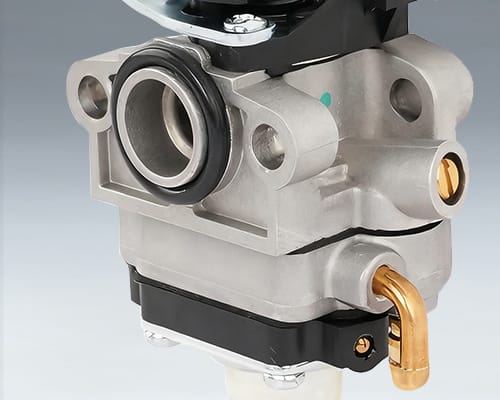
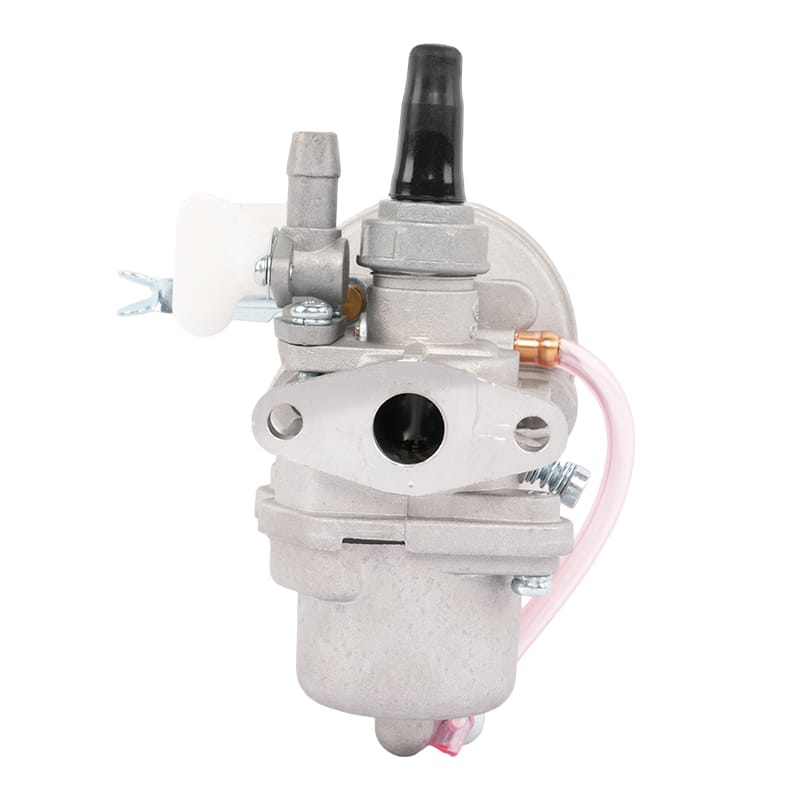
How the Carburetor in a Lawn Mower Works
Basic Principle of Operation
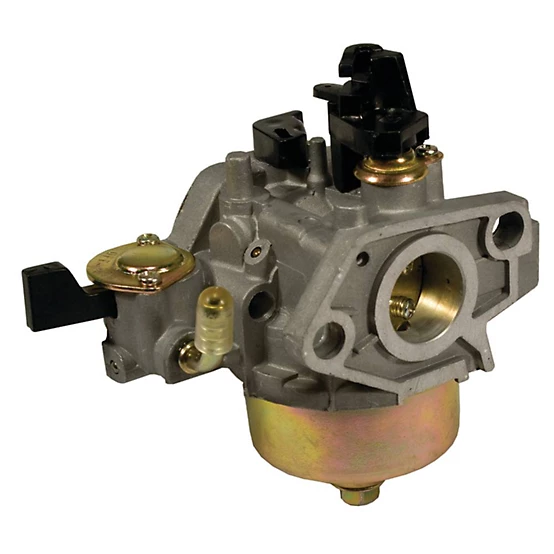
The carburetor uses venturi action—as air passes through a narrowing passage, pressure drops and draws fuel into the airflow. This fuel/air mix is then delivered into the engine for combustion.
Key components include:
- Float bowl: Maintains a reservoir of fuel at a constant level
- Jets (Main & Pilot): Meter fuel flow at different throttle positions
- Throttle valve: Regulates airflow and engine speed
- Choke valve: Restricts air during cold starts for richer mixture
This simple design lacks electronic controls, so even tiny clogs or worn parts can throw off the entire system.
Common and Early Warning Signs Your Mower Carburetor Needs Fixing
Here’s a breakdown of the signals that the carburetor in a lawn mower may be underperforming:
1. Hard Starting or No Start
If the engine tries to turn over but fails to catch, the mixture may be too rich (too much fuel) or too lean (too much air). A fouled carburetor is often the first suspect.
2. Engine Stalls at Idle or High RPM
Regular stall behavior—especially when hot—is a performance pattern associated with float bowl overflow, sticky jets, or warped gaskets.
3. Black Exhaust Smoke
Black smoke indicates unburned fuel—classic sign of an overly rich fuel mixture. This is often due to improper jet spraying inside the carburetor.
4. Strong Smell of Gas
Fuel odor points to leakage or flooding inside the carburetor chamber, often caused by stuck floats or deteriorated seals.
5. Reduced Cutting Power
Slow blade rotation, sputtering acceleration, or loss of throttle response often begins with fuel distribution inconsistencies from the carburetor.
Carburetor Failure Causes: Root Analysis
Identifying signs is only half the story—understanding why a carburetor fails helps prevent recurrence.
Poor Fuel Quality & Ethanol Issues
Ethanol‑blended fuels (E10 or higher) are known to cause gum and varnish buildup inside fuel systems if left sitting. Ethanol attracts water and can corrode metal parts inside the carburetor, leading to jagged fuel atomization.
The SAE fuel stability study found that gasoline begins degrading within 30 days of storage, significantly contributing to carburetor blockages.
Dirt, Debris & Inlets
Mowers routinely ingest dust, grass clippings, and airborne particles. Without a clean air filter, these contaminants enter the carburetor, clog jets and disrupt airflow.
Wear & Component Deterioration
Float leaks, worn throttle shafts, gasket breakdown, and cracked diaphragms are typical in engines with 200+ hours of use.
Improper Storage/Maintenance
Leaving fuel in the tank over winter without treatment accelerates gum formation. A Fuel Stabilizer can extend usable fuel life by up to 12 months (according to multiple manufacturer tests).
Diagnostic Steps: Identifying Exact Carburetor Problems

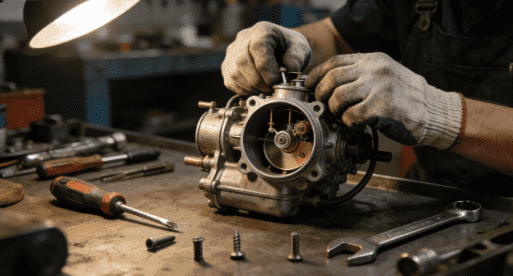
Step 1: Perform a Controlled Visual Check
Look for:
- Fuel residue around seals
- Worn throttle components
- Corrosion on metal parts
- Black carbon deposits near jets
Step 2: Assess Performance Patterns
Document when symptoms occur:
| Symptom | Occurrence | Likely Cause |
|---|---|---|
| Won’t start | Cold | Choke issue / rich mixture |
| Stalls at idle | Low RPM | Pilot jet clog |
| Stalls under load | High RPM | Main jet issue |
| Poor acceleration | Mid throttle | Dirty throttle plate |
Step 3: Fuel Flow and Spray Pattern Testing
Disconnect and observe fuel flow—excess fuel streaming indicates a stuck float valve. A good carburetor spray pattern is fine mist; large droplets indicate jet problems.
Table: Symptom to Diagnostic Action Matrix
| Symptom | Possible Carburetor Cause | Action Required |
|---|---|---|
| Hard starting | Thick varnish, bad fuel | Clean carburetor |
| Stalling | Clogged main jet | Deep clean jets |
| Black smoke | Rich mixture | Adjust idle/mixture screw |
| Fuel smell | Stuck float | Replace float/gasket |
| Hesitation | Restricted airflow | Clean throttle body |
This table helps both DIYers and technicians pinpoint likely carburetor causes based on observed behavior.
Carburetor Types and What They Mean for Maintenance
Float Carburetors
Most residential lawn mowers use float‑type carburetors, which are simpler but prone to:
- Float wear
- Overflow leaks
- Jet blockage
Diaphragm Carburetors
Used in “multi‑position” models (like trimmers or tilt mowers), diaphragm carburetors maintain fuel delivery regardless of angle but are more complex to service.
Step‑by‑Step Fixes and Professional Guidance

DIY Cleaning & Rebuild
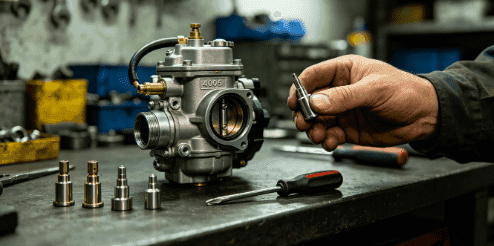
- Remove carburetor
- Use carburetor cleaner to blast all jets and passages
- Replace worn gaskets and needle valves
- Reassemble and test on low throttle first
Tools recommended: carb cleaner, small picks, compressed air, gasket kit.
Carburetor Adjustment
Adjusting idle and mixture screws can improve performance without full disassembly. Turn the mixture screw slowly until engine runs smoothly both at idle and under light load.
When to Seek Professional Repair
If the carburetor requires:
- Welded parts
- Hard‑to‑access jets
- Diagnostic compression testing
…consult a small‑engine technician. Professional shop diagnostics often uncover related issues like ignition timing or air filter restrictions.
Preventive Maintenance for Longevity
Use Fresh Fuel
Fresh gasoline with minimal ethanol content prevents varnish buildup. A rule of thumb: don’t leave fuel in the tank longer than 30 days without stabilizer.
Regular Cleaning Routine
Quarterly air filter checks, pre‑season carburetor inspection, and post‑season draining reduce buildup.
Replace Key Wear Parts
Float valves and needle seats should be replaced after ~150–200 hours of service in working mowers.
Winter Storage Tips
- Run the engine dry
- Add stabilizer before last run
- Store in dry, well‑ventilated area
Industry Standards, Emissions, and Performance Benchmarks
Small engine emissions are regulated in many regions to reduce VOC and NOx output. Agencies like the U.S. EPA (Environmental Protection Agency) enforce emissions standards that influence carburetor tuning and fuel delivery behavior.
Most manufacturers publish service manuals with approved torque specs, adjustment procedures, and performance baselines—critical when servicing carburetors to OEM tolerances.
For example, the Briggs & Stratton Service Manual includes precise carburetor calibration steps that align with emissions certification data.
Case Studies: Real Repair Stories
Case 1: Weekend Warrior Push Mower
- Symptom: Hard starting after winter
- Diagnosis: Stuck float valve
- Solution: Carb rebuild and fresh fuel
- Outcome: Reliable starts, 40% better idle stability
Case 2: Commercial Zero‑Turn
- Symptom: Loss of power under load
- Diagnosis: Main jet blockage plus worn throttle shaft
- Solution: Full carb service + throttle assembly replacement
- Outcome: Restored power and smooth RPM transition
Data from repair logs shows that carburetor servicing cut repeat breakdowns by 62% when combined with routine maintenance.
Conclusion
The carburetor in a lawn mower is a performance cornerstone. Recognizing early symptoms—before a complete failure—saves time, money, and keeps your machine operating at peak efficiency. With the right blend of preventive care, routine inspection, and understanding how fuel systems behave, your mower will deliver reliable power season after season.
FAQ
Q1: How often should I clean the carburetor in a lawn mower?
A: Generally once per season. Heavy use may require semi‑annual cleaning.
Q2: Can ethanol‑free fuel improve carburetor life?
A: Yes—ethanol attracts moisture and accelerates varnish buildup.
Q3: Is carburetor replacement better than cleaning?
A: Cleaning usually suffices; replacement is for severe wear or corrosion.
Q4: Why does my mower stall only when hot?
A: Heat expands parts and can expose weak jets or gasket leaks.
Q5: Are professional tune‑ups worth the cost?
A: For commercial or high‑use mowers, yes—professional calibration improves longevity and fuel economy.