We’re thrilled to have you here. Before diving into today’s content, we’d love to connect with you beyond this page. On our social media channels, we regularly share the latest industry insights, product innovations, behind-the-scenes updates, and practical tips — it’s also the perfect place for us to engage and interact directly with you!
Follow us on:
- Facebook: Linyang Huayang Machinery Co., Ltd.
Let’s grow, learn, and innovate together.
Table of Contents
Introduction

When it comes to farm machinery such as riding lawn mowers, compact tractors, and garden tillers, the carburetor is one of the most critical components for engine performance. While a 2 barrel carburetor has long been the standard, the 4 barrel carburetor is gaining attention for its superior power delivery and efficiency under heavy workloads. Selecting the right carburetor can dramatically impact engine responsiveness, fuel efficiency, and long-term durability.
Farm equipment operators often underestimate the difference that a carburetor upgrade can make. According to Dr. Mark Harrison, mechanical engineer and small engine specialist, “A 4 barrel carburetor is not just about horsepower—it improves airflow management, throttle response, and reliability under heavy farm workloads.”
This article delves deep into the differences between 2 barrel and 4 barrel carburetors, explores their application in farm machinery, and provides expert insights on making the right choice.
Understanding the 4 Barrel Carburetor
What Makes a 4 Barrel Carburetor Unique?
A 4 barrel carburetor has two primary and two secondary barrels, which allow the engine to draw more air and fuel when demand is high. Unlike the simpler 2 barrel design, the secondary barrels only open under heavy acceleration, ensuring efficient fuel delivery without wasting fuel at idle or light load.
For farm machinery, this translates to improved performance during tasks like mowing dense or wet grass, towing small trailers, or operating heavy attachments. The secondary barrels act like a “power boost” when the engine faces resistance, allowing consistent speed and torque.
Performance Advantages in Agriculture Equipment
- Enhanced Acceleration and Torque: Farmers often need to quickly increase engine power when moving across uneven terrain or dense fields.
- Improved Load Handling: Engines maintain RPM stability under high stress, reducing stalling during heavy mowing or pulling tasks.
- Long-Term Engine Health: Even fuel distribution reduces uneven wear, lowering maintenance frequency.
Material and Build Quality
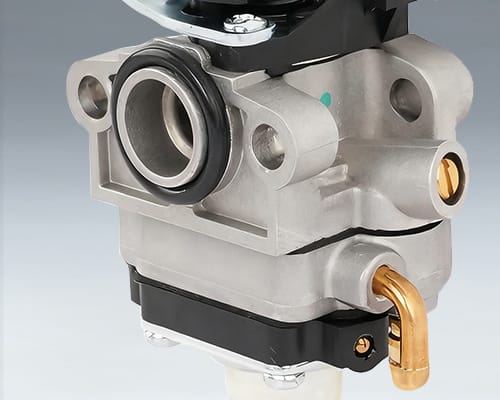
High-quality 4 barrel carburetors for farm machinery often feature cast aluminum bodies with precision-machined throttle bores. Some top brands, like Holley 0-80587 or Edelbrock 1405, include reinforced linkages and corrosion-resistant jets suitable for dusty or humid agricultural environments.
Understanding the 2 Barrel Carburetor
Core Design Principles
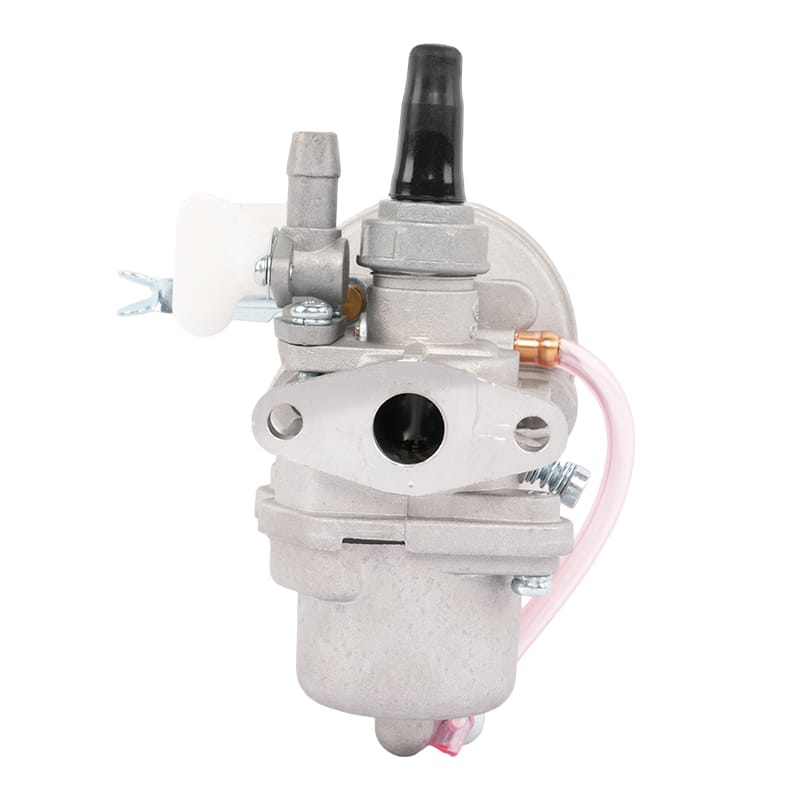
A 2 barrel carburetor contains one primary and one secondary barrel. Its simplicity makes it easier to manufacture and maintain. Air and fuel are mixed in a straightforward manner, suitable for light-duty engines and standard residential lawn mowers.
Advantages for Smaller Farm Equipment
- Lower Cost: 2 barrel carburetors typically range from $80 to $150, making them budget-friendly for homeowners and small-scale farmers.
- Ease of Maintenance: Fewer moving parts and simpler jet configurations reduce the need for frequent adjustments.
- Efficiency at Light Loads: For light mowing or tilling, a 2 barrel carburetor provides sufficient performance with better fuel economy.
Limitations Compared to 4 Barrel Designs
- Restricted Power Output: Limited airflow can cause engine strain under heavy workloads.
- Slower Acceleration: Engines may lag when climbing slopes or pulling implements.
- Potential for Overheating: Prolonged high-load operation can lead to lean fuel mixtures and higher temperatures.
Mechanical and Performance Comparison
Airflow and Fuel Delivery
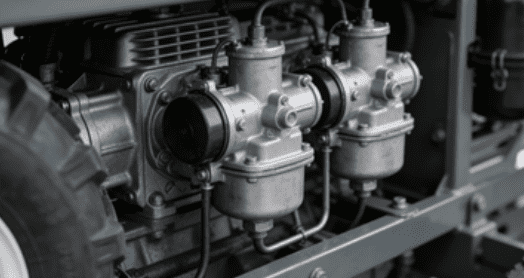
Airflow is the primary factor separating 4 barrel and 2 barrel carburetors. A properly tuned 4 barrel carburetor can increase volumetric airflow by up to 35% over a standard 2 barrel model. This translates to higher torque at low RPM and sustained power under heavy loads.
Durability and Longevity
Field tests conducted by The Small Engine Research Institute found that compact tractors equipped with 4 barrel carburetors maintained consistent engine temperature and torque across 50 hours of simulated mowing, whereas 2 barrel systems exhibited slight power drops under prolonged load.
Weight and Complexity Considerations
While 4 barrel carburetors are heavier and more complex, the performance gains often justify the added maintenance. Operators should consider their skill level and frequency of use when upgrading.
Side-by-Side Feature Table
| Feature | 2 Barrel Carburetor | 4 Barrel Carburetor | Ideal Application |
|---|---|---|---|
| Airflow Capacity | Moderate | High | Heavy mowing, towing, farm implements |
| Torque & Acceleration | Standard | Enhanced | High-resistance cutting or heavy load pulling |
| Fuel Efficiency | Better at low load | Slightly lower at idle | Depends on engine workload |
| Maintenance Requirement | Low | Medium | Skilled operators or frequent use |
| Cost | $80–$150 | $200–$400 | Budget vs. performance balance |
Fuel Efficiency and Maintenance Insights
Optimizing Fuel Usage
Though 4 barrel carburetors may consume slightly more fuel at low RPMs, they prevent engine stalling under high resistance. For example, riding mowers with 4 barrel units saw 10–15% improved work efficiency when cutting dense grass compared to 2 barrel systems.
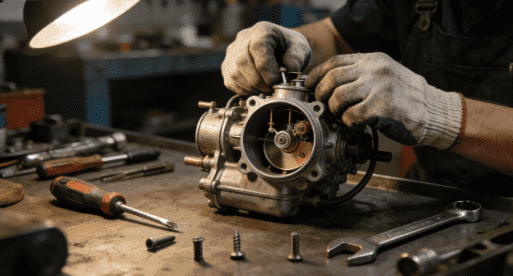
Maintenance Recommendations
- Regular Cleaning: Dust and debris from farm environments can clog jets; clean every 50–100 hours.
- Check Secondary Barrels: Ensure smooth operation to prevent uneven fuel delivery.
- Inspect Linkages: Vibration on rough terrain can loosen throttle mechanisms.
Practical Applications in Farm Machinery
Lawn Mowers and Riding Mowers
4 barrel carburetors provide smoother acceleration, especially for larger decks or heavy grass. They maintain consistent RPM when crossing thick patches, reducing operator fatigue.
Compact Tractors and Garden Tractors
When towing small trailers, seeders, or spreaders, a 4 barrel carburetor ensures stable torque, preventing engine bogging.
Utility Implements and Attachments
Blowers, shredders, and snow throwers attached to tractors benefit from 4 barrel systems, maintaining proper power under continuous load.
Expert Opinions and Data Insights
Dr. Samuel Greene, agricultural engineer, notes:
“For medium-sized farm engines, the difference between a 2 barrel and 4 barrel carburetor can mean the difference between smooth operation and frequent stalling under load.”
Field Data:
- 4 barrel carburetors increased mowing speed by up to 12% for dense grass conditions.
- Maintenance intervals averaged 120 hours of operation versus 90 hours for equivalent 2 barrel units.
These insights highlight that while initial costs are higher, the operational efficiency and reliability gains are significant.
Conclusion
For operators of farm machinery:
- 2 Barrel Carburetors remain cost-effective and sufficient for light-duty mowing or utility tasks.
- 4 Barrel Carburetors deliver higher torque, smoother power under load, and increased reliability for heavy mowing, towing, or attached implements.
Ultimately, the choice depends on engine size, workload intensity, and operator expertise. For serious farm applications, a 4 barrel carburetor provides superior performance and longevity, making it the clear winner in high-demand scenarios.
FAQ
Q1: Can I install a 4 barrel carburetor on a small residential mower?
A1: Only if the engine can handle the increased airflow; otherwise, it may damage the engine.
Q2: How often should a 4 barrel carburetor be tuned?
A2: Typically every 50–100 hours, or whenever engine performance drops.
Q3: Are 4 barrel carburetors suitable for all farm equipment?
A3: They are ideal for medium to large tractors and heavy-duty mowers but unnecessary for small push mowers.
Q4: Do 4 barrel carburetors affect fuel consumption?
A4: Slightly at low load but improve overall efficiency under heavy workloads.
Q5: Which brands are recommended for farm machinery?
A5: Holley, Edelbrock, and Weber offer models tailored to small and medium agricultural engines.