We’re thrilled to have you here. Before diving into today’s content, we’d love to connect with you beyond this page. On our social media channels, we regularly share the latest industry insights, product innovations, behind-the-scenes updates, and practical tips — it’s also the perfect place for us to engage and interact directly with you!
Follow us on:
- Facebook: Linyang Huayang Machinery Co., Ltd.
Let’s grow, learn, and innovate together
Table of Contents
- A lawn mower carburetor repair kit can restore normal fuel delivery when gaskets, diaphragms, seals, needles, or other serviceable parts are worn.
- Repair kits are most useful when the carburetor body, throttle shaft, fuel passages, and mounting surfaces remain in usable condition.
- Hard starting, unstable idle, fuel leakage, surging, and stalling may indicate carburetor trouble, but ignition and airflow problems should be checked first.
- Compatibility must be confirmed through the engine model, carburetor number, gasket shape, diaphragm layout, fuel inlet position, and mounting dimensions.
- Cleaning is usually appropriate for deposits and minor blockages, while rebuilding addresses worn internal components.
- Severe corrosion, physical damage, enlarged passages, or unavailable matching parts may make complete carburetor replacement more practical.
- Commercial buyers should evaluate material quality, kit consistency, packaging, documentation, order quantities, and supplier testing capabilities.
When a lawn mower becomes difficult to start, runs unevenly, leaks fuel, or stalls under load, the carburetor is often one of the first components inspected. Some problems can be corrected with cleaning, while others require new internal components.
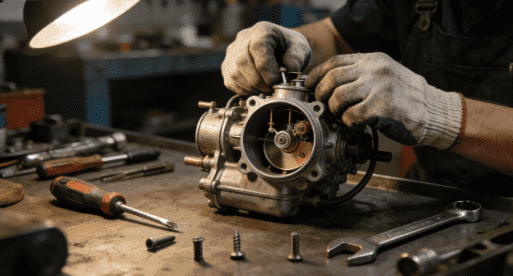
A properly matched lawn mower carburetor repair kit allows technicians and experienced equipment owners to replace selected wear parts without discarding the entire carburetor. This can be a practical solution when the main housing and mechanical components are still in good condition.
However, not every kit fits every mower, and not every carburetor should be rebuilt. This guide explains how repair kits work, what they normally contain, how to check compatibility, and when complete replacement may be the better purchasing decision.
What Is a Lawn Mower Carburetor Repair Kit?
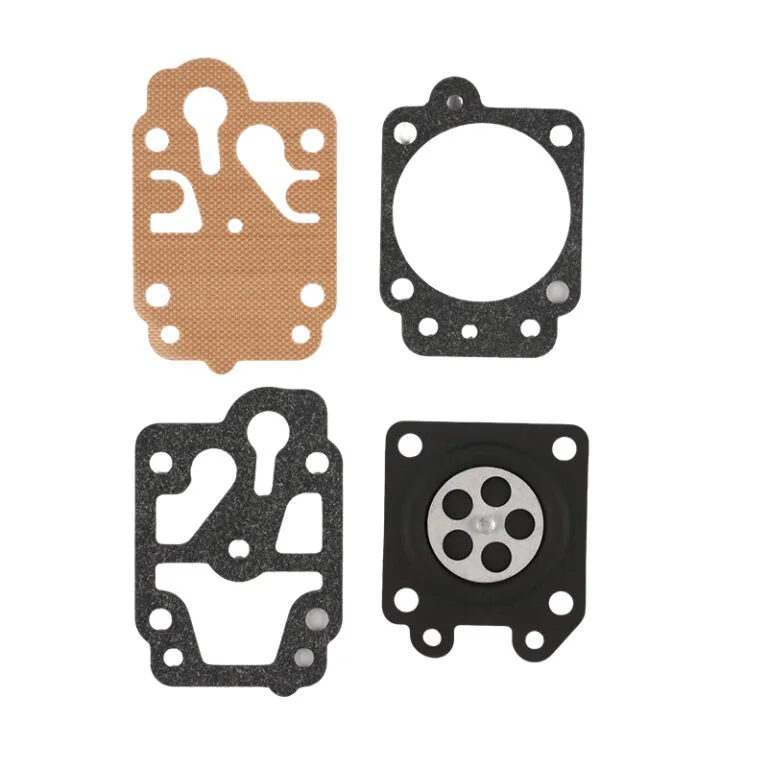
A lawn mower carburetor repair kit is a collection of replacement components used to service a small-engine carburetor. The exact contents depend on whether the carburetor uses a float-bowl or diaphragm-type fuel system.
Some kits contain only gaskets and seals. More complete overhaul kits may also include diaphragms, metering needles, inlet needles, seats, O-rings, springs, screens, welch plugs, screws, or primer components.
What Does the Kit Actually Repair?
The kit does not replace the entire aluminum or composite carburetor body. Instead, it replaces selected components that control fuel sealing, pumping, metering, or internal pressure.
This means a repair kit is most effective when the carburetor housing remains structurally sound and its calibrated passages have not been permanently damaged.
Gaskets and Seals
Gaskets create sealed connections between the carburetor body, fuel bowl, metering sections, intake system, and engine.
A hardened, torn, or incorrectly positioned gasket may allow fuel leakage or unwanted air to enter the engine. This can create an unstable fuel-air mixture even when the jets are clean.
Diaphragms
A diaphragm is a flexible component used in many compact small-engine carburetors to pump or regulate fuel.
Age, heat, fuel exposure, and storage conditions can cause the material to stiffen, deform, or crack. A compatible replacement diaphragm may restore fuel movement and throttle response.
Needle and Seat Components
The inlet needle and seat regulate fuel entering the carburetor.
Wear, contamination, or a damaged needle tip may prevent proper sealing. The result can be flooding, leakage, difficult hot starting, or an excessively rich mixture.
O-Rings and Small Seals
O-rings are used around screws, fuel passages, fittings, and adjustable components.
Even a small damaged seal can create an air or fuel leak. Because these parts vary significantly in diameter, thickness, and material, approximate visual matching is not enough.
When Do You Need a Lawn Mower Carburetor Repair Kit?
A mower performance problem does not automatically mean the carburetor needs rebuilding.
Briggs & Stratton advises checking other maintenance items such as the air filter, fuel condition, spark plug, oil, and control connections when diagnosing small-engine performance problems. Dirt, varnish, and fuel deposits can also block carburetor passages and reduce or completely stop engine operation.
The Lawn Mower Is Hard to Start
Hard starting can result from restricted fuel flow, a dried diaphragm, an incorrect fuel level, a leaking gasket, or stale gasoline.
It can also be caused by a damaged spark plug, weak ignition, low compression, a blocked air filter, or incorrect starting procedures. These possibilities should be checked before ordering a lawn mower carburetor repair kit.
The Engine Starts but Quickly Stalls
An engine that starts briefly and then stops may not be receiving fuel through the idle or main metering circuit.
A blocked jet may require cleaning, while a failed diaphragm, damaged seal, or sticking inlet needle may require replacement parts.
The Engine Surges at a Steady Speed
Surging occurs when engine speed repeatedly rises and falls without deliberate throttle movement.
Possible causes include a partially blocked passage, air leakage, inconsistent fuel delivery, governor problems, or a lean mixture. Replacing gaskets without cleaning the affected passage may not solve the problem.
Fuel Leaks From the Carburetor
Visible fuel leakage requires immediate attention.
A leaking carburetor may have a contaminated inlet needle, damaged seat, high fuel level, cracked fuel line, loose bowl, failed gasket, or worn diaphragm. Do not operate the mower until the source of the leak has been identified and corrected.
The Mower Runs Only With the Choke On
An engine that continues running only when the choke is partially closed is commonly receiving too little fuel or too much unmetered air.
Cleaning may remove a blockage, but a new gasket, diaphragm, or seal may be necessary when worn components are causing the lean condition.
Cleaning vs Repair Kit vs Complete Replacement
Before purchasing parts, determine whether the carburetor needs cleaning, rebuilding, or full replacement.
| Service Option | Best Used When | Main Advantage | Main Limitation |
|---|---|---|---|
| External cleaning | Dirt affects linkage or exterior surfaces | Fast and inexpensive | Does not clear deep internal blockages |
| Internal cleaning | Jets or fuel passages contain deposits | Retains original calibrated components | Cannot restore worn seals or diaphragms |
| Carburetor repair kit | Serviceable internal parts are worn | Reuses the original carburetor body | Requires exact compatibility |
| Complete replacement | Body is damaged or badly corroded | Faster than a complex rebuild | Quality and calibration vary by supplier |
When Is Cleaning Enough?
Cleaning may be sufficient when the carburetor body is undamaged and the problem is caused by dirt, varnish, or a blocked passage.
Briggs & Stratton recommends inspecting the air filter and carburetor connections and using appropriate carburetor cleaner to remove deposits. The company also warns users to read the equipment manual and follow its safety instructions before servicing the engine.
A cleaner should loosen deposits rather than replace mechanical probing with hard steel objects. Forcing an oversized wire or drill bit through a calibrated jet can enlarge the opening and permanently change fuel delivery.
When Is a Lawn Mower Carburetor Repair Kit Better?
A lawn mower carburetor repair kit is a logical option when cleaning reveals worn but replaceable parts.
Typical examples include:
- A flattened bowl gasket
- A stiff metering diaphragm
- A damaged primer diaphragm
- A leaking inlet needle
- Cracked O-rings
- A deteriorated pump gasket
- Worn seals around adjustment screws
- A damaged filter screen
The original carburetor body can then be cleaned, inspected, and reassembled with correctly matched components.
When Should the Whole Carburetor Be Replaced?
Complete replacement may be more practical when the carburetor has severe oxidation, cracks, warped sealing surfaces, damaged threads, excessive throttle-shaft wear, or missing non-serviceable components.
Replacement may also be preferable when the correct lawn mower carburetor repair kit cannot be identified confidently.
Float Carburetor vs Diaphragm Carburetor Repair Kits
Lawn mower carburetors do not all use the same fuel-control design. Identifying the carburetor type is essential because float and diaphragm kits contain different components.
Float-Bowl Carburetor
A float-bowl carburetor stores a small amount of fuel in a bowl.
As fuel level changes, a float moves the inlet needle to regulate additional fuel entering the bowl. These carburetors are common on many four-stroke walk-behind and riding mower engines.
Typical Float-Carburetor Kit Parts
A float-type lawn mower carburetor repair kit may contain:
- Bowl gasket
- Float needle
- Needle seat
- Bowl washer
- O-rings
- Main-jet seal
- Mixture-screw seal
- Float pin
- Welch plugs
The float itself may or may not be included.
Diaphragm Carburetor
A diaphragm carburetor uses flexible membranes to pump, meter, or regulate fuel.
This design is widely used in portable garden equipment and other small-engine applications where compact construction or operation at changing angles is important.
Typical Diaphragm Kit Parts
A diaphragm repair kit may include:
- Metering diaphragm
- Pump diaphragm
- Diaphragm gaskets
- Fuel screen
- Metering needle
- Lever
- Spring
- O-rings
- Primer components
The order in which the diaphragm and gasket are installed is important. Reversing them can change chamber movement and prevent the carburetor from operating correctly.
Can One Kit Fit Both Types?
No. A diaphragm kit cannot rebuild a conventional float-bowl carburetor, and a float-bowl gasket set cannot service a diaphragm metering system.
Even two carburetors of the same general type may require different kits. Compatibility should be verified by exact numbers and dimensions rather than by mower appearance.
How Do I Find the Correct Lawn Mower Carburetor Repair Kit?
The most common purchasing error is choosing a kit according to the lawn mower’s brand name alone.
A mower manufacturer may use several engine families over different production years. Those engines may use different carburetors even when the mower deck and exterior design appear similar.
Start With the Engine Model
Locate the engine identification information before removing the carburetor.
Depending on the manufacturer, the information may include:
- Engine model
- Engine type
- Engine code
- Serial number
- Family number
- Production date
Use the engine manufacturer’s official parts lookup or service documentation where available.
Find the Carburetor Number
Some carburetors have a model, casting, stamping, or identification number on the body.
Record the complete number before cleaning the housing because solvent, brushing, or corrosion removal can make faint markings more difficult to read.
Compare the Old Parts
Place the old components beside the proposed lawn mower carburetor repair kit and compare them carefully.
Check the following:
- Gasket outline
- Screw-hole locations
- Diaphragm port locations
- Needle length
- Needle-tip material
- Spring length
- O-ring dimensions
- Fuel-screen diameter
- Primer shape
- Bowl-gasket profile
A single misplaced hole can prevent fuel or impulse pressure from reaching the correct passage.
Measure Important Dimensions
When identification numbers are missing, accurate measurements may help a manufacturer or supplier determine compatibility.
Useful measurements include:
- Intake-bore diameter
- Mounting-hole spacing
- Bowl diameter
- Fuel-inlet diameter
- Needle length
- Diaphragm width
- Screw spacing
- Gasket thickness
- Primer-bulb diameter
Measurements should support model identification, not replace it entirely.
Ask for a Compatibility Confirmation
Commercial buyers, repair shops, and distributors should provide the supplier with engine numbers, carburetor numbers, clear photographs, and dimensional drawings.
This reduces returns and prevents a visually similar lawn mower carburetor repair kit from being used in the wrong metering system.
What Should a Good Carburetor Repair Kit Include?

There is no universal parts list because carburetor designs vary.
A good kit is not necessarily the one with the largest number of pieces. It is the kit containing the correct components, materials, and dimensions for the intended carburetor.
Fuel-Resistant Materials
Gaskets, O-rings, and diaphragms are continuously exposed to gasoline and fuel vapors.
Their materials must retain flexibility, sealing performance, and dimensional stability under the fuel conditions specified by the equipment manufacturer.
Precisely Cut Passages
Small holes in a diaphragm or gasket may serve fuel, vacuum, pulse, or atmospheric circuits.
Poor cutting accuracy, torn edges, or incorrect hole placement can affect engine starting, idle stability, acceleration, and load response.
Correct Spring and Needle Specifications
Metering springs and needles may look interchangeable but have different dimensions and operating characteristics.
A spring with the wrong rate or a needle with the wrong tip can alter fuel pressure control and metering behavior.
Clear Product Identification
A professional lawn mower carburetor repair kit should be identified by compatible carburetor or engine references.
Bulk packaging should also preserve lot numbers, product codes, quantities, and inspection information.
How to Use a Lawn Mower Carburetor Repair Kit
The exact overhaul procedure depends on the mower, engine, and carburetor model. Always follow the official service manual for the specific equipment.
Step 1: Prepare the Work Area
Work in a clean and well-ventilated area away from sparks, flames, heaters, cigarettes, and other ignition sources.
Allow the engine to cool, disconnect the spark-plug lead, shut off the fuel supply, and safely drain fuel when the service procedure requires it.
Step 2: Photograph the Original Assembly
Take clear photographs before disconnecting the fuel line, choke linkage, governor linkage, throttle spring, or primer connections.
These images provide a useful reference during reassembly, particularly when several small linkages are positioned close together.
Step 3: Clean Around the Carburetor
Remove loose grass, dust, and debris before opening the fuel system.
This prevents contamination from falling into the intake port, fuel bowl, metering chamber, or small internal passages.
Step 4: Remove the Carburetor Carefully
Disconnect the carburetor without stretching springs, bending linkages, or damaging plastic fittings.
Inspect the intake gasket and insulator during removal. An air leak between the carburetor and engine can produce symptoms similar to an internal carburetor problem.
Step 5: Organize the Components
Place screws, springs, plates, diaphragms, needles, and gaskets in their removal order.
Do not assume every part in a universal-style kit belongs in the carburetor. Some kits contain alternatives for several closely related models.
Step 6: Clean the Metal Passages
Use an appropriate carburetor-cleaning product according to its label and the equipment manufacturer’s instructions.
Briggs & Stratton explains that main fuel jets can become blocked by dirt, varnish, and gasoline deposits and that carburetor cleaner and compressed air can be used to remove loosened debris.
Wear appropriate eye protection and avoid directing solvent or compressed air toward yourself or other people.
Step 7: Inspect the Carburetor Body
Look for:
- Cracks
- Corrosion
- Warped surfaces
- Damaged threads
- Loose fittings
- Enlarged holes
- Throttle-shaft movement
- Choke-plate binding
- Worn needle seating areas
Installing a lawn mower carburetor repair kit in a damaged housing may produce only a temporary or incomplete repair.
Step 8: Install the New Components
Match each new component to the old part before installation.
Confirm diaphragm and gasket order, spring position, needle orientation, screen placement, O-ring location, and screw type. Tighten fasteners evenly without crushing gaskets or distorting covers.
Step 9: Reinstall and Test
Reconnect the fuel line, control linkages, air-cleaner assembly, primer components, and mounting hardware.
After adding fuel, inspect for leakage before starting. Operate the engine in a safe outdoor area and check starting, idle, acceleration, load response, choke operation, and governor behavior.
Common Repair Kit Installation Mistakes
Ordering by Mower Brand Only
The mower name does not always identify the engine or carburetor.
Always use the engine and carburetor information when selecting a lawn mower carburetor repair kit.
Installing Old and New Parts Together
Reusing one hardened gasket while replacing the adjacent diaphragm may create an uneven seal.
When a matched diaphragm-and-gasket pair is supplied, install the pair according to the carburetor’s assembly specification.
Reversing the Diaphragm and Gasket
The diaphragm and gasket may appear to fit in either order, but their sequence affects chamber clearance and pressure movement.
Use the original assembly, service diagram, or supplier instructions as the reference.
Enlarging a Jet During Cleaning
A jet is a calibrated metering component.
Using a drill, hard steel wire, or unsuitable cleaning tool can enlarge it and make the engine run excessively rich. Compressed air and approved cleaning methods are safer choices.
Overtightening Screws
Overtightening may distort a cover, tear a gasket, strip a thread, or prevent a diaphragm from moving freely.
Tighten small fasteners evenly and follow the service specification where torque values are provided.
Ignoring the Fuel Tank and Line
A newly rebuilt carburetor can quickly become blocked again when contaminated fuel remains in the tank or deteriorated fuel lines continue releasing debris.
Inspect the complete fuel path, including the tank, cap vent, filter, line, shutoff valve, and fuel inlet.
Adjusting Factory-Set Carburetors
Some modern carburetors are factory calibrated to meet emissions requirements and are not designed for unrestricted adjustment.
Briggs & Stratton states that owners should not tamper with emission-control systems, while routine maintenance and authorized rebuilding remain acceptable. Follow the applicable engine manual and local regulations.
Repair Kit vs New Carburetor: Which Is Better?
Choose a Repair Kit When:
- The carburetor body is structurally sound.
- The original unit previously matched the engine correctly.
- The fault is limited to serviceable internal parts.
- A model-specific kit is available.
- The carburetor can be cleaned thoroughly.
- Original calibration is worth preserving.
- Skilled labor and service information are available.
A lawn mower carburetor repair kit can be especially useful for professional repair shops servicing repeat engine models.
Choose a New Carburetor When:
- The housing is cracked or severely corroded.
- The throttle shaft or bore is excessively worn.
- Threads or mounting surfaces are damaged.
- The carburetor is incomplete.
- The original model cannot be identified.
- A compatible repair kit is unavailable.
- Repair time exceeds the practical value of the unit.
A replacement carburetor must still be matched carefully. A low-cost unit with incorrect bore size, jetting, linkage geometry, or choke design can introduce new performance problems.
How Should Commercial Buyers Evaluate Repair Kit Suppliers?
Repair shops, distributors, garden-equipment brands, and importers usually require more than a single functional sample.
They need repeatable compatibility and consistent production quality across multiple orders.
Model Coverage
Review whether the supplier supports the engine and carburetor families commonly used in your market.
A wide product list is useful only when individual kits are clearly identified and technically matched.
Dimensional Consistency
Gasket holes, diaphragm thickness, spring dimensions, needle geometry, and seal sizes should remain consistent between production batches.
Small dimensional changes can affect fuel flow, sealing, and assembly.
Packaging and Identification
Each lawn mower carburetor repair kit should have a clear product number and compatibility reference.
Wholesale packaging may also require:
- Barcodes
- Private labels
- Multilingual instructions
- Batch numbers
- Quantity markings
- Individual sealed bags
- Custom cartons
Sample Testing
Before a bulk purchase, test the kit on the intended carburetor and engine.
Evaluate:
- Cold starting
- Warm starting
- Idle stability
- Acceleration
- Full-load operation
- Fuel leakage
- Hot restart
- Extended running
- Storage restart
Technical Communication
A capable supplier should be able to discuss engine models, carburetor structures, measurements, material requirements, packaging, and application differences.
Photographs alone may not be sufficient for reliable model matching.
Related QIYANG Carburetor Products
QIYANG manufactures carburetors and related components for general-purpose small gasoline engines used in lawn mowers and other garden, agricultural, and construction equipment. Its website states that finished carburetors are checked for air and fuel leakage and calibrated for fuel flow.
QY-70101 Carburetor Repair Kit
The QIYANG QY-70101 Carburetor Repair Kit is designed for compatible diaphragm-type carburetors.
The kit may include diaphragms, gaskets, O-rings, screws, and other service parts. Buyers should confirm the exact carburetor model before treating it as a lawn mower carburetor repair kit.
36F-2 Engine Carburetor
The QIYANG QY-10309 36F-2 Engine Carburetor is listed for several small-engine applications, including petrol lawn mowers.
It is designed for an external manual-pump configuration, so its interface and control arrangement should be checked against the intended engine.
G45 Engine Copper Piston Carburetor
The QIYANG QY-10401.1 G45 Engine Carburetor is another model listed for petrol lawn mower and garden-equipment applications.
This is a complete carburetor rather than a universal repair kit. Confirm the engine model, intake diameter, and control configuration before ordering.
Lawn Mower Carburetor Selection Guide
For more information about choosing between carburetor structures and replacement options, read QIYANG’s guide to choosing the right carburetor for a lawn mower.
Users experiencing uncertain symptoms can also review the common signs that a lawn mower carburetor needs repair.
OEM and Wholesale Inquiries
Commercial buyers can review QIYANG’s small-engine carburetor manufacturing capabilities or submit engine numbers, carburetor samples, drawings, and order requirements through the contact page.
FAQ About Lawn Mower Carburetor Repair Kits
How do I know which lawn mower carburetor repair kit I need?
Find the engine model, type, code, and carburetor identification number.
Compare the old gaskets, diaphragms, needles, seals, and hole positions with the proposed kit. Ask the supplier to confirm compatibility when the identification is unclear.
Can I rebuild a lawn mower carburetor myself?
A person with basic small-engine repair experience may be able to rebuild a simple carburetor using the correct service information and tools.
Fuel is flammable, and incorrect assembly may cause leakage or unsafe operation. Consult the mower manual and use a qualified technician when the procedure is uncertain.
What parts usually come in a lawn mower carburetor repair kit?
Common parts include gaskets, diaphragms, O-rings, inlet needles, seats, springs, screens, seals, and small fasteners.
Contents vary by carburetor design, so check the product list rather than assuming every kit contains a float, jet, or primer bulb.
Will a carburetor repair kit fix a mower that will not start?
It may help when worn carburetor components are preventing correct fuel delivery.
A no-start condition can also result from stale fuel, a closed fuel valve, a dirty air filter, ignition trouble, low compression, incorrect oil level, or a safety-switch problem.
Should I clean the carburetor before installing the repair kit?
Yes. New seals and diaphragms cannot correct fuel passages that remain blocked by varnish or debris.
Clean the carburetor according to the engine manufacturer’s instructions and inspect the housing before installing new parts.
Is it better to rebuild or replace a lawn mower carburetor?
Rebuilding is usually reasonable when the original body is undamaged and a correct kit is available.
Replacement is generally more practical when the housing is cracked, heavily corroded, badly worn, incomplete, or difficult to identify.
Why does my mower still surge after installing a repair kit?
Possible causes include a remaining blocked passage, an intake air leak, incorrect gasket order, contaminated fuel, governor problems, restricted fuel flow, or an unsuitable kit.
Recheck the entire fuel and air system instead of repeatedly adjusting one carburetor component.
Can a universal carburetor kit fit different lawn mowers?
Some kits contain parts for several related carburetor models, but this does not make them universally compatible.
Use only the components specified for the exact carburetor. Installing a visually similar needle, spring, gasket, or diaphragm can change fuel delivery.
How often should a lawn mower carburetor be rebuilt?
There is no fixed rebuilding interval for every mower.
Rebuild the carburetor when diagnosis confirms worn serviceable components. Routine fuel management, filtration, cleaning, and proper storage may reduce the need for repeated repairs.
Why does gasoline damage carburetor gaskets and diaphragms?
Heat, age, oxidation products, contamination, and prolonged fuel exposure can gradually change the flexibility and dimensions of sealing materials.
Use components designed for the carburetor and the fuel specifications stated by the engine manufacturer.
Can I use carburetor cleaner on rubber diaphragms?
Strong solvent may damage some rubber, plastic, coated, or composite parts.
Remove sensitive components before cleaning unless the product label and equipment instructions clearly state that the cleaner is compatible with them.
What information should I send a repair kit supplier?
Provide the engine model, carburetor number, application, clear photographs, old-part dimensions, gasket layout, required quantity, and packaging needs.
For large orders, sending an original sample may help the supplier complete a more accurate compatibility review.
Conclusion
A lawn mower carburetor repair kit can be an effective way to restore a carburetor with worn gaskets, diaphragms, needles, seals, or related service parts.
The repair is most likely to succeed when the carburetor body is undamaged, internal passages are thoroughly cleaned, and every replacement component is matched to the correct model.
Before purchasing, identify the engine and carburetor, compare the existing parts, and determine whether the actual problem requires cleaning, rebuilding, or complete replacement.
For distributors, repair shops, and garden-equipment manufacturers, supplier consistency is just as important as initial fit. Accurate components, fuel-resistant materials, clear model identification, reliable packaging, and sample testing all help turn a basic lawn mower carburetor repair kit into a dependable long-term service solution.