We’re thrilled to have you here. Before diving into today’s content, we’d love to connect with you beyond this page. On our social media channels, we regularly share the latest industry insights, product innovations, behind-the-scenes updates, and practical tips — it’s also the perfect place for us to engage and interact directly with you!
Follow us on:
- Facebook: Linyang Huayang Machinery Co., Ltd.
Let’s grow, learn, and innovate together
Table of Contents
A diaphragm carburetor and a float carburetor perform the same basic task: they meter fuel into the incoming air so a gasoline engine can start, accelerate and operate under load. However, they control their fuel supply differently, making each design suitable for different equipment, installation positions and operating conditions.
In this guide, you will learn:
- How diaphragm and float carburetors control fuel delivery
- Why equipment orientation affects carburetor selection
- Which design suits brush cutters, trimmers, pumps and other small engines
- How to compare bore size, mounting dimensions and fuel circuits
- Which symptoms indicate diaphragm, float or needle-valve problems
- What to verify before selecting a replacement carburetor
Direct Answer: What Is the Main Difference?
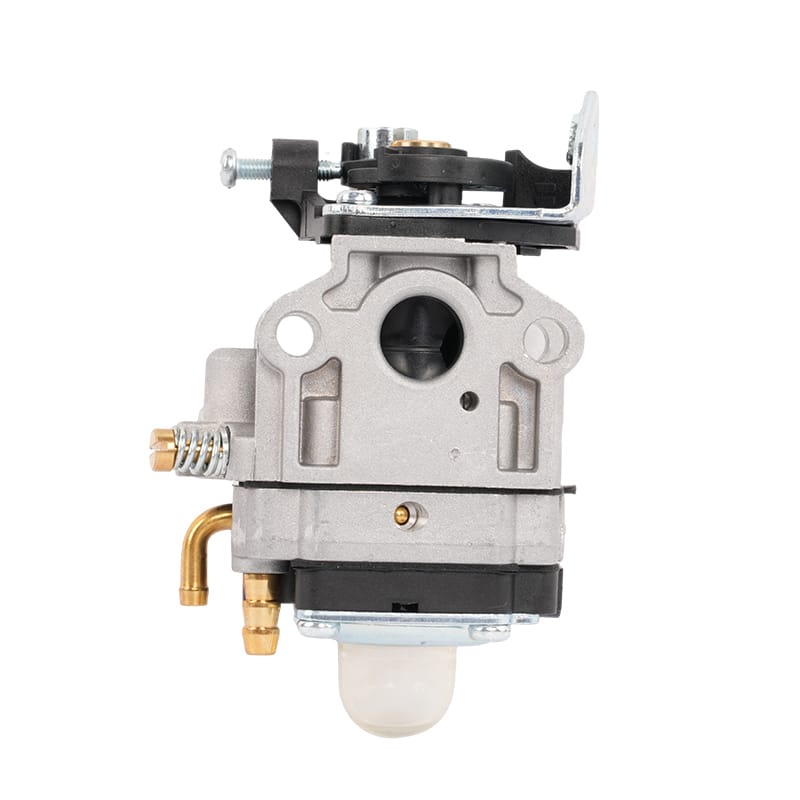
A diaphragm carburetor uses flexible diaphragms, pressure pulses and a metering needle to move and regulate fuel. It can continue supplying fuel when handheld equipment is tilted, rotated or used at changing angles.
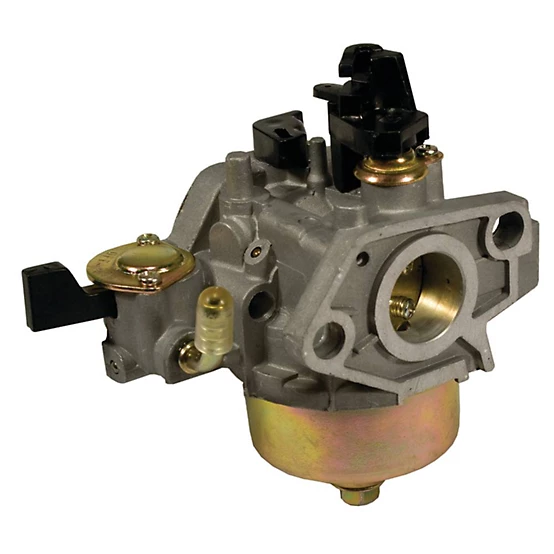
A float carburetor stores fuel in a bowl. A float and inlet needle maintain a relatively constant fuel level inside that bowl. This arrangement is simple and stable when the engine remains mostly upright, but its fuel control can be affected by extreme tilting or continuous vibration.
The right choice therefore depends on more than engine displacement. Equipment orientation, fuel-tank position, intake dimensions, engine pulse design and the original fuel system must all be considered.
Readers who need a broader explanation of other designs can also review QIYANG’s complete guide to carburetor types.
How a Diaphragm Carburetor Works
A diaphragm carburetor does not rely on a conventional float bowl. It typically combines a pump section with a metering section so fuel can reach the engine even when the equipment is not upright.
The pump diaphragm
Pressure changes created by the engine act on the pump diaphragm. As the diaphragm flexes, inlet and outlet check valves direct fuel from the tank toward the metering chamber.
This pumping action is especially useful when the fuel tank is below the carburetor or when gravity alone cannot provide a steady supply.
The metering diaphragm
The metering diaphragm responds to pressure changes in the carburetor throat. Its movement operates a lever connected to the inlet needle, allowing fuel into the metering chamber when engine demand increases.
The balance between diaphragm movement, spring force, needle position and chamber pressure affects how consistently fuel is delivered across different engine speeds.
High- and low-speed circuits
Many diaphragm designs have separate fuel circuits for idle and higher engine speeds. Their calibration must match the engine’s airflow, displacement, operating speed and emission configuration.
For equipment-specific options, QIYANG provides a range of diaphragm carburetors with different throat sizes, including Ø8.5, Ø9, Ø11, Ø12 and Ø15 configurations.
Why orientation matters
A handheld tool may operate horizontally, vertically or at an intermediate angle. Because a diaphragm carburetor does not depend on a free-moving float maintaining a horizontal fuel level, it is generally more suitable for equipment such as brush cutters, hedge trimmers, chainsaws and portable sprayers.
The general distinction between float and diaphragm chambers is also described in the technical overview of the carburetor fuel-supply system.
How a Float Carburetor Works
A float carburetor uses a bowl as a small fuel reservoir. The float rises and falls with the fuel level and operates an inlet needle.
When the level falls, the needle opens and allows more fuel into the bowl. When the specified level is restored, the float pushes the needle toward its seat and reduces or stops incoming fuel.
Fuel bowl and float level
The height of the fuel inside the bowl affects the pressure difference required to draw fuel through the jets. An incorrect float level may therefore cause a rich mixture, a lean condition, leakage or poor acceleration.
Float height is not a universal setting. It must correspond to the carburetor design and engine specification.
Inlet needle and seat
The inlet needle controls fuel entering the bowl. Wear, contamination or damage at the needle tip or seat may prevent complete closure, leading to flooding or external fuel leakage.
A stuck needle can also restrict incoming fuel and cause the engine to lose power as demand increases.
Venturi and jet operation
Air accelerates as it passes through the narrowed venturi. The resulting pressure difference draws fuel from the bowl through a calibrated jet and into the airflow.
This operating principle is related to the Venturi effect, in which fluid pressure changes as flow passes through a restricted section.
QIYANG’s float carburetor range includes Ø11, Ø13, Ø15, Ø16 and Ø21 options for different small-engine configurations.
Diaphragm Carburetor vs Float Carburetor Comparison
| Comparison factor | Diaphragm carburetor | Float carburetor |
|---|---|---|
| Primary fuel control | Flexible diaphragm and metering needle | Float, fuel bowl and inlet needle |
| Fuel movement | Often uses engine pressure pulses | Commonly gravity-fed or pump-fed |
| Equipment orientation | Suitable for changing operating angles | Best when the engine remains mostly upright |
| Typical applications | Brush cutters, chainsaws, trimmers, handheld blowers and sprayers | Pumps, generators, tillers, mowers and stationary equipment |
| Fuel reservoir | Compact metering chamber | Separate float bowl |
| Common wear points | Diaphragm, gasket, check valve, metering lever and needle | Float, hinge pin, inlet needle, seat and bowl gasket |
| Common symptoms | Difficult starting, weak acceleration, fuel starvation or inconsistent metering | Flooding, bowl leakage, rich running or high-speed fuel starvation |
| Storage sensitivity | Diaphragm may stiffen or deform | Bowl, jet and needle may develop fuel deposits |
| Installation priority | Pulse passage, gasket order and metering calibration | Level position, bowl clearance and float setting |
| Best selection basis | Equipment orientation and pulse-fuel design | Stable mounting and original bowl-fed system |
Neither design is inherently better for every engine. A properly calibrated float carburetor can be highly reliable on upright equipment, while a diaphragm carburetor offers a clear advantage when equipment angle changes continuously.
Which Carburetor Fits Different Small-Engine Applications?

Brush cutters and grass trimmers
Brush cutters and grass trimmers are frequently tilted during operation. Their engines also experience rapid speed changes as cutting load varies.
A diaphragm carburetor is normally the more practical design because it can meter fuel without relying on a horizontal fuel bowl. The QIYANG Diaphragm Carburetor QY-10202 is presented for brush-cutter fuel-delivery applications.
Chainsaws and handheld blowers
Chainsaws may be used at nearly any angle, while handheld blowers must remain responsive as the operator changes position. These operating patterns generally favor a diaphragm system.
Selection still requires confirmation of the pulse port, mounting pattern, throttle linkage, choke arrangement and fuel-line connections.
Water pumps and generators
Portable water pumps and generators usually remain on a level surface during operation. A float carburetor can maintain a stable bowl level and deliver predictable fuel flow under these conditions.
However, engine model and original fuel-system architecture take priority. A carburetor should not be converted from one type to another simply because the equipment normally remains upright.
Tillers and lawn equipment
Tillers, cultivators and some lawn mowers use float carburetors because their engines remain generally upright. The float bowl also provides a reserve of fuel when load changes quickly.
Vibration, slopes and repeated impacts must still be considered. A float system designed for one engine may not maintain the correct fuel level when installed on a different intake arrangement.
TU26 and related trimmer engines
The TU26 and 1E34F engine families may use application-specific float systems depending on their configuration. For example, QIYANG’s Float Type Carburetor System QY-20201 is listed as compatible with 1E34F and TU26 applications.
Compatibility must be verified from dimensions and configuration rather than the model name alone, because engine variants can use different manifolds, cables or fuel connections.
Seven Factors to Check Before Choosing a Carburetor
1. Engine identification
Record the complete engine model, variant and equipment model. A shared engine-family name does not guarantee that every carburetor version has the same mounting and calibration.
Photographs of the original carburetor and its connection points can help prevent errors during identification.
2. Carburetor type
Confirm whether the original system is diaphragm-fed or float-bowl-fed. Changing the basic fuel-delivery architecture can require modifications to the pulse passage, tank position, manifold and linkage.
For replacement work, preserving the original operating principle is generally the safest starting point.
3. Throat diameter
The carburetor throat must match the engine’s airflow requirements. A larger diameter is not automatically an upgrade.
An oversized throat may weaken the pressure signal at lower speeds, while an undersized passage may restrict airflow at high load.
4. Mounting dimensions
Measure the center-to-center distance between mounting holes, flange shape, stud diameter and available clearance. Also inspect gasket orientation and every pulse or vacuum passage.
A carburetor may appear similar externally while using a different internal passage arrangement.
5. Linkage and control direction
Check the throttle lever, choke lever, return spring, cable connection and direction of movement. Incorrect linkage geometry may prevent full throttle, leave the choke partly closed or create an unsafe control condition.
6. Fuel-line arrangement
Confirm fuel inlet position, hose diameter, primer connections and return-line configuration. For diaphragm systems, verify how the pump section receives engine pulses.
A blocked, missing or misaligned pulse passage can create symptoms that resemble an incorrect carburetor calibration.
7. Factory calibration
Jets, metering springs, needle settings and internal passages are selected for a specific engine demand. Two carburetors with matching external dimensions may still deliver different amounts of fuel.
For regulated nonroad engines, unauthorized changes to emission-related fuel settings may also be restricted. The U.S. Environmental Protection Agency explains that altering a certified engine’s fuel system outside manufacturer specifications may constitute tampering and increase emissions. Consult the equipment manual and applicable local requirements before adjustment. See the EPA small-engine emission guidance.
Common Problems in Diaphragm Carburetors
Stiff or distorted diaphragm
Age, unsuitable fuel, heat and extended storage can change diaphragm flexibility. A stiff diaphragm may not respond correctly to pressure changes, reducing fuel delivery during starting or acceleration.
The diaphragm should be inspected for hardening, waviness, tears and permanent deformation.
Incorrect gasket order
Diaphragm and gasket order affects chamber movement and sealing. Installing the correct parts in the wrong sequence can prevent the pump or metering section from working normally.
Record the original arrangement during disassembly and follow the relevant technical specification.
Metering lever error
If the metering lever is too high, the inlet needle may open too easily and create a rich or flooded condition. If it is too low, the chamber may not receive enough fuel during acceleration or load.
Lever height must be checked against the specification for that carburetor design.
Restricted check valves or passages
Deposits may interfere with the small one-way valves and fuel passages in the pump section. Aggressive probing can enlarge calibrated openings or damage thin valve material.
Use cleaning procedures and materials appropriate for the component.
Common Problems in Float Carburetors
Fuel leakage from the bowl
Leakage can result from a damaged bowl gasket, loose fastener, contaminated inlet needle, worn seat or float that no longer closes the inlet correctly.
Before replacing the complete assembly, identify whether leakage originates at the bowl, fuel inlet or another connection.
Sticking float
Deposits, corrosion or hinge damage can restrict float movement. A stuck-open float may cause flooding, while a stuck-closed float can stop fuel from entering the bowl.
The float should move freely without contacting the bowl wall.
Incorrect float height
A high fuel level can produce an excessively rich mixture or leakage. A low level can create hesitation and fuel starvation under load.
Adjustment procedures vary, so a generic float-height value should not be applied to every model.
Blocked main jet
Small deposits inside the main jet may reduce high-speed fuel flow even when the engine idles normally. This often appears as power loss when the throttle opens or equipment load rises.
If a jet is damaged or its calibrated opening has changed, replacement is more reliable than attempting to reshape it.
Rebuild or Replace?
A carburetor may be suitable for rebuilding when its body, throttle shaft, sealing surfaces and calibrated passages remain serviceable. Flexible parts, gaskets, needles and other replaceable components can then be renewed with a correctly matched kit.
QIYANG’s carburetor repair kit range provides a relevant internal reference for serviceable components. The correct kit should be matched using the carburetor model and internal layout.
Replacement may be more appropriate when:
- The carburetor body is cracked or heavily corroded
- A mounting flange is warped
- The throttle shaft or bore has excessive wear
- A non-replaceable passage is damaged
- The original unit has been modified
- The exact internal specification cannot be confirmed
- Rebuilding does not restore stable fuel metering
The decision should consider the condition of the complete fuel and intake system. An air leak, restricted filter, damaged fuel line or ignition problem may continue causing symptoms after a carburetor is replaced.
How Manufacturing Quality Influences Fuel Delivery
Carburetor performance depends on the consistency of many small features rather than one visible dimension.
Machined fuel passages
Main jets, needle seats and metering openings must remain within controlled tolerances. Small dimensional changes can alter fuel delivery, particularly in low-displacement engines.
Flatness and sealing
Mounting surfaces, diaphragm covers and bowl interfaces must seal correctly. Poor flatness can create air or fuel leaks that disturb the intended pressure balance.
Clean assembly
Dust, machining chips and other contamination can obstruct small passages or prevent an inlet needle from sealing. Controlled cleaning and assembly are therefore important parts of carburetor production.
Flow and leakage verification
A finished unit should be checked for air leakage, fuel leakage and appropriate flow characteristics. Consistent testing becomes especially important when the same carburetor is produced in large quantities for equipment manufacturing or replacement programs.
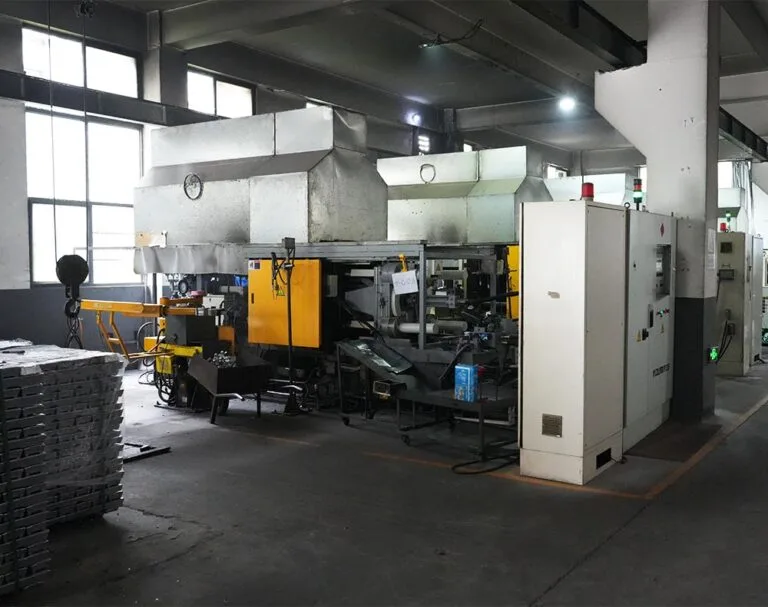
QIYANG manufactures carburetors for small gasoline engines and reports in-house control from aluminum casting and automated machining through assembly. Its production process also includes leakage inspection and fuel-flow calibration. These capabilities help connect component tolerances with repeatable finished-unit performance.
Final Selection Checklist
Before confirming a diaphragm carburetor or float carburetor, verify:
- Complete engine and equipment model
- Two-stroke or four-stroke configuration
- Original carburetor type
- Throat and venturi dimensions
- Mounting-hole spacing
- Intake and gasket pattern
- Pulse-port location, where applicable
- Fuel inlet and return arrangement
- Primer configuration
- Throttle and choke linkage
- Air-filter interface
- Original jet and metering specification
- Intended operating angle
- Applicable emission requirements
If an existing unit cannot be identified confidently, provide clear images and measured dimensions when requesting technical support. QIYANG can review application details through its carburetor inquiry page.
Conclusion
The diaphragm carburetor vs float carburetor decision begins with the equipment’s fuel-system design and operating position.
A diaphragm carburetor is usually better suited to handheld equipment that operates at changing angles. A float carburetor is commonly appropriate for engines that remain upright and use a stable bowl-fed fuel system. Neither should be selected solely by appearance, engine displacement or throat diameter.
The most reliable match combines engine identification, mounting dimensions, linkage geometry, fuel connections, operating orientation and factory calibration. Treating these factors as one system reduces the risk of hard starting, flooding, unstable idle and power loss.
FAQ
Is a diaphragm carburetor better than a float carburetor?
It is better for applications that require operation at changing angles, such as brush cutters, chainsaws and handheld trimmers. A float carburetor may be simpler and highly stable on upright equipment. The better design is the one engineered for the original engine, fuel system and operating conditions.
Can I replace a float carburetor with a diaphragm carburetor?
Usually not as a direct replacement. A diaphragm system may require an engine pulse passage, different fuel-line routing, different mounting dimensions and specific calibration. Unless the engine manufacturer approves the conversion, use the same carburetor architecture as the original unit.
Why does a diaphragm carburetor work in different positions?
Its fuel level is controlled by flexible diaphragms, pressure changes and a metering needle rather than a gravity-sensitive float. This allows the metering chamber to maintain fuel delivery when equipment is tilted. Correct pulse routing and diaphragm condition remain essential.
What causes a float carburetor to flood?
Common causes include contamination between the inlet needle and seat, incorrect float height, a leaking float, restricted float movement or excessive fuel pressure. Bowl leakage can also come from a damaged gasket, so the exact source should be identified before parts are replaced.
How do I know which carburetor size fits my engine?
Check the original carburetor model, throat diameter, mounting-hole spacing, flange pattern, engine model, linkage and fuel connections. Diameter alone is insufficient because two units with the same bore may use different jets, internal passages and fuel-delivery calibrations.