Table of Contents
Introduction
A small engine may look simple compared with an automotive engine, but reliable operation still depends on precise control of fuel and air. For many gasoline-powered lawn mowers, brush cutters, trimmers, blowers, generators, water pumps, and other compact machines, the small engine carburetor is the component responsible for preparing the air-fuel mixture before combustion.
Choosing the correct carburetor is therefore about much more than finding a component that physically fits the engine. Engine displacement, operating position, intake dimensions, fuel-delivery design, throttle configuration, application, and carburetor structure can all affect compatibility. A carburetor that looks almost identical to the original may still produce difficult starting, unstable idle, weak acceleration, excessive fuel consumption, or poor performance under load if its specifications do not match the engine.
This guide explains how small engine carburetors work, the major types used in outdoor power equipment, the specifications that matter during selection, and the practical differences between diaphragm and float designs.
What Is a Small Engine Carburetor?
A small engine carburetor is a fuel-metering device used on gasoline engines to combine incoming air with fuel before the mixture enters the combustion chamber. Its task is not simply to supply fuel, but to provide an appropriate mixture over changing operating conditions such as starting, idling, acceleration, normal running, and higher engine loads.
The basic carburetor principle relies on airflow through a narrowed passage. As air moves through this area, pressure changes help draw and atomize fuel into the intake stream. A more detailed explanation of the underlying carburetor principle can be found in the Wikipedia overview of carburetors.
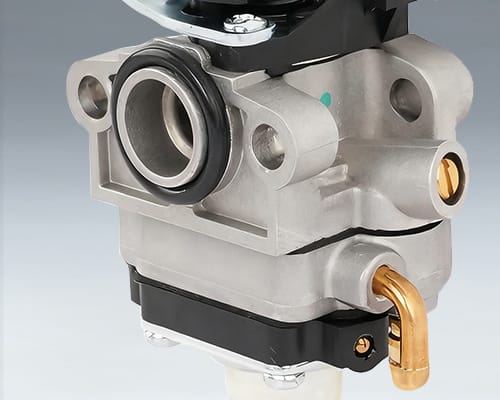
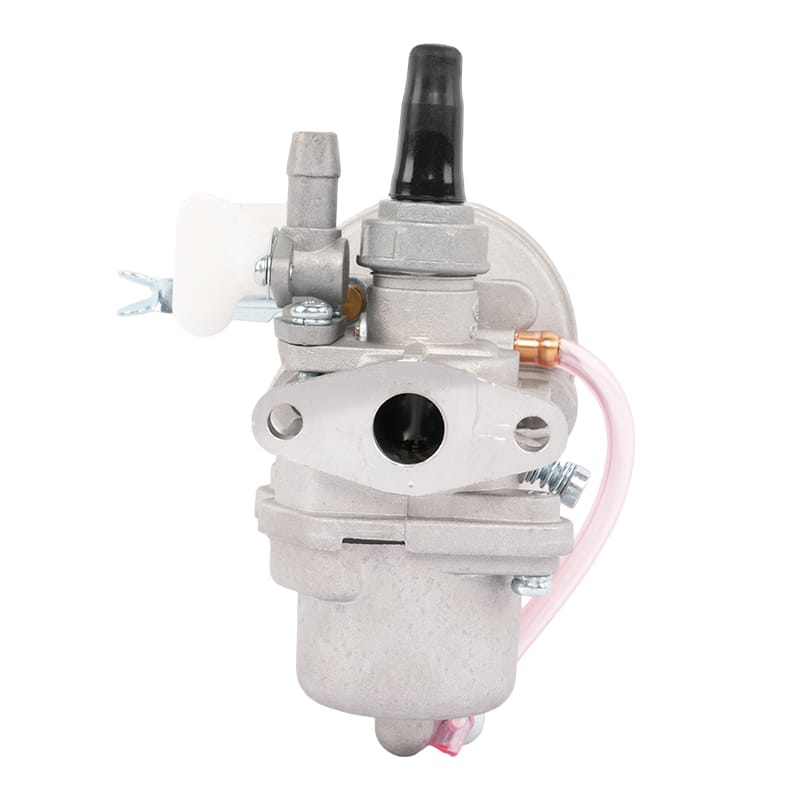
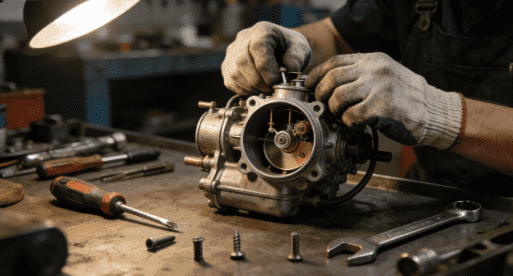
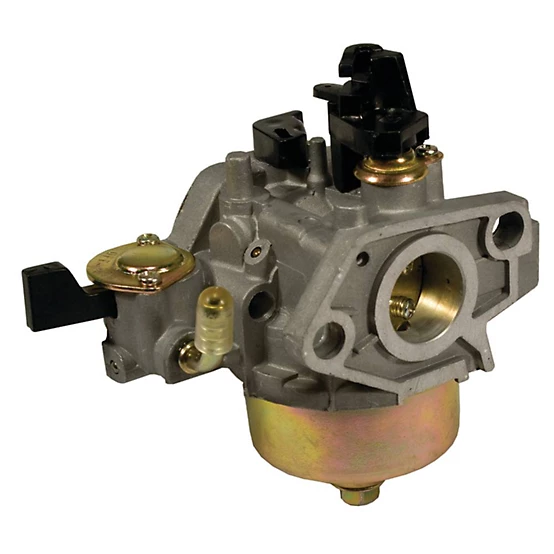
Small-engine carburetors usually contain several interacting components, including a throttle valve, fuel passages, metering components, jets or needles, primer or starting systems, and either a float chamber or diaphragm-based fuel-control mechanism. Their exact construction varies according to engine type and application.
For this reason, the term “small engine carburetor” describes a broad group of products rather than one universal component.
Where Are Small Engine Carburetors Commonly Used?
Small gasoline engines are widely used when equipment needs a compact and independent power source. Carbureted engines remain especially common in outdoor power equipment and machinery where mechanical simplicity, compact installation, and established engine platforms are important.
Typical applications include lawn mowers, grass trimmers, brush cutters, hedge trimmers, chainsaws, leaf blowers, portable generators, water pumps, sprayers, cultivators, and other garden or agricultural equipment.
The operating conditions of these machines vary considerably. A lawn mower may operate mainly in a relatively stable horizontal position, while a handheld trimmer or brush cutter may be tilted and rotated repeatedly during use. A generator can run for long periods at a relatively consistent orientation but experience changing load conditions.
These differences are one of the main reasons different carburetor structures exist.
Diaphragm vs Float Small Engine Carburetor
Two of the most important carburetor designs for small engines are diaphragm carburetors and float carburetors. Neither design is automatically better in every application. The appropriate choice depends largely on engine configuration and how the equipment operates.
| Feature | Diaphragm Carburetor | Float Carburetor |
|---|---|---|
| Fuel control | Flexible diaphragm system | Float and fuel bowl |
| Typical orientation | Suitable for changing operating angles | Generally better for more stable orientation |
| Common applications | Trimmers, brush cutters, blowers, handheld equipment | Mowers, generators, pumps and other stationary equipment |
| Fuel reservoir | No conventional float bowl required | Uses a float chamber |
| Compact installation | Often highly compact | Usually requires space for a float bowl |
| Selection priority | Pulse system, bore, engine and fuel circuit compatibility | Float level, bowl design, jetting and engine compatibility |
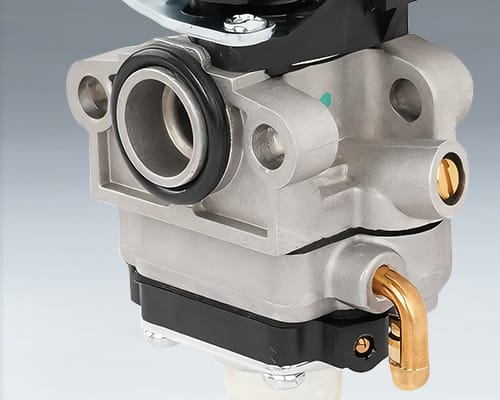
A diaphragm carburetor uses a flexible diaphragm to help meter or pump fuel. This structure is particularly useful in handheld equipment because fuel delivery does not depend on maintaining a conventional float bowl in a fixed horizontal position.
A float carburetor uses a float and needle mechanism to regulate the amount of fuel entering the bowl. As the fuel level changes, the float moves and controls the inlet valve. This design is widely used on engines installed in equipment that normally operates in a comparatively stable orientation.
When reviewing available replacement options, the complete QIYANG small engine carburetor range provides examples of both diaphragm and float configurations for different small-engine applications.
Why Engine Model Should Be Checked First
One of the most reliable starting points when selecting a small engine carburetor is the engine model rather than the appearance of the existing carburetor.
Different engines can use carburetors that appear nearly identical externally while containing different venturi diameters, jets, metering passages, throttle mechanisms, mounting dimensions, or adjustment configurations. Even small variations can influence how much fuel enters the airflow at different engine speeds.
Before comparing replacement carburetors, identify the complete engine model and any relevant model suffixes or equipment-specific information. For engines used across several machine types, the same basic engine family can sometimes have different configurations depending on application.
The original carburetor markings and equipment model can provide additional reference points, but these should be considered together with dimensional and structural information rather than used independently.
This approach reduces the risk of choosing a component that can physically mount to the engine but cannot deliver the required fuel mixture correctly.
Check the Carburetor Bore and Mounting Dimensions
Physical dimensions are another essential part of small engine carburetor selection.
The carburetor bore affects airflow through the intake system. Installing a carburetor with substantially different internal dimensions can change airflow velocity and fuel-metering behavior. Bigger is therefore not automatically better. A larger carburetor designed for another engine may actually reduce low-speed response or produce an unsuitable fuel mixture.
Mounting dimensions must also match the intake interface. Important measurements can include mounting-hole spacing, intake and outlet diameters, flange configuration, overall carburetor dimensions, and the location of related connections.
Gaskets and insulators also need to align correctly with intake passages. A partially blocked passage or improperly sealed connection can introduce an air leak, making an otherwise correct carburetor appear to be incorrectly calibrated.
When replacing an unfamiliar carburetor, comparing measurements is considerably more reliable than judging compatibility from product photographs alone.
Match the Fuel Delivery System
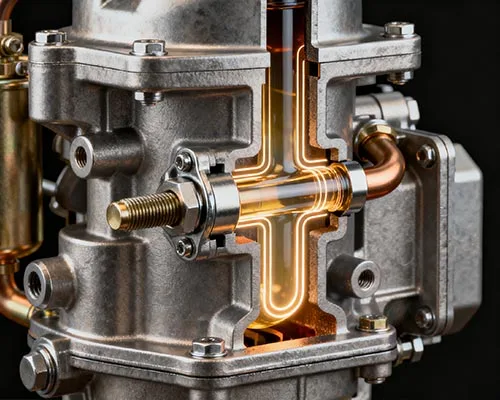
A small engine carburetor does not operate independently from the rest of the fuel system. Fuel-tank position, primer design, pulse passages, fuel lines, filters, and tank ventilation can all influence how fuel reaches the carburetor.
This is particularly important with diaphragm designs.
Some diaphragm carburetors use pressure pulses from the engine to operate an internal pumping section. If the pulse port does not correspond with the engine configuration, the carburetor may not receive fuel correctly even when mounting dimensions are identical.
Primer arrangements are another area where apparently similar carburetors can differ. A primer bulb may purge air from the carburetor circuit, assist fuel movement, or work as part of a specific starting system depending on the design.
Before choosing a replacement, compare fuel inlet position, return-line arrangement where applicable, primer configuration, pulse passages, and the original hose layout.
Correct fuel-system compatibility is particularly important for equipment expected to start reliably after repeated stop-and-start operation.
Consider Two-Stroke and Four-Stroke Engine Requirements
Engine cycle is another fundamental compatibility factor.
Two-stroke and four-stroke gasoline engines operate differently and their carburetor systems are designed around those differences. Two-stroke engines are particularly common in lightweight handheld equipment such as brush cutters and some blowers because of their compact construction and power-to-weight characteristics. Four-stroke engines are frequently found in lawn equipment, generators, pumps, and other machinery.
Carburetor selection should therefore always begin with the actual engine design.
A product described only as a “universal small engine carburetor” should be evaluated carefully. Even when mounting dimensions seem suitable, internal calibration may have been developed for a different engine displacement, operating speed, or fuel requirement.
Using engine type, displacement, original carburetor configuration, and application together provides a much more reliable basis for selection than the word “universal.”
Look at Throttle and Choke Configuration
The mechanical controls surrounding the carburetor are sometimes overlooked during replacement.
Throttle plates regulate airflow and therefore engine power and speed. Depending on the equipment, the throttle may be controlled through a direct cable, governor linkage, spring mechanism, or another control arrangement.
The replacement carburetor must provide the appropriate lever position and linkage geometry. If the throttle lever differs significantly from the original design, installation may require unsuitable modifications or may prevent the governor from operating correctly.
The choke system also deserves attention. Cold starting generally requires a richer fuel mixture than normal warmed-up operation. Small engine carburetors may achieve this through a choke plate, enrichment circuit, primer system, or another starting arrangement.
Before selecting a carburetor, compare not only the main body but also throttle levers, choke controls, spring attachment points, cable positions, and governor linkage.
These details often determine whether a replacement is truly compatible.
Application Matters More Than Appearance
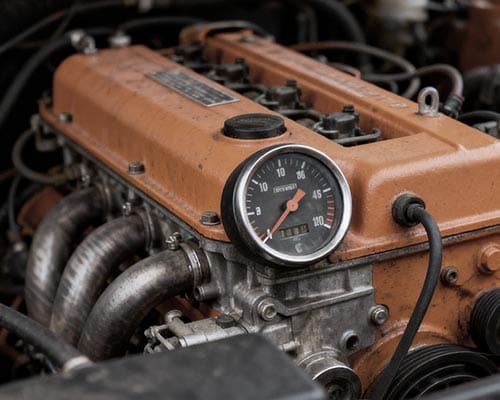
A common selection mistake is assuming that two visually similar carburetors are interchangeable.
Small-engine carburetor design is closely linked to the machine in which the engine operates. A handheld brush cutter may be rotated through different angles. A lawn mower normally remains horizontal. A portable generator may run continuously for extended periods. A blower can require rapid engine response as throttle position changes.
These operating characteristics influence the type of fuel-delivery system and calibration required.
For handheld machines that frequently change orientation, diaphragm carburetors are commonly appropriate because their fuel control is less dependent on gravity maintaining a stable level in a float chamber.
For many engines mounted in stable equipment, float carburetors provide an established and effective solution.
The equipment application should therefore be treated as an engineering requirement rather than simply a product-category label.
Signs the Existing Carburetor May Need Attention
Not every engine problem automatically means the carburetor needs replacement. However, certain operating symptoms can indicate that the carburetor or fuel system deserves closer inspection.
Common symptoms include difficult cold or warm starting, an engine that starts only with excessive choke, unstable idle, hesitation during acceleration, stalling when throttle is applied, reduced power under load, fuel leakage, unusually rich running, or an engine that will not maintain consistent speed.
These symptoms can develop when fuel passages become restricted, diaphragms harden or deteriorate, the float system becomes contaminated, seals leak, jets are obstructed, or adjustment changes from the intended setting.
At the same time, similar symptoms can be produced by an air filter, fuel line, spark plug, ignition problem, intake leak, fuel-quality issue, or low engine compression.
Diagnosis should therefore examine the complete intake, fuel, ignition, and engine system before assuming that the carburetor itself is defective.
Cleaning, Repair or Replacement?
When a small engine develops carburetor-related symptoms, there are generally three possible approaches: cleaning, component repair, or complete carburetor replacement.
Cleaning can be appropriate when deposits or contamination restrict fuel passages but the mechanical components remain serviceable. The carburetor should be inspected carefully during disassembly because extremely small passages can affect fuel delivery.
Repair can be suitable when replaceable components such as diaphragms, gaskets, primer bulbs, needles, or other service parts have deteriorated while the carburetor body remains in usable condition.
Replacement may be more practical when the carburetor body is damaged, corrosion is extensive, sealing surfaces are compromised, internal components cannot be restored, or an appropriate repair configuration is unavailable.
The decision should therefore be based on condition rather than age alone.
Small Engine Carburetor Selection Checklist
A practical carburetor selection process should verify several pieces of information before installation.
Start with the full engine model and equipment type. Then compare the original carburetor structure, mounting dimensions, bore diameter, fuel-line arrangement, throttle linkage, choke system, primer configuration, and adjustment layout.
For diaphragm carburetors, check diaphragm and pulse-system compatibility. For float carburetors, compare the bowl configuration and fuel-inlet arrangement.
A useful selection sequence is:
- Identify the engine model and equipment application.
- Determine whether the original carburetor is diaphragm or float type.
- Compare mounting-hole spacing and intake dimensions.
- Check throttle, choke, and governor linkage positions.
- Confirm fuel inlet, primer, return-line, and pulse arrangements.
- Compare relevant carburetor markings or reference information.
- Inspect gaskets, air filters, and fuel lines before installation.
Following this process helps prevent the common situation where a replacement component fits mechanically but performs incorrectly after installation.
Why Carburetor Quality Matters in Small Engines
Small engines often operate under demanding conditions that include vibration, dust, temperature changes, repeated starting, extended running periods, and seasonal storage.
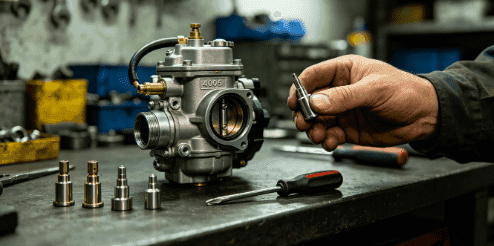
Within the carburetor, fuel must pass through very small metering components and passages. Dimensional consistency, sealing quality, stable moving components, and accurate machining therefore influence how consistently the carburetor can control the mixture.
Component quality is particularly important around metering needles, jets, throttle shafts, fuel passages, diaphragm assemblies, and sealing surfaces. Small deviations in these areas can result in noticeable differences in engine behavior.
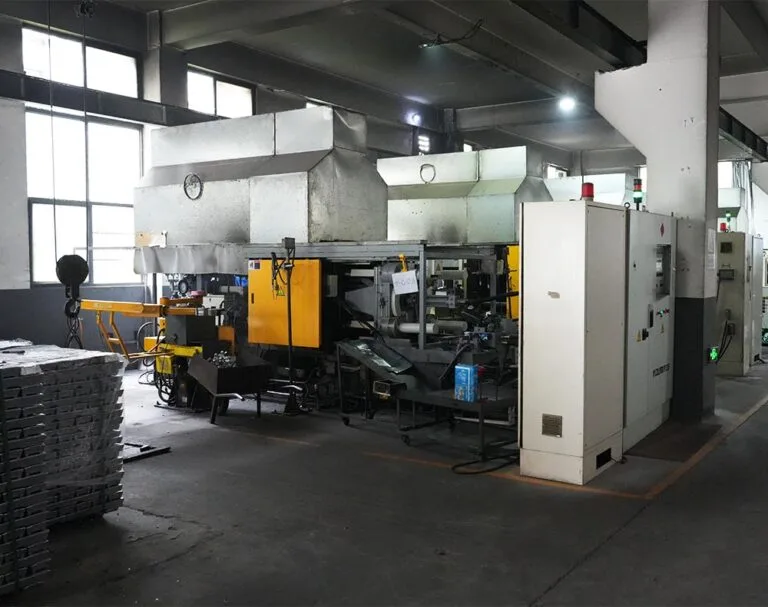
For equipment manufacturers, service businesses, distributors, and users maintaining multiple engine platforms, carburetor selection should therefore consider both compatibility and manufacturing consistency.
Conclusion
Choosing the right small engine carburetor requires more than matching the shape of an existing component. Engine model, application, carburetor structure, bore dimensions, mounting pattern, fuel-delivery system, throttle linkage, choke configuration, and operating orientation all contribute to correct compatibility.
Diaphragm carburetors are particularly well suited to many handheld machines that operate at changing angles, while float carburetors remain widely used on engines installed in equipment with a more stable operating position. Neither should be selected purely by appearance or assumed to be universally interchangeable.
A systematic approach based on engine specifications and actual operating requirements helps improve starting consistency, throttle response, fuel metering, and overall engine reliability.
FAQ
What type of carburetor is commonly used on small engines?
Both diaphragm and float carburetors are widely used. Diaphragm carburetors are common in handheld outdoor equipment, while float carburetors are frequently used on lawn mowers, generators, pumps, and other engines that normally operate in a stable position.
How do I know which small engine carburetor fits my engine?
Begin with the complete engine model and compare the original carburetor’s mounting dimensions, bore, fuel connections, throttle and choke configuration, primer system, and carburetor type. Appearance alone is not sufficient to confirm compatibility.
Can I install a larger carburetor on a small engine?
A physically larger carburetor is not automatically an upgrade. Carburetor dimensions and calibration must correspond to the engine’s airflow and fuel requirements. An incorrectly sized carburetor can cause poor throttle response, starting difficulties, or unsuitable mixture conditions.
What is the difference between a diaphragm and float carburetor?
A diaphragm carburetor uses flexible diaphragms as part of its fuel-control system and can function effectively when equipment changes orientation. A float carburetor uses a float chamber to maintain fuel level and is generally suited to engines operating in a relatively stable position.
Should a dirty small engine carburetor be cleaned or replaced?
That depends on its condition. Contamination may sometimes be resolved through proper cleaning, while worn service components can potentially be repaired. A carburetor with significant damage, corrosion, sealing problems, or unsuitable internal components may require replacement.
Need Help Identifying the Right Small Engine Carburetor?
Different small engines can require significantly different carburetor configurations even when the external appearance is similar. If you are matching a carburetor to a specific engine model, garden machine, generator, pump, trimmer, blower, or other small-engine application, provide the engine model and available carburetor specifications so the configuration can be evaluated more accurately.
Contact QIYANG for assistance with small engine carburetor compatibility and product selection.