We’re thrilled to have you here. Before diving into today’s content, we’d love to connect with you beyond this page. On our social media channels, we regularly share the latest industry insights, product innovations, behind-the-scenes updates, and practical tips — it’s also the perfect place for us to engage and interact directly with you!
Follow us on:
- Facebook: Linyang Huayang Machinery Co., Ltd.
Let’s grow, learn, and innovate together
Table of Contents
Introduction
The 2150 carburetor remains a popular fuel-delivery solution for classic Ford, Mercury, Lincoln, and selected AMC or Jeep applications. Known for its straightforward two-barrel design, stable throttle response, and serviceable construction, it continues to attract vehicle restorers, repair workshops, parts distributors, and classic-engine enthusiasts.
Although modern fuel injection dominates new vehicle production, a properly selected and adjusted 2150 carburetor can still provide reliable starting, smooth acceleration, and practical field serviceability. Its mechanical layout also makes it easier to diagnose and rebuild than many electronically controlled fuel systems.
This 2026 guide explains how the carburetor works, how to identify the correct version, what to inspect before buying, and how to solve common performance problems.
Key Takeaways
- A 2150 carburetor is a two-barrel downdraft carburetor commonly associated with older Ford and AMC engine applications.
- Venturi size, linkage design, choke type, calibration, mounting pattern, and emissions equipment affect compatibility.
- The 2150 and 2100 look similar, but they have important differences in their air-bleed and metering systems.
- Hard starting, hesitation, flooding, rough idle, black smoke, and poor fuel economy do not always mean the complete carburetor must be replaced.
- Vacuum leaks, incorrect float level, contaminated fuel, worn gaskets, blocked passages, and choke problems should be checked first.
- A rebuild may be economical when the main body, throttle shaft, and mounting surfaces remain serviceable.
- Buyers should match the carburetor to the exact engine, vehicle, transmission, altitude system, and original equipment number.
- Reliable carburetor sourcing depends on dimensional inspection, flow consistency, material quality, leak testing, and application verification.
What Is a 2150 Carburetor?
The Motorcraft 2150 is a two-barrel carburetor developed for gasoline engines. It is closely related to the earlier Autolite or Motorcraft 2100 but uses an updated metering design intended to improve the control of the air-fuel mixture under changing operating conditions.
A carburetor mechanically combines fuel and air before the mixture enters an internal combustion engine. Readers unfamiliar with the basic principle can review this general carburetor overview and the explanation of the Venturi effect.
The 2150 carburetor is generally associated with North American vehicles produced during the carbureted-engine era. Different versions were manufactured for specific engine sizes, vehicle configurations, emissions systems, choke arrangements, and altitude requirements.
Two-Barrel Configuration
A two-barrel carburetor contains two main airflow passages, often called bores or barrels. Both throttle plates operate together to supply air and fuel to the engine.
This configuration provides more airflow than a typical single-barrel design while remaining simpler and more compact than many four-barrel carburetors.
Downdraft Design
The 2150 carburetor uses a downdraft layout. Air moves downward through the carburetor, passes through the venturi area, collects fuel, and continues into the intake manifold.
The pressure difference created as air accelerates through the narrowed venturi helps draw fuel into the airflow.
Mechanical Fuel Metering
Unlike electronic fuel injection, the carburetor uses mechanical passages, jets, valves, floats, vacuum signals, and calibrated openings to regulate fuel delivery.
Its performance therefore depends heavily on clean internal passages, correct fuel pressure, accurate float adjustment, sealed gaskets, and properly functioning linkage.
How Does a 2150 Carburetor Work?
The 2150 carburetor does not deliver the same amount of fuel under every condition. It uses several circuits to support cold starting, idle, acceleration, cruising, and higher engine loads.
Understanding these circuits makes troubleshooting more accurate because a problem at idle may come from a different component than a problem during acceleration.
Float and Fuel Bowl
The fuel bowl stores a controlled quantity of gasoline inside the carburetor. A float moves with the fuel level and operates the inlet needle and seat.
When the fuel level drops, the inlet opens to admit more fuel. When the correct level is reached, the inlet closes. An incorrect float level may cause flooding, hesitation, fuel starvation, or excessive fuel consumption.
Venturi and Main Metering System
As engine airflow increases, air passes faster through the venturi. The resulting pressure change draws fuel through calibrated passages and into the airstream.
The main metering system is most active during cruising and moderate-to-high airflow conditions. Dirt, varnish, incorrect jets, or damaged metering components can disturb this process.
Variable Air-Bleed System
One important difference associated with the 2150 design is its variable air-bleed system. This system helps regulate the relationship between air and fuel across changing engine speeds and loads.
Its purpose is to maintain more controlled fuel metering instead of relying on a completely fixed air-bleed arrangement.
Idle Circuit
When the throttle plates are nearly closed, airflow through the main venturi is limited. The idle circuit supplies the small amount of fuel required to keep the engine running.
Blocked idle passages, incorrectly adjusted mixture screws, vacuum leaks, or throttle plates that are open too far can lead to unstable idle speed.
Idle Mixture Screws
The idle mixture screws control fuel or air-fuel flow through the idle system, depending on the specific design. Both screws should generally be adjusted evenly unless the applicable service procedure states otherwise.
They should not be used to hide ignition faults, vacuum leaks, incorrect timing, or internal engine problems.
Accelerator Pump
Rapid throttle opening creates a temporary increase in airflow before the main fuel circuit fully responds. The accelerator pump supplies an additional shot of fuel during this transition.
A weak pump diaphragm, incorrect linkage position, blocked discharge passage, or damaged check valve may cause hesitation or backfiring when the accelerator is pressed.
Power Enrichment System
During higher engine loads, the engine requires a richer mixture than it needs during light cruising. The power enrichment system provides additional fuel when operating conditions demand it.
A damaged diaphragm or incorrect vacuum signal may create either a lean condition or unnecessarily rich operation.
Choke System
A cold engine needs a richer mixture for easier starting. The choke restricts incoming air during cold operation and gradually opens as the engine warms.
Depending on the application, a 2150 carburetor may use a manual, hot-air, climatic, or electric choke arrangement. The replacement carburetor must match the vehicle’s control system or be properly converted.
Main 2150 Carburetor Components
The 2150 carburetor contains multiple components that work together. A failure in one small part can affect the operation of the entire fuel system.
Air Horn
The air horn forms the upper section of the carburetor. It may contain choke-related components, bowl vents, internal passages, and other calibrated features.
The air horn must remain flat and correctly sealed to the main body. Excessive tightening can distort the casting and create leakage.
Main Body
The main body contains the primary airflow passages, fuel bowl, venturi system, metering passages, and several serviceable components.
Corrosion or physical damage in this area may make rebuilding less reliable, especially when sealing surfaces or calibrated passages are affected.
Throttle Body
The throttle body contains the throttle plates and shaft. Movement of the accelerator linkage rotates the shaft and changes the amount of air entering the engine.
A severely worn throttle shaft bore can allow unmetered air into the system, causing a persistent vacuum leak and unstable idle.
Needle and Seat
The needle and seat regulate fuel entering the bowl. Dirt, wear, excessive fuel pressure, or an incorrectly installed component can prevent proper sealing.
A leaking needle and seat is a common cause of flooding, fuel odor, and fuel spilling into the carburetor throat.
Gaskets and Seals
Gaskets isolate fuel, air, and vacuum passages. Age, heat, unsuitable fuel, incorrect installation, or excessive fastener torque can damage them.
A complete service should use the correct gasket pattern because similar-looking carburetor versions may contain different internal passages.
For related service components, buyers can review QIYANG’s carburetor repair kits and engine parts.
2150 Carburetor Size and Identification
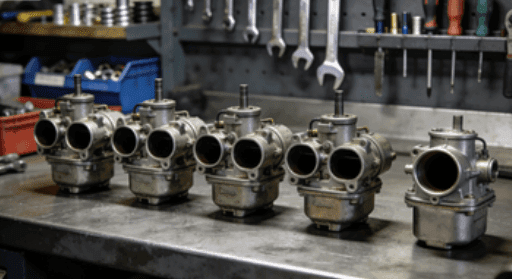
Correct identification is one of the most important steps before ordering a replacement or rebuild kit. A unit that physically fits the intake manifold may still have the wrong calibration, venturi size, choke, linkage, or vacuum connections.
Venturi Size Marking
Many 2150 units have a venturi-size marking cast or stamped into the main body. Commonly discussed versions include approximately 1.08-, 1.21-, and 1.23-inch configurations, although application details should always be confirmed through the identification number and vehicle documentation.
Venturi size influences airflow capability, low-speed response, and suitability for a particular engine displacement.
Identification Tag or Number
An original identification tag, stamping, or engineering number can help determine:
- Vehicle year
- Engine family
- Calibration
- Transmission application
- Emissions configuration
- Choke design
- Altitude-related equipment
Do not rely only on the external appearance. Many versions look almost identical but use different internal settings.
Linkage Position
Check the throttle linkage, transmission kickdown linkage, return-spring connection, cruise-control attachment, and choke linkage.
A replacement may require unnecessary modification when these features do not match the original unit.
Vacuum Port Layout
Compare the location, diameter, and function of all vacuum ports. Some ports provide manifold vacuum, while others provide timed or ported vacuum.
Connecting a device to the wrong vacuum source can affect ignition timing, emissions controls, idle quality, and drivability.
2150 Carburetor Size Comparison
The following table offers a general comparison. Exact flow values and original applications can vary by calibration and test method, so the vehicle service manual and carburetor identification number should remain the primary references.
| Venturi marking | General airflow level | Typical buying consideration | Possible concern |
|---|---|---|---|
| 1.08 | Lower | Better suited to smaller-displacement or lower-airflow applications | May restrict a heavily modified engine |
| 1.21 | Medium to high | Useful for larger engines requiring additional airflow | May reduce low-speed response if oversized |
| 1.23 | Higher | Considered for larger-displacement or higher-demand applications | Requires careful calibration and compatibility checks |
| Unknown or unreadable | Unverified | Identification tag and measurements must be checked | Higher risk of ordering the wrong unit |
Does a Larger Carburetor Always Make More Power?
No. A larger carburetor can supply more potential airflow, but the engine must be able to use it.
An oversized carburetor may reduce airflow velocity at lower engine speeds, weaken fuel metering, soften throttle response, and make tuning more difficult. Selection should be based on engine displacement, intended RPM range, volumetric efficiency, intake design, and operating purpose.
2150 Carburetor vs 2100 Carburetor
The 2150 and 2100 share a recognizable two-barrel layout, and some service components may appear similar. However, they should not automatically be treated as identical.
| Feature | 2150 carburetor | 2100 carburetor |
| Basic configuration | Two-barrel downdraft | Two-barrel downdraft |
| Design relationship | Later development | Earlier design |
| Air-bleed system | Uses an updated variable air-bleed arrangement | Uses an earlier metering arrangement |
| External appearance | Similar to the 2100 | Similar to the 2150 |
| Parts interchange | Some parts may be similar | Must be verified by model |
| Best identification method | Tag, casting, venturi marking, application | Tag, casting, venturi marking, application |
Which One Is Better for a Restoration?
For a factory-style restoration, the correct model is the unit specified for the original engine, vehicle year, transmission, and emissions package.
Using the original configuration usually simplifies linkage alignment, air-cleaner fit, vacuum routing, choke operation, and tuning.
Can a 2150 Replace a 2100?
A conversion may be possible in selected applications, but compatibility should not be assumed. The mounting flange, throttle linkage, fuel inlet, choke, air-cleaner clearance, vacuum ports, and calibration must all be evaluated.
The installer should also determine whether the change complies with local road-use and emissions requirements.
2150 Carburetor vs Four-Barrel Carburetor
A four-barrel carburetor can offer higher airflow potential, but it also introduces additional components and tuning requirements.
| Buying factor | 2150 two-barrel | Four-barrel carburetor |
| Mechanical complexity | Lower | Higher |
| Installation simplicity | Usually easier on compatible manifolds | May require a different manifold or adapter |
| Low-speed drivability | Often strong when correctly sized | Depends on primary-barrel sizing and calibration |
| Maximum airflow | More limited | Usually higher |
| Fuel-system tuning | Relatively straightforward | More variables to adjust |
| Best use | Original restoration, daily driving, moderate engine demand | Performance builds and higher airflow requirements |
When Should You Keep the Two-Barrel Design?
Keep the two-barrel system when originality, predictable street operation, serviceability, and moderate airflow are more important than maximum power.
It can also be the practical choice when the intake manifold, air cleaner, throttle linkage, and fuel system are already designed for the original carburetor.
How to Choose a 2150 Carburetor in 2026
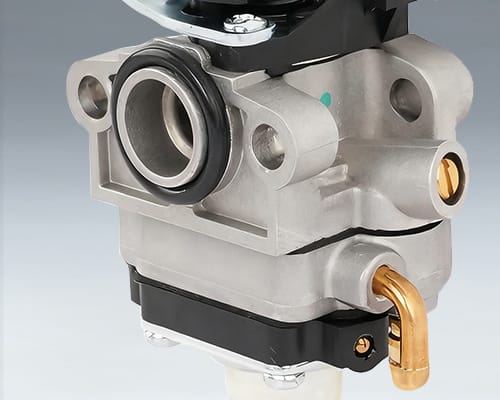
A successful purchase starts with application data rather than price. Buyers should collect all available information before comparing suppliers or remanufactured units.
Confirm the Engine Application
Record the engine displacement, model year, vehicle model, transmission type, intake manifold, and any engine modifications.
A carburetor calibrated for a stock engine may not perform correctly on an engine with a different camshaft, intake, cylinder head, compression ratio, or exhaust system.
Match the Mounting Flange
Measure the bolt spacing and compare the throttle-bore arrangement. Confirm that the base gasket matches all fuel, air, and vacuum passages.
An adapter may introduce height, linkage, airflow, or sealing problems.
Verify the Choke Type
Determine whether the existing system uses:
- Manual choke
- Electric choke
- Hot-air choke
- Climatic or thermostatic choke
- A related vacuum pull-off mechanism
The choke must open and close correctly throughout the warm-up cycle.
Check Fuel Inlet Orientation
Confirm the fuel-inlet thread, fitting style, direction, and clearance. Fuel lines should not be forced, sharply bent, or positioned against hot or moving components.
Fuel-system changes must use components suitable for gasoline and the expected pressure.
Compare Every Connection
Before installation, place the old and replacement units side by side. Compare:
- Base pattern
- Throttle linkage
- Choke assembly
- Fuel inlet
- Vacuum ports
- Air-cleaner mounting
- Bowl vents
- Electrical terminals
- Overall height
Ask for Quality-Control Information
Professional buyers should ask how the carburetor is inspected and tested. Important quality factors include dimensional consistency, casting integrity, leakage control, calibrated fuel flow, clean assembly, and repeatable performance.
QIYANG states that its finished carburetors are checked for air and fuel leakage and that fuel flow is calibrated to support consistent performance. The company also offers adaptation and optimization for specific general-purpose small gasoline engines.
Buyers sourcing carburetors for garden, agricultural, or construction machinery can browse the company’s small-engine carburetor product range or learn more about its manufacturing and customization capabilities.
New, Rebuilt, or Used 2150 Carburetor?
Each sourcing option has different advantages.
New Replacement Carburetor
A new unit may reduce the time spent inspecting worn castings, shafts, threads, and sealing surfaces. However, manufacturing quality and calibration can vary.
The buyer should verify whether the replacement is application-specific or a universal-style unit that requires adjustment.
Professionally Rebuilt Carburetor
A properly rebuilt original unit can preserve correct linkages, fittings, and calibration features.
Its quality depends on the condition of the core, cleaning procedure, throttle-shaft wear, surface flatness, replacement components, and final testing.
Used Carburetor
A used unit may be useful as a rebuildable core or source of difficult-to-find components.
It carries the greatest uncertainty because internal corrosion, blocked passages, missing parts, distorted surfaces, and previous modifications may not be visible in listing photos.
| Purchase option | Main advantage | Main disadvantage | Suitable buyer |
| New replacement | Clean and ready for initial setup | Quality and calibration may vary | Buyers prioritizing quick replacement |
| Professionally rebuilt | Can retain application-correct features | Depends on rebuilder and core condition | Restorers and repair workshops |
| Rebuildable original core | Supports originality | Requires labor, tools, and inspection | Experienced rebuilders |
| Used as-is | Usually lower initial price | Unknown wear and contamination | Parts recovery rather than immediate use |
Common 2150 Carburetor Problems
Performance symptoms should be diagnosed systematically. Replacing the complete unit without testing may leave the actual problem unresolved.
Hard Starting When Cold
Possible causes include a choke that does not close, a weak accelerator-pump shot, an empty fuel bowl, low fuel supply, or incorrect starting technique.
Inspect choke movement when the engine is cold and confirm that fuel reaches the bowl.
Hard Starting When Hot
Hot-start problems may be caused by flooding, excessive fuel pressure, a leaking needle and seat, heat soak, fuel boiling, or an incorrectly adjusted choke.
A strong fuel odor or visible fuel in the carburetor throat can indicate an overly rich condition.
Rough or Unstable Idle
An unstable idle may come from clogged idle passages, vacuum leaks, worn throttle-shaft bores, incorrect ignition timing, weak ignition components, low compression, or incorrectly adjusted mixture screws.
Do not adjust the carburetor until the ignition system and basic engine condition have been checked.
Hesitation During Acceleration
A hesitation immediately after throttle opening often points to the accelerator-pump circuit.
Check the pump diaphragm, linkage setting, pump arm clearance, discharge passage, and check valves. A lean main circuit or ignition problem can create a similar symptom.
Black Smoke
Black exhaust smoke generally indicates an excessively rich mixture. Possible causes include a high float level, leaking inlet needle, excessive fuel pressure, restricted air filter, closed choke, oversized jets, or internal leakage.
Prolonged rich operation can contaminate engine oil, foul spark plugs, increase emissions, and reduce fuel economy.
Fuel Leaking From the Carburetor
Stop the engine when external fuel leakage is found. Inspect the fuel inlet, bowl gasket, plugs, needle and seat, float, and fuel pressure.
Gasoline near ignition sources or hot surfaces creates a serious fire hazard.
Engine Stalls at Idle
Stalling may result from insufficient idle fuel, excess unmetered air, incorrect curb-idle speed, a closed idle solenoid, or transmission load that exceeds the current idle setting.
The base gasket, intake manifold, brake-booster hose, PCV system, and vacuum accessories should be checked for leakage.
Poor Fuel Economy
Poor economy can be caused by rich calibration, choke restriction, excessive fuel level, leaking power-valve components, ignition problems, low tire pressure, transmission faults, or driving conditions.
Fuel economy should not be evaluated from carburetor adjustment alone.
2150 Carburetor Troubleshooting Table
| Symptom | Likely carburetor-related cause | What to inspect first |
| Cold engine will not start | Choke not closing or weak pump shot | Choke plate and accelerator pump |
| Hot engine is flooded | Needle leakage or high fuel level | Fuel pressure, float, needle and seat |
| Rough idle | Vacuum leak or blocked idle circuit | Base gasket, hoses, idle passages |
| Off-idle hesitation | Weak accelerator-pump discharge | Pump diaphragm and linkage |
| Black exhaust smoke | Rich mixture | Choke, float level, air filter |
| Fuel smell | External leak or internal flooding | Fuel inlet, bowl and throat |
| Stalling on braking | Float or fuel-level problem | Float movement and adjustment |
| Low power under load | Restricted fuel flow or incorrect enrichment | Fuel filter, jets and power circuit |
| High idle speed | Linkage binding or vacuum leak | Throttle return and vacuum hoses |
| Surging at cruise | Lean mixture or unstable fuel supply | Vacuum leaks, fuel flow and metering system |
Should You Clean, Rebuild, or Replace It?
The correct decision depends on the condition of the carburetor body and the type of failure.
Clean the Carburetor When
Cleaning may be sufficient when the unit has minor contamination, sticky linkage, or deposits caused by aged fuel, but the gaskets and mechanical components remain serviceable.
External spraying alone may not clear internal metering passages.
Rebuild the Carburetor When
A rebuild is appropriate when the main casting is sound but service parts have deteriorated. A typical rebuild may include new gaskets, seals, pump diaphragm, needle and seat, and other application-specific components.
Fuel and air travel through small internal passages that can become restricted by dirt or residue from evaporated gasoline, particularly after long storage.
Replace the Carburetor When
Replacement may be more practical when the body is cracked, heavily corroded, badly distorted, missing critical components, or affected by severe throttle-shaft wear.
Replacement should also be considered when the cost of professional restoration exceeds the value of a reliable, correctly calibrated alternative.
Rebuild Decision Checklist
Before ordering a kit, inspect:
- Identification number
- Casting condition
- Throttle-shaft movement
- Thread condition
- Base and air-horn flatness
- Linkage completeness
- Choke components
- Internal corrosion
- Previous modifications
- Availability of the correct repair kit
How to Clean a 2150 Carburetor Safely
Carburetor cleaning requires a clean work area, correct protective equipment, and careful organization.
Prepare the Work Area
Work away from flames, sparks, heaters, and other ignition sources. Use chemical-resistant gloves and eye protection, and follow the cleaner manufacturer’s instructions.
Gasoline and cleaning solvents should be stored and disposed of according to local requirements.
Photograph the Original Assembly
Take clear photographs of vacuum hoses, linkage connections, springs, electrical wires, and fuel-line routing before removal.
Labeling these connections can prevent installation errors.
Disassemble Methodically
Arrange parts in order and keep small calibrated components separated. Do not force stuck screws or press hardened wire through precision passages.
Incorrect probing can enlarge a metering opening and permanently change fuel delivery.
Clean Internal Passages
Use an appropriate carburetor-cleaning method and compressed air according to the service procedure. Confirm that each passage is clear before reassembly.
Never direct compressed air toward your face or skin.
Install the Correct Components
Compare every new gasket, diaphragm, needle, seat, seal, and spring with the original part.
A gasket that looks similar may block or uncover the wrong passage.
Basic Installation Considerations
Installation quality directly affects carburetor performance.
Inspect the Intake Surface
The intake mounting surface should be clean, flat, and free of old gasket material. Debris must not fall into the intake manifold.
Use the specified base gasket and any required insulating spacer.
Tighten Fasteners Evenly
Tighten mounting fasteners gradually and evenly according to the vehicle service specification.
Excessive torque can distort the carburetor base or damage the intake manifold.
Check Throttle Movement
Before starting the engine, operate the throttle by hand. It must move smoothly from idle to full opening and return completely without binding.
Verify that the air cleaner, fuel line, wiring, and hoses do not interfere with the linkage.
Inspect for Fuel Leaks
After fuel reaches the carburetor, inspect every connection before starting and again while the engine is operating.
Turn the engine off immediately if leakage is found.
How to Tune a 2150 Carburetor
Final adjustment should be performed only after the engine reaches normal operating temperature and all basic mechanical and ignition conditions are correct.
Establish a Reliable Baseline
Before carburetor tuning, verify:
- Correct ignition timing
- Serviceable spark plugs
- Strong ignition output
- Adequate compression
- Correct valve operation
- No vacuum leaks
- Clean fuel supply
- Correct fuel pressure
- Proper choke opening
- Clean air filter
Adjust Float Level
Float adjustment affects almost every operating circuit. Follow the procedure and measurement specified for the exact carburetor version.
Do not assume one universal float setting applies to every 2150 carburetor.
Set Curb Idle Speed
Idle speed should be adjusted to the vehicle specification with the correct transmission position and accessories operating as required by the service instructions.
An idle speed set too high can expose the transition slots and reduce the effectiveness of the mixture screws.
Adjust Idle Mixture
Make small and equal changes to the mixture screws while monitoring engine speed, smoothness, or manifold vacuum.
After adjustment, recheck curb idle speed because mixture and speed settings can affect each other.
Verify Accelerator-Pump Operation
Look for an immediate, consistent fuel discharge when the throttle begins to open. A delayed or weak stream may cause off-idle hesitation.
Linkage position should follow the correct service specification rather than being changed randomly.
Road-Test Under Different Conditions
Evaluate:
- Cold starting
- Hot restarting
- Idle in gear
- Light acceleration
- Steady cruising
- Moderate load
- Deceleration
- Fuel odor
- Choke release
- Throttle return
One adjustment should be changed at a time so its effect can be evaluated.
Altitude and Temperature Considerations
Air density changes with altitude and temperature. A calibration that works well at sea level may behave differently in a high-altitude environment.
High-Altitude Operation
At higher elevation, reduced air density can make an unchanged fuel calibration operate richer.
Some 2150 configurations were equipped with altitude-compensation components, but their presence and condition must be verified for the exact model.
Cold-Weather Operation
Cold fuel vaporizes less readily, increasing the importance of correct choke operation, accelerator-pump performance, and intake heating.
A choke that opens too soon can create hesitation and stalling.
Hot-Weather Operation
High under-hood temperature can contribute to heat soak and fuel vaporization after shutdown.
Fuel-line routing, insulating components, cooling-system condition, and fuel pressure may all need inspection before modifying carburetor calibration.
Maintenance Tips for Longer Service Life
Regular maintenance reduces the chance of blocked passages and deteriorated components.
Use Clean Fuel
Contaminated fuel can damage the needle and seat, block passages, and leave deposits inside the bowl.
Inspect the fuel tank, lines, hoses, filter, and pump when repeated contamination occurs.
Replace the Fuel Filter
Use the correct filter type and install it in the proper flow direction.
A restricted filter can cause fuel starvation, while an unsuitable filter may fail to protect small carburetor passages.
Inspect the Air Filter
A blocked air filter can reduce airflow and contribute to rich operation.
Check the housing for damage and ensure that no loose material can enter the carburetor.
Operate Stored Vehicles Periodically
Fuel left for long periods can evaporate and leave residue. Storage procedures should account for fuel stability, local climate, and vehicle use.
Follow the fuel and vehicle manufacturers’ storage recommendations.
Check Linkages and Springs
Linkages should remain clean and move freely. Return springs must close the throttle reliably without creating excessive side load on the shaft.
Sourcing Carburetors and Related Parts From QIYANG
QIYANG focuses on carburetors and components for general-purpose small gasoline engines used in garden, agricultural, and construction equipment. Its range includes diaphragm carburetors, float carburetors, special-application carburetors, repair kits, primer bulbs, air filters, oil pumps, and related parts.
Although the historical automotive 2150 carburetor differs from the company’s principal small-engine product range, buyers, distributors, and equipment manufacturers can use the same core sourcing principles discussed in this guide: confirm engine compatibility, interface dimensions, fuel-flow requirements, linkage design, operating environment, testing standards, and order volume.
Useful QIYANG resources include:
- Complete Carburetor Product Range
- Diaphragm Carburetors
- Float Carburetors
- Carburetor Parts and Repair Tools
- Company and Manufacturing Information
- Carburetor Technical Articles
- Contact QIYANG
For example, the company’s QY-10301 diaphragm carburetor is designed for selected small-engine applications such as brush cutters, grass trimmers, water pumps, power sprayers, mist dusters, and petrol lawn mowers. It is not presented as a replacement for an automotive 2150 model, but it demonstrates why application-specific matching is essential.
Frequently Asked Questions About the 2150 Carburetor
What vehicles use a 2150 carburetor?
The 2150 carburetor is commonly associated with selected older Ford, Mercury, Lincoln, AMC, and Jeep engine applications. Exact use varies by model year, engine, emissions package, transmission, and market.
Always confirm the original carburetor identification number before purchasing a replacement.
How do I know which 2150 carburetor I have?
Look for an identification tag, engineering number, venturi marking, casting details, choke configuration, vacuum-port arrangement, and linkage design.
The vehicle identification number and original service documentation can provide additional confirmation.
Are all 2150 carburetors the same?
No. Different versions may have different venturi sizes, jets, choke systems, linkages, vacuum ports, emissions equipment, and calibrations.
Visual similarity does not guarantee compatibility.
What does the number 2150 mean on a carburetor?
The number identifies the carburetor model family rather than its airflow rating or engine displacement.
It should not be interpreted as a 2,150 CFM rating or a universal part number.
Is the 2150 carburetor a two-barrel carburetor?
Yes. It is generally classified as a two-barrel downdraft carburetor.
Both throttle bores contribute airflow to the engine.
What is the difference between a 2100 and 2150 carburetor?
The models share a similar basic architecture, but the 2150 uses a revised metering and variable air-bleed arrangement.
Identification and parts compatibility must be checked before rebuilding or exchanging components.
Can I install a 2150 carburetor on any V8 engine?
No. Engine displacement alone does not confirm suitability.
The intake mounting pattern, airflow requirement, linkage, fuel connection, choke, calibration, vacuum system, hood clearance, and legal requirements must all be evaluated.
Why does my 2150 carburetor hesitate when I accelerate?
A weak accelerator-pump shot is a common possibility. Other causes include vacuum leaks, incorrect fuel level, blocked passages, lean calibration, ignition problems, or low fuel delivery.
Inspect the pump discharge as the throttle begins to open.
Why is fuel coming out of the top of my carburetor?
Possible causes include a stuck float, leaking needle and seat, excessive fuel pressure, contaminated fuel, damaged float, or incorrect assembly.
Turn the engine off and correct the leak before further operation.
How do I stop a 2150 carburetor from running rich?
Check the choke, float level, needle and seat, fuel pressure, air filter, jets, power enrichment components, and fuel leakage.
Do not begin by turning the mixture screws randomly because they mainly affect the idle circuit.
Can I rebuild a 2150 carburetor myself?
An experienced owner with the correct manual, tools, workspace, and application-specific kit may be able to rebuild it.
Precision passages, spring locations, float settings, gasket orientation, and adjustments must be handled carefully.
How much fuel pressure does a 2150 carburetor need?
The correct fuel-pressure range depends on the exact application and fuel-system configuration.
Use the applicable factory service specification rather than a generic pressure setting. Excess pressure can overpower the inlet system and cause flooding.
Is a rebuilt 2150 carburetor better than a new replacement?
A professionally rebuilt original can provide better application compatibility, especially when it retains the correct linkage and calibration.
A high-quality new replacement may be more convenient, but its dimensions and settings still need verification.
Can a 2150 carburetor improve fuel economy?
Restoring correct fuel metering, choke operation, float level, and throttle control may improve economy when the existing unit is faulty.
However, fuel consumption also depends on ignition, engine condition, gearing, vehicle weight, tire pressure, driving speed, and operating environment.
Is a 2150 carburetor still worth buying in 2026?
Yes, when it is required for a compatible classic vehicle, restoration, repair project, or mechanically controlled engine.
Its value depends on correct identification, casting condition, calibration, component availability, and installation quality.
Final Thoughts
The 2150 carburetor remains relevant because it combines a compact two-barrel layout with straightforward mechanical operation and broad serviceability. However, successful installation requires more than finding a carburetor that looks similar to the original.
Buyers should verify the identification number, venturi size, mounting pattern, choke type, linkage, vacuum ports, fuel inlet, calibration, and engine application. During troubleshooting, vacuum leaks, ignition faults, fuel pressure, float level, choke movement, and accelerator-pump operation should be checked before replacing the entire unit.
For manufacturers and professional buyers, consistent carburetor quality also depends on accurate machining, clean assembly, leak inspection, fuel-flow calibration, suitable materials, and application-specific engineering. Explore QIYANG’s carburetor products or contact the technical team to discuss small-engine carburetor selection, replacement components, customization, and volume sourcing.