Table of Contents
Introduction

Inside a float-type carburetor, one relatively small component has a major influence on how consistently an engine receives fuel: the carburetor float. Its job may appear simple, but an incorrect float level, damaged float, sticking needle, contaminated fuel bowl, or poorly matched replacement component can quickly lead to hard starting, fuel leakage, unstable idle, rich or lean running, and inconsistent engine performance.
For small gasoline engines used in lawn mowers, generators, water pumps, sprayers, agricultural machinery, and other outdoor equipment, the carburetor float works together with the float bowl and inlet needle to maintain a controlled fuel level. That fuel level provides the foundation for the carburetor’s metering circuits to work correctly as engine speed and load change.
Understanding how the float works makes it easier to diagnose fuel-system problems and avoid replacing an entire carburetor when the real issue is related to fuel level or the float-valve mechanism.
What Is a Carburetor Float?
A carburetor float is a movable component located inside the fuel bowl of a float-type carburetor. As fuel enters the bowl, the float rises. Its movement operates an inlet needle or valve that controls additional fuel entering from the tank.
When the fuel reaches the intended level, the float pushes the inlet needle toward its seat and restricts additional fuel flow. As the engine consumes fuel and the level falls, the float moves downward, allowing the inlet valve to open again.
This continuous movement helps keep the amount of fuel in the bowl within a controlled range.
The principle can be compared with other automatic liquid-level control systems: rising liquid causes a floating component to close an inlet, while falling liquid allows more fluid to enter. In a carburetor, however, the required tolerances are much smaller because fuel level directly influences mixture formation.
A carburetor float should therefore be considered part of the fuel-metering system rather than simply a component that stores fuel.
How Does a Carburetor Float Work?
The carburetor float operates together with several other components. The basic system usually includes the float itself, a hinge pin, an inlet needle, a valve seat, and the fuel bowl.
The process begins when fuel travels from the fuel tank toward the carburetor. When the fuel level inside the bowl is low, the float remains in a lower position and the inlet needle stays open. Fuel can then enter the chamber.
As the level rises, buoyancy lifts the float. The float gradually moves the inlet needle toward the valve seat. Once the specified fuel level is reached, the needle restricts or closes the inlet.
During engine operation, fuel is drawn from the bowl into the carburetor’s metering circuits. The fuel level then drops slightly, allowing the float and needle to reopen the inlet.
This cycle repeats continuously.
The system can be summarized as follows:
| Fuel Bowl Condition | Float Position | Inlet Needle | Result |
|---|---|---|---|
| Fuel level low | Moves downward | Opens | More fuel enters |
| Fuel level rising | Moves upward | Begins closing | Fuel flow decreases |
| Correct level reached | Stable upper position | Closes or restricts | Fuel level stabilizes |
| Engine consumes fuel | Moves downward again | Reopens | Bowl refills |
The system is mechanically simple, but small changes in float position can affect fuel height and therefore carburetor operation.
Why Is Carburetor Float Level Important?
Fuel level inside the carburetor bowl influences the pressure difference required to draw fuel into the intake airflow.
If the fuel level is too high, fuel can be drawn into the metering circuits more easily than intended. This can contribute to a rich air-fuel mixture and may also increase the possibility of fuel leakage or flooding.
If the fuel level is too low, the carburetor may struggle to supply sufficient fuel when engine demand increases. The result can be hesitation, weak acceleration, surging, or loss of power under load.
The correct level therefore creates a stable reference point for the main jet, idle circuit, and other fuel-metering passages.
This is one reason float adjustment should not be treated as a way to randomly make an engine run “richer” or “leaner.” The intended float setting should correspond to the specific carburetor and engine design.
What Happens When the Carburetor Float Is Too High?
A float that closes the fuel inlet too late allows the fuel level inside the bowl to become higher than intended.
A high fuel level can produce several symptoms. An engine may run excessively rich, emit a strong fuel smell, become difficult to restart when warm, or experience fuel leakage from the carburetor. Spark plugs can also become wet or heavily carboned if excessive fuel repeatedly enters the combustion chamber.
In more severe cases, fuel can overflow from the bowl or carburetor throat.
However, the float itself is not always the cause.
A high fuel level can also result from a worn inlet needle, contamination between the needle and seat, an incorrectly assembled float mechanism, excessive fuel pressure in applicable systems, or a float that has absorbed fuel and lost buoyancy.
Diagnosis should therefore examine the complete float-and-needle assembly.
What Happens When the Carburetor Float Is Too Low?
A low fuel level creates a different set of problems.
When the float closes the inlet too early, the carburetor may not maintain enough fuel in the bowl. The engine may idle reasonably well but hesitate when throttle is opened or lose power as load increases.
Other possible symptoms include surging, lean running, difficult acceleration, or an engine that runs for a short period before losing power.
These symptoms become particularly noticeable when fuel demand increases because the bowl cannot maintain the required reserve.
A restricted fuel line or fuel filter can create similar symptoms, so fuel supply upstream of the carburetor should also be inspected before assuming float level is the only problem.
Common Signs of a Carburetor Float Problem
A defective carburetor float does not produce one universal symptom. The behavior depends on whether the fuel level becomes too high, too low, or inconsistent.
Some of the most common signs include:
- Fuel leaking from the carburetor
- Engine flooding during starting
- Strong gasoline odor
- Difficult hot starting
- Unstable idle
- Engine surging
- Hesitation under acceleration
- Reduced power under load
- Excessively rich running
- Lean operating symptoms
- Fuel overflowing from the bowl
- Engine stopping after operating for a short period
These symptoms should be treated as diagnostic clues rather than proof of float failure.
For example, a contaminated main jet can cause weak engine performance even when the float system operates normally. An intake leak can also create lean symptoms that resemble an excessively low fuel level.
The most reliable diagnosis considers the complete fuel and intake system.
Carburetor Float vs Float Bowl: What Is the Difference?
The terms carburetor float and float bowl are sometimes confused, but they describe different components.
The float bowl is the chamber that temporarily stores fuel before it passes through the carburetor’s metering system. The carburetor float is the movable component located inside that chamber.
The bowl creates the reservoir, while the float regulates how much fuel is maintained in that reservoir.
They work together with the inlet needle.
A useful way to understand the relationship is:
Float Bowl → Stores Fuel
Carburetor Float → Detects Fuel Level
Needle Valve → Controls Incoming Fuel
If any one of these components fails to operate correctly, fuel level can become unstable.
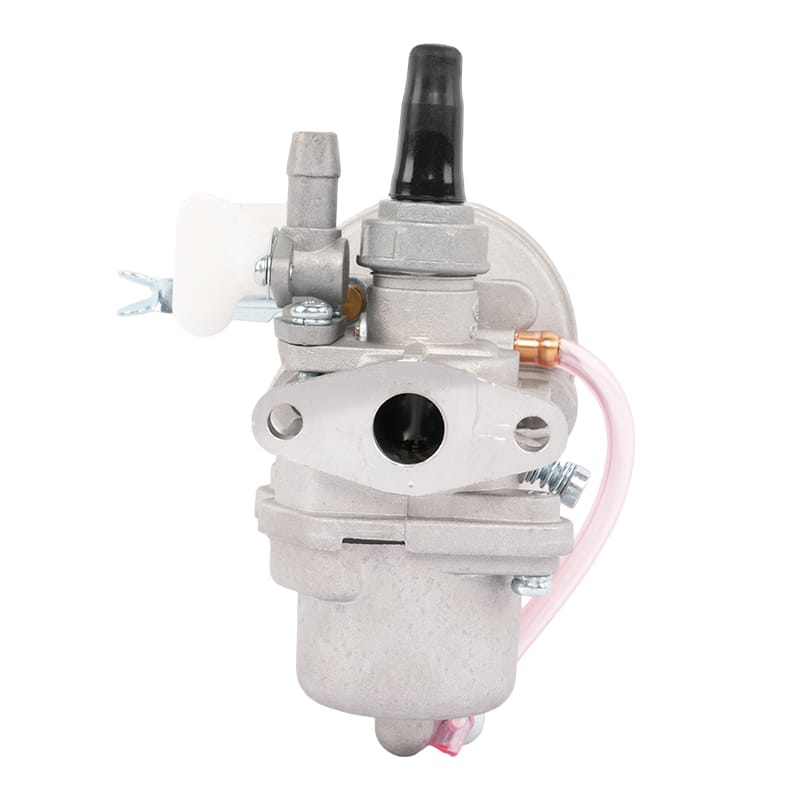
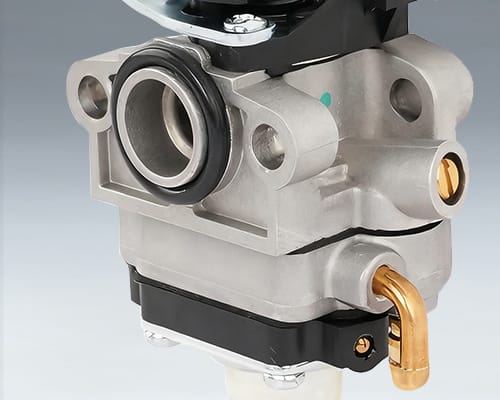
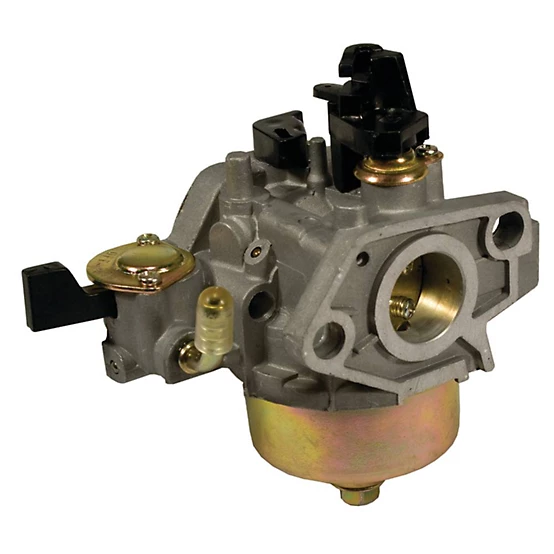
For small gasoline engine applications using this configuration, QIYANG provides a dedicated range of Float Carburetors covering different interface diameters and engine applications.
What Can Cause a Carburetor Float to Fail?
Several conditions can interfere with normal float operation.
Physical Damage
A float can become cracked, distorted, or damaged during disassembly or long-term use. Depending on its construction, damage can affect buoyancy or movement.
Fuel Inside the Float
Some float designs can develop leaks. If fuel enters a hollow float, its weight increases and it may no longer rise sufficiently to close the inlet valve.
The result is usually excessive fuel level or flooding.
Sticking Hinge
Deposits, corrosion, incorrect assembly, or mechanical damage can prevent the float from moving freely around its hinge pin.
The float may then remain partially open or closed rather than following changes in fuel level.
Worn Needle or Seat
The float can operate correctly while the needle fails to seal.
Deposits on the needle or seat can also prevent complete closure, allowing fuel to continue entering after the proper level has been reached.
Incorrect Float Adjustment
Some float assemblies allow their position to be adjusted. If the setting is altered incorrectly during service, fuel level can move outside the intended range.
The correct specification should therefore be used rather than relying on visual estimates.
How to Inspect a Carburetor Float

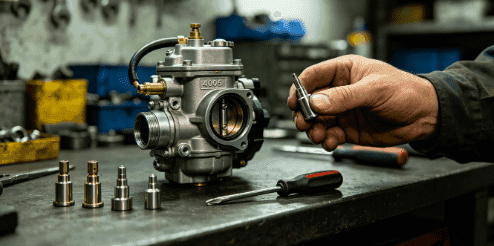
Inspection begins after the carburetor has been safely removed or the float bowl has been accessed according to the appropriate equipment service procedure.
Once the bowl is removed, inspect the fuel for contamination, water, sediment, or deposits. Contamination in the bowl can provide an immediate clue about why the needle or float mechanism is sticking.
Next, examine the float itself.
It should move smoothly around the hinge without binding. The hinge pin should remain correctly positioned, and the float should not show obvious cracks or distortion.
The inlet needle should also be inspected for wear or contamination.
When the float is moved gently through its operating range, the needle should follow its movement without sticking.
The exact float-level measurement procedure varies between carburetor designs. Some are measured at a specified carburetor angle, while others use a particular reference dimension between the float and carburetor body.
For that reason, one universal measurement should never be applied to every carburetor.
Even major small-engine manufacturers emphasize matching replacement parts to the specific engine or equipment model because visually similar carburetor components are not necessarily interchangeable. Briggs & Stratton, for example, recommends identifying the correct engine model when selecting a carburetor float replacement.
Can a Carburetor Float Be Adjusted?
Some carburetor floats are adjustable, while others are manufactured with a fixed configuration.
On adjustable designs, a small tab may determine where the float contacts the inlet needle. Changing that tab alters the point at which the needle closes and therefore affects fuel level.
This adjustment should be performed carefully.
A small change at the float can produce a meaningful difference in fuel height inside the bowl. Excessive adjustment can create flooding or fuel starvation even though the engine previously had only a minor problem.
Before making adjustments, verify that the float is undamaged, the needle and seat are clean, and the correct float specification is available.
Adjustment cannot compensate for a leaking float or badly worn needle valve.
Carburetor Float Problems vs Needle Valve Problems
Because the float and inlet needle operate together, their symptoms can overlap.
| Problem | Possible Effect | Inspection Focus |
|---|---|---|
| Float has lost buoyancy | High fuel level | Inspect float for leakage or damage |
| Float sticks downward | Flooding | Check hinge and contamination |
| Float sticks upward | Fuel starvation | Check hinge movement |
| Needle tip worn | Fuel leakage | Inspect sealing surface |
| Dirt on needle seat | Bowl overflow | Clean needle and seat |
| Float level incorrect | Rich or lean running | Measure to specification |
| Fuel supply restricted | Low bowl level | Inspect fuel line and filter |
Replacing only the float may therefore fail to solve a problem caused by the needle or seat.
Likewise, installing a new needle will not correct a float that has lost buoyancy.
The assembly should be evaluated as a system.
Carburetor Float Problems and Engine Orientation
Float carburetors generally work best when the equipment operates near the orientation for which the fuel bowl was designed.
This is because gravity influences the liquid fuel level inside the chamber.
Engines used in lawn mowers, generators, water pumps, sprayers, and similar equipment often maintain a relatively stable working position, making float carburetors well suited to many of these applications.
Handheld equipment can present different requirements because the machine may operate at continuously changing angles.
This is one reason diaphragm carburetors are common in equipment such as trimmers, chainsaws, and some blowers.
QIYANG’s current product structure reflects this distinction, with both float and diaphragm carburetor ranges designed for different small gasoline engine applications.
Can You Replace Only the Carburetor Float?
In some situations, replacing only the carburetor float is possible.
This may be appropriate when the carburetor body, jets, passages, bowl, needle, and other components remain in good condition and the float itself has been clearly identified as defective.
However, compatibility must be verified carefully.
Float shape, hinge location, buoyancy characteristics, needle-contact geometry, and available movement all affect operation. A float that physically fits inside the bowl does not necessarily maintain the correct fuel level.
When several internal components show wear or contamination, servicing the complete float system or evaluating the carburetor as a whole may be more appropriate.
When Should the Complete Float Carburetor Be Checked?
A complete carburetor inspection is worthwhile when float-related symptoms continue after the float mechanism has been cleaned and verified.
Internal fuel passages may be restricted, jets may contain deposits, gaskets may leak, throttle shafts can wear, or the carburetor body may suffer from corrosion or physical damage.
At that point, focusing only on float level can delay the real diagnosis.
A structured inspection should consider:
- Fuel condition
- Fuel tank ventilation
- Fuel line and filter
- Float movement
- Needle and seat condition
- Bowl contamination
- Main and idle fuel passages
- Gaskets and seals
- Intake connections
- Throttle and choke operation
This provides a more reliable basis for deciding whether cleaning, repair, adjustment, or replacement is appropriate.
Choosing the Right Float Carburetor for a Small Engine

When a complete carburetor replacement is required, the engine model should remain the primary reference.
Different small engines can require different interface diameters, mounting patterns, throttle arrangements, choke structures, fuel connections, and internal calibration.
QIYANG’s current Small Engine Carburetor Products include both diaphragm and float configurations for garden, agricultural, and other general-purpose small gasoline engine applications.
Before selecting a replacement, compare:
- Engine model
- Existing carburetor markings
- Interface diameter
- Mounting dimensions
- Float or diaphragm design
- Fuel inlet position
- Throttle configuration
- Choke mechanism
- Air-filter connection
- Equipment application
Correct mechanical fit is important, but correct fuel-metering configuration is equally necessary.
Conclusion
The carburetor float is a simple mechanical component with a critical role in maintaining a stable fuel level inside a float-type carburetor. As fuel rises and falls in the bowl, the float controls the inlet needle so that the carburetor has enough fuel available without continuously overflowing.
When float level becomes too high, the engine may experience rich running, flooding, difficult starting, or fuel leakage. When the level becomes too low, hesitation, surging, lean operation, and reduced power can occur.
However, many apparent float problems actually involve the inlet needle, valve seat, contaminated fuel, restricted fuel supply, or other carburetor components. Effective troubleshooting therefore requires inspection of the complete fuel-level control system.
For small gasoline engines used in lawn mowers, generators, water pumps, agricultural machinery, and related equipment, correct float-carburetor matching helps maintain reliable fuel delivery and consistent engine operation.
FAQ
What does a carburetor float do?
A carburetor float monitors fuel level inside the float bowl. As fuel rises, the float moves the inlet needle toward its seat and reduces additional fuel flow. When fuel level falls, the inlet opens again so the bowl can refill.
What happens when a carburetor float gets stuck?
A float stuck in a low position can allow too much fuel into the bowl and cause flooding or leakage. A float stuck in a high position can restrict fuel entry and cause fuel starvation, hesitation, or engine stalling.
How do I know if my carburetor float is bad?
Possible signs include fuel leakage, flooding, unstable idle, rich running, hesitation, loss of power, or inconsistent fuel level. The float should be inspected together with the needle, seat, hinge, and fuel bowl before confirming the diagnosis.
Can carburetor float level affect engine performance?
Yes. Float level determines the height of fuel available to the carburetor’s metering circuits. A fuel level that is too high or too low can change mixture behavior and affect starting, idle, acceleration, and operation under load.
Are all carburetor floats interchangeable?
No. Carburetor floats differ in size, shape, hinge geometry, buoyancy, and needle-contact design. Replacement should be matched to the relevant carburetor and engine configuration rather than selected only by visual similarity.
Need Help Matching the Right Float Carburetor?
Float carburetors can look very similar externally while using different interface diameters, fuel-control components, mounting arrangements, and engine configurations. When identifying a replacement, provide the engine model, equipment application, carburetor markings, and available dimensional information whenever possible.
Contact QIYANG for assistance with float carburetor configuration and small-engine compatibility.