Table of Contents
Introduction

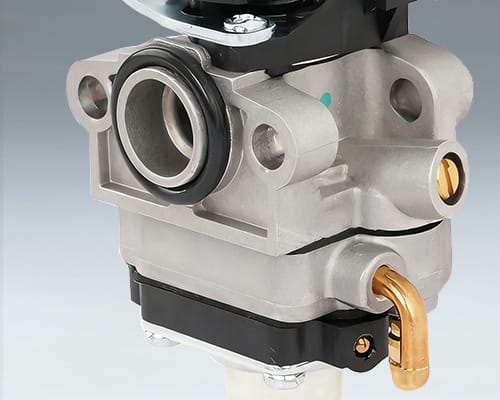
A diaphragm carburetor is widely used on small gasoline engines that need to operate reliably while equipment changes position, including brush cutters, grass trimmers, blowers, hedge trimmers, chainsaws, and other handheld outdoor machines. Unlike a conventional float carburetor, this design uses flexible diaphragms as part of the fuel pumping and metering process.
Because these diaphragms repeatedly flex while being exposed to gasoline, heat, vibration, storage conditions, and fuel additives, their condition can gradually change over time. A hardened, stretched, cracked, or incorrectly installed carburetor diaphragm may interfere with fuel delivery even when the carburetor body itself remains in good condition.
The difficulty is that diaphragm problems do not always create one obvious symptom. Hard starting, unstable idle, hesitation, loss of power, or an engine that stops after running briefly can also be caused by fuel lines, filters, air leaks, ignition components, or blocked passages.
The following seven signs can help identify when the carburetor diaphragm should become part of the diagnostic process.
What Does a Carburetor Diaphragm Do?
A carburetor diaphragm is a thin flexible membrane used to respond to pressure changes inside a diaphragm-type carburetor. Depending on the carburetor design, separate diaphragms may be used for fuel pumping and fuel metering.
The pumping diaphragm responds to pressure pulses generated by engine operation. As it flexes, it helps move fuel from the tank through the carburetor.
The metering diaphragm works with the metering lever, needle, and fuel chamber to regulate how much fuel becomes available to the engine.
This arrangement allows a diaphragm carburetor to operate without relying on a conventional float bowl. That is especially useful for equipment that may be tilted, rotated, or used at changing angles.
For example, STIHL specifies an all-position diaphragm carburetor with an integral fuel pump on some of its two-stroke handheld equipment, illustrating why this carburetor structure is common where operating orientation changes frequently.
1. The Engine Becomes Difficult to Start
One of the most common symptoms associated with a deteriorating carburetor diaphragm is increasingly difficult starting.
When the diaphragm remains flexible and correctly positioned, pressure changes can move fuel through the carburetor as intended. If the material becomes stiff or distorted, the diaphragm may not respond quickly enough to those pressure changes.
As a result, the carburetor may struggle to supply the amount of fuel required during starting.
You may notice that the engine requires more pulls than usual, needs repeated primer operation, starts only with excessive choke, or briefly starts before stopping.
However, hard starting alone does not prove the carburetor diaphragm is faulty. A blocked fuel filter, cracked fuel line, weak ignition spark, incorrect choke operation, or stale fuel can produce similar symptoms.
The diaphragm should therefore be inspected as part of the complete starting system rather than treated as the automatic cause.
2. The Engine Starts but Stops Shortly Afterwards
Another useful warning sign is an engine that starts normally but stops after operating for a short period.
This can happen when enough fuel reaches the carburetor for initial starting but the fuel-pumping system cannot maintain the required flow once the engine begins running.
A hardened or damaged pump diaphragm may move insufficient fuel from the tank, causing the fuel available inside the carburetor to gradually decrease.
The engine may then begin to lose speed, hesitate, and eventually stop.
After sitting for a short period, enough fuel may slowly enter the system for the engine to start again, creating a repeating start-run-stop pattern.
This behavior should also prompt inspection of the tank vent, fuel filter, fuel line, primer system, and fuel pickup because restrictions elsewhere in the fuel system can create almost identical symptoms.
3. Idle Speed Becomes Unstable
An engine that repeatedly rises and falls in speed at idle can indicate inconsistent fuel metering.
The metering diaphragm plays an important role in maintaining fuel availability as engine demand changes. If it becomes stiff, warped, or incorrectly positioned, the metering system may respond unevenly.
The result can be:
- fluctuating idle speed;
- engine surging;
- repeated near-stalling;
- idle speed that changes as the machine position changes;
- an engine that will not remain running without partial choke.
Small engines are sensitive to changes in the air-fuel mixture at low throttle openings because airflow and fuel demand are relatively low.
Even a small disturbance in fuel delivery can therefore produce noticeable idle instability.
Before adjusting carburetor screws to compensate, it is better to determine whether the diaphragm and internal fuel passages are functioning properly. Adjustment cannot reliably correct a physically damaged diaphragm.
4. The Engine Hesitates When the Throttle Opens
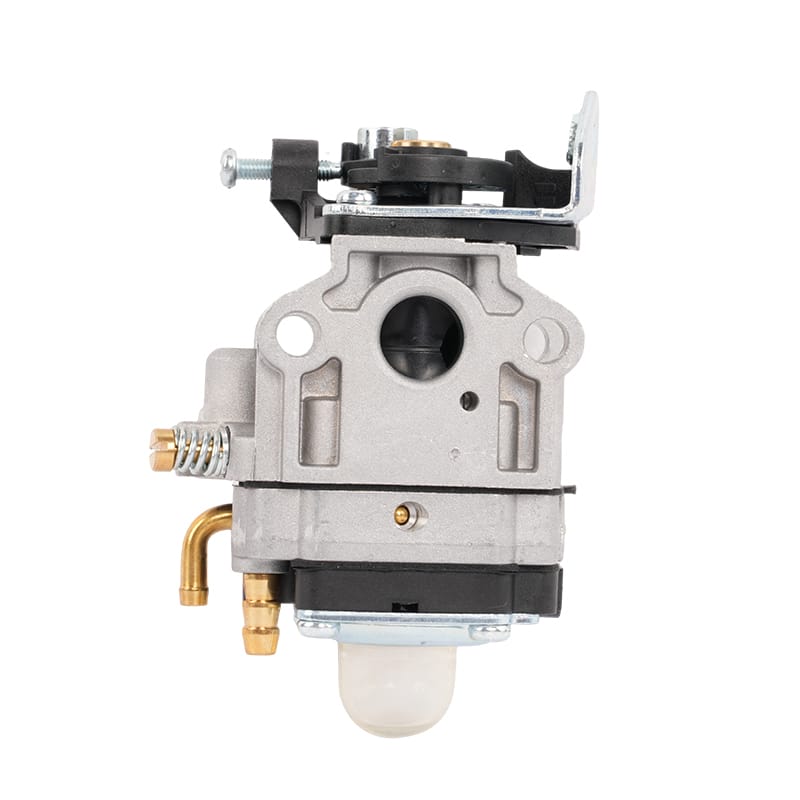
A healthy small gasoline engine should respond predictably when throttle demand increases.
When the throttle opens, airflow rises and the carburetor must increase fuel delivery accordingly. A diaphragm that cannot respond correctly may delay or limit this fuel supply.
The engine may hesitate, stumble, briefly lose power, or stop when the throttle is opened quickly.
This symptom is common in equipment such as brush cutters and grass trimmers because their engines frequently move between idle and higher operating speeds.
A carburetor diaphragm problem is not the only possible cause. Restricted jets, incorrect adjustment, an intake air leak, blocked fuel filter, damaged fuel line, or dirty air filter can also affect acceleration.
The difference is that diaphragm deterioration often produces inconsistent fuel response across several operating conditions rather than one isolated throttle position.
5. Power Drops Under Load
Some diaphragm problems become most noticeable only after the equipment is placed under working load.
A trimmer may appear to run correctly without cutting vegetation but lose speed once the cutting head encounters resistance. A blower may idle normally but fail to maintain full operating speed. A brush cutter may hesitate when the blade begins working harder.
This occurs because fuel demand increases under load.
If the pumping diaphragm cannot maintain sufficient fuel movement, the carburetor may supply enough fuel for low-load operation but not enough for higher engine demand.
Possible symptoms include:
- reduced maximum engine speed;
- weak acceleration;
- loss of cutting or blowing performance;
- engine surging at high throttle;
- engine speed falling when load increases.
Fuel-flow restrictions elsewhere should also be inspected before replacing the diaphragm.
A kinked fuel hose, contaminated filter, restricted tank vent, or incorrect fuel pickup position can cause similar fuel-starvation symptoms.
6. The Carburetor Diaphragm Looks Hard, Cracked, or Distorted
Operational symptoms provide clues, but direct physical inspection can often reveal whether the diaphragm itself has deteriorated.
A serviceable diaphragm should generally remain flexible enough to respond to pressure changes without cracking, sticking, or permanently holding a distorted shape.
Warning signs can include:
| Diaphragm Condition | Possible Effect |
|---|---|
| Hardened material | Reduced pumping or metering movement |
| Cracks or splits | Loss of pressure response or fuel leakage |
| Warped surface | Incorrect metering movement |
| Stretched material | Delayed or inconsistent fuel control |
| Brittle edges | Risk of failure during operation |
| Swollen material | Dimensional change and poor sealing |
| Incorrect installation | Restricted diaphragm movement |
Material condition can be affected by age, heat, prolonged fuel exposure, unsuitable fuel, or extended storage.
The gasket and diaphragm should also be checked for correct installation order.
On some carburetor designs, changing the order of these components can prevent the diaphragm from moving properly even if neither component is physically damaged.
7. The Engine Runs Differently When Equipment Position Changes
One major advantage of a diaphragm carburetor is its ability to support fuel delivery while handheld equipment operates at different angles.
If the engine begins running differently when the machine is tilted or rotated, the carburetor diaphragm and fuel pickup system deserve inspection.
For example, an engine may run normally when held horizontally but hesitate when the equipment is turned sideways. In another case, engine speed may fluctuate when a trimmer is moved between cutting positions.
This can indicate that the diaphragm is no longer responding consistently.
However, the fuel pickup inside the tank should also be inspected. A damaged fuel hose or incorrectly positioned pickup can temporarily move away from the fuel when equipment orientation changes.
The diagnosis should therefore compare both the diaphragm system and the fuel supply from the tank.
Why Diaphragm Carburetors Are Used on Handheld Equipment
The relationship between diaphragm carburetors and handheld equipment is not accidental.
Float carburetors maintain a fuel level through a bowl and float mechanism. This arrangement works effectively in many machines that remain relatively level during operation.
Handheld tools experience very different conditions.
A brush cutter may be moved from side to side repeatedly. A hedge trimmer can be rotated to work on vertical surfaces. A chainsaw may operate horizontally, vertically, or at changing angles during the same job.
Because diaphragm carburetors do not depend on maintaining a conventional fuel level inside a float bowl, they are particularly suitable for these changing orientations.
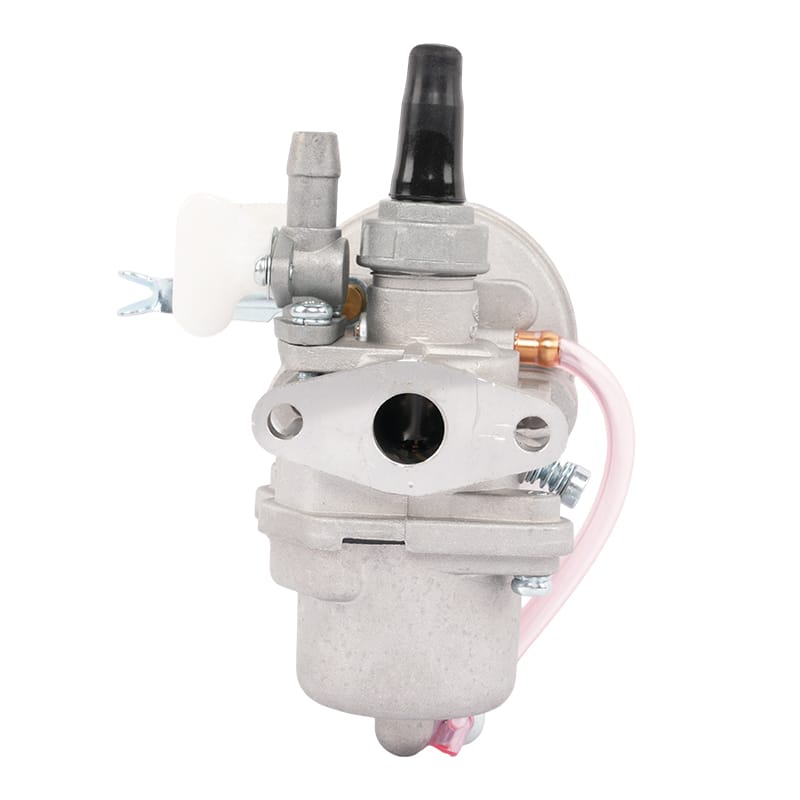
QIYANG supplies a range of diaphragm carburetors for general-purpose small gasoline engines used across garden, agricultural, and related equipment.
Choosing the correct carburetor still requires matching the engine model, bore size, fuel system, throttle arrangement, and other specifications rather than selecting a diaphragm carburetor only because the equipment is handheld.
Pump Diaphragm vs Metering Diaphragm
One important troubleshooting point is that the term carburetor diaphragm may refer to more than one flexible component.
Many diaphragm carburetors contain both a pump diaphragm and a metering diaphragm.
Pump Diaphragm
The pump diaphragm assists fuel movement through the carburetor.
Engine pressure pulses repeatedly move the diaphragm, while small internal valves control the direction of fuel movement.
If this diaphragm becomes stiff or damaged, the carburetor may struggle to move enough fuel from the tank.
Symptoms often become more noticeable at higher engine demand.
Metering Diaphragm
The metering diaphragm interacts with the metering lever and needle valve to control fuel entering the metering chamber.
A stiff or distorted metering diaphragm can interfere with accurate fuel control.
This can contribute to rich or lean running, unstable idle, poor acceleration, or starting problems.
Understanding which diaphragm performs which function makes diagnosis more accurate than assuming every fuel-related symptom comes from the same component.
Can a Carburetor Diaphragm Be Cleaned?
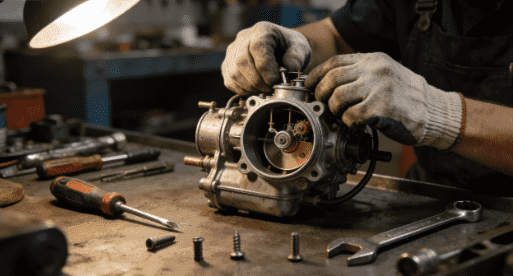
Cleaning can remove surface contamination, but cleaning cannot restore material that has physically deteriorated.
If a diaphragm remains flexible, undamaged, dimensionally stable, and free of cracks, the surrounding carburetor components may simply require cleaning.
However, a hardened or brittle diaphragm cannot reliably be restored by carburetor cleaner.
Strong solvents may actually damage some diaphragm materials.
For this reason, cleaning procedures should focus primarily on carburetor passages, screens, jets, and other appropriate components while sensitive rubber or elastomer parts are handled according to the manufacturer’s service guidance.
When the diaphragm itself has lost flexibility or suffered physical damage, replacement is generally more appropriate than attempting to chemically restore it.
Why Storage Can Affect Carburetor Diaphragms
Seasonal equipment often spends months without operation.
During long storage periods, residual fuel can evaporate and leave deposits inside the carburetor. Fuel composition can also change over time, potentially affecting flexible components.
A diaphragm that remained immersed or exposed to aging fuel can gradually harden, swell, or deform depending on its material and operating history.
This explains why equipment may run normally at the end of one season but become difficult to start several months later.
Good storage practice should therefore consider the complete fuel system, not just the fuel tank.
Before returning stored equipment to operation, inspect fuel condition, fuel lines, primer bulbs, filters, carburetor components, and air intake components if starting or running behavior has changed.
Should You Replace Only the Diaphragm or the Whole Carburetor?
Replacing only the carburetor diaphragm can make sense when the rest of the carburetor remains in good condition.
For example, if the carburetor body is undamaged, passages are clean, the throttle shaft operates correctly, adjustment components remain serviceable, and the problem is clearly related to a hardened diaphragm, replacing the service component may restore normal operation.
A repair kit can also include related gaskets and other wear parts that should be inspected during service.
However, complete carburetor replacement may be more appropriate when there is extensive corrosion, damaged threads, worn shafts, blocked internal passages that cannot be restored, damaged adjustment components, or uncertainty about previous repairs.
QIYANG also provides carburetor parts and repair-related components for different small-engine fuel-system applications.
Compatibility remains essential. Diaphragms that look similar can differ in hole locations, valve geometry, material, thickness, and metering characteristics.
Briggs & Stratton similarly warns that carburetor diaphragm parts can appear very similar and should be matched to the correct engine or original equipment model rather than selected by appearance alone.
How to Inspect a Carburetor Diaphragm
A structured inspection can reduce unnecessary component replacement.
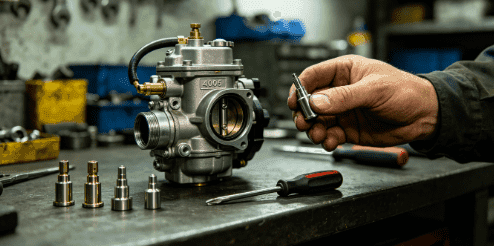
Begin by examining the external fuel system. Check the fuel tank, fuel condition, fuel lines, filter, primer bulb, and visible connections.
If those components appear serviceable, remove and inspect the carburetor according to the appropriate service procedure.
During inspection, look for:
- hardened diaphragm material;
- cracks or split edges;
- warped surfaces;
- stretched areas;
- blocked pulse passages;
- damaged gaskets;
- contamination around small internal screens;
- worn metering-lever components;
- damaged needle valves;
- incorrect diaphragm and gasket assembly order.
Take care when disassembling the carburetor because springs, metering levers, needles, and other small components can be easily lost or installed incorrectly.
If the carburetor requires calibration after service, the correct engine-specific procedure should be followed.
Avoid Adjusting Around a Mechanical Problem
One common repair mistake is repeatedly changing mixture screws when the underlying problem is a damaged diaphragm.
Adjustment screws control fuel flow within a carburetor that is otherwise mechanically functional.
If the pumping diaphragm cannot move sufficient fuel or the metering diaphragm cannot respond correctly, turning an adjustment screw may temporarily change engine behavior but cannot restore normal diaphragm movement.
Excessive adjustment can make diagnosis even more difficult.
Before making significant calibration changes, verify that fuel supply, air intake, diaphragms, internal passages, gaskets, and ignition components are in suitable condition.
A carburetor should be mechanically sound before final tuning begins.
Choosing the Correct Diaphragm Carburetor
When diaphragm deterioration occurs together with extensive carburetor wear, complete replacement may be considered.
The replacement carburetor should be matched using more than external appearance.
Important information includes:
- complete engine model;
- equipment application;
- carburetor markings;
- intake diameter;
- mounting dimensions;
- throttle linkage;
- choke configuration;
- fuel inlet and return arrangement;
- primer configuration;
- pulse-port location;
- adjustment design.
QIYANG currently manufactures diaphragm carburetors in several interface sizes, including Ø8.5, Ø9, Ø11, Ø12, and Ø15, for different general-purpose small gasoline engine applications.
This range illustrates why diameter and engine configuration should be confirmed before treating diaphragm carburetors as interchangeable.
Conclusion
A carburetor diaphragm plays a critical role in fuel pumping and metering on many small gasoline engines, particularly those used in handheld equipment that operates at changing angles.
Hard starting, an engine that stops shortly after starting, unstable idle, hesitation, reduced power under load, visible diaphragm deterioration, and changes in performance when equipment orientation changes are all useful warning signs.
None of these symptoms should be treated as automatic proof of diaphragm failure. Fuel lines, tank ventilation, filters, primer systems, ignition components, air leaks, and blocked carburetor passages can create similar behavior.
The most reliable approach is to inspect the complete fuel system and then evaluate the diaphragm’s flexibility, condition, installation, and compatibility.
When replacement is required, matching the diaphragm or complete carburetor to the actual engine model and fuel-system configuration helps avoid repeated starting and performance problems.
FAQ
What happens when a carburetor diaphragm goes bad?
A damaged or hardened carburetor diaphragm may no longer respond correctly to engine pressure changes. This can interfere with fuel pumping or metering and may result in hard starting, unstable idle, hesitation, fuel starvation, or reduced engine power.
How can I tell if a carburetor diaphragm is stiff?
Remove and inspect the diaphragm according to the relevant service procedure. A deteriorated diaphragm may feel noticeably rigid, remain distorted after bending, show cracks around the edges, or fail to move freely compared with a serviceable flexible membrane.
Can a bad carburetor diaphragm cause an engine to stall?
Yes. If the diaphragm cannot maintain sufficient fuel delivery, the engine may start but stall as fuel demand increases. Similar symptoms can also result from blocked fuel lines, restricted filters, tank-vent problems, or other carburetor faults.
How long does a carburetor diaphragm last?
There is no universal service life. Diaphragm condition depends on material, fuel composition, heat, engine use, storage, maintenance, and operating environment. Inspection based on actual condition is more useful than replacing the component at one fixed interval.
Are all carburetor diaphragms interchangeable?
No. Diaphragms can differ in size, thickness, hole pattern, valve design, material, and carburetor compatibility. Replacement parts should be matched to the relevant carburetor or engine configuration rather than selected only because they look similar.
Need Help Matching a Diaphragm Carburetor?
Diaphragm carburetors used on trimmers, brush cutters, blowers, hedge trimmers, and other small-engine equipment may look similar while using different bore sizes, fuel circuits, pulse systems, and linkage arrangements.
When identifying the correct carburetor, compare the engine model, equipment application, original carburetor markings, mounting dimensions, and fuel-system layout before replacement.
Contact QIYANG for assistance with diaphragm carburetor selection and small-engine compatibility.