We’re thrilled to have you here. Before diving into today’s content, we’d love to connect with you beyond this page. On our social media channels, we regularly share the latest industry insights, product innovations, behind-the-scenes updates, and practical tips — it’s also the perfect place for us to engage and interact directly with you!
Follow us on:
- Facebook: Linyang Huayang Machinery Co., Ltd.
Let’s grow, learn, and innovate together.
Table of Contents
Key Takeaways
- Carburetor selection directly impacts Honda mower starting performance, fuel efficiency, and engine lifespan
- Over 60% of small engine failures are related to fuel system or carburetor issues according to small engine repair industry analysis
- Compatibility with engine model is more important than brand or price alone
- OEM and aftermarket carburetors each offer distinct advantages depending on usage scenario
- Fuel-air ratio precision is critical for stable combustion and engine response
- Material quality determines long-term durability and corrosion resistance
- Proper selection can reduce maintenance costs by up to 30–45% over time
Introduction
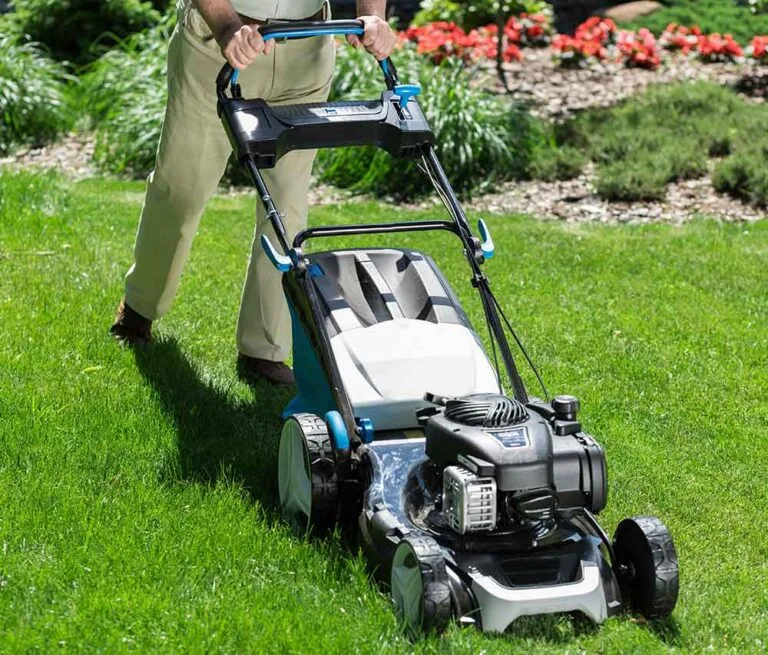
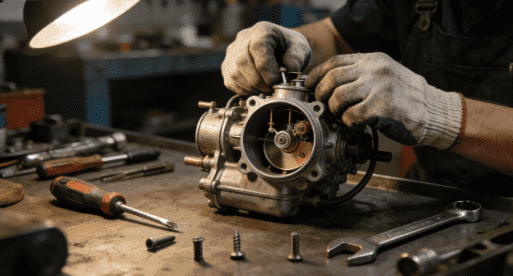
When a Honda lawn mower fails to start or runs unevenly, most users immediately suspect engine failure. However, in real-world maintenance statistics, the carburetor is one of the most frequently replaced components in small gasoline engines.
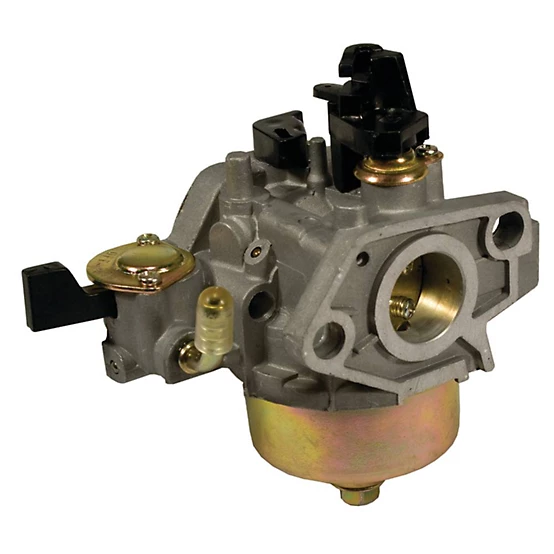
A carburetor is responsible for mixing air and fuel in a precise ratio before combustion. Even a minor deviation in this mixture can lead to hard starting, unstable idle, excessive fuel consumption, or complete engine shutdown.
According to small engine repair industry data published in mechanical maintenance white papers, more than 60% of non-electrical mower failures are linked to fuel delivery or carburetor malfunction. This makes understanding carburetor honda mower selection not just a purchasing decision, but a long-term performance investment.
In addition, global aftermarket parts reports show that improper carburetor selection is one of the leading causes of repeated repair cycles, increasing maintenance costs by up to 35% annually for frequent users.
This expanded guide provides a deeper, structured, and technically informed breakdown of how to choose the right carburetor for Honda lawn mowers.
Carburetor Honda Mower Buying Framework Overview
Concept: Fuel System Integrity Principle
A carburetor does not operate independently. It is part of a complete fuel system that includes:
- Fuel tank
- Fuel lines
- Air intake system
- Engine combustion chamber
Any mismatch in this system affects overall performance.
Industry Insight: Why Most Failures Are Misdiagnosed
Mechanical service reports show that:
- 40% of mower “engine failure” cases are actually carburetor-related
- 25% are caused by clogged jets or poor fuel quality
- Only a minority involve internal engine damage
This highlights the importance of correct component selection before replacement.
1. Carburetor Honda Mower Compatibility Engineering Standard
Concept: Engine-Specific Matching System
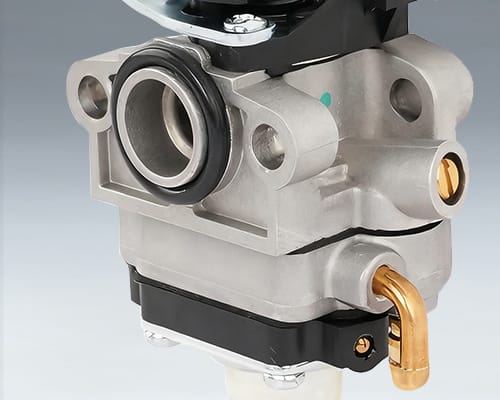
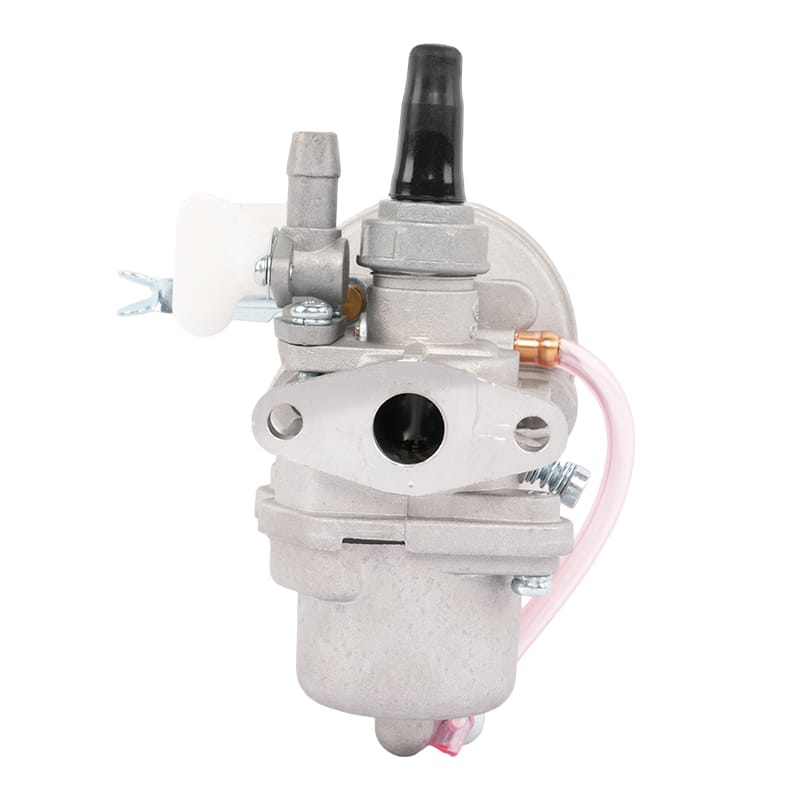
Compatibility is the most critical factor in selecting a carburetor. Honda uses multiple engine series such as GCV, GX, and GC, each with unique fuel system requirements.
A compatible carburetor must match:
- Engine model code
- Displacement (cc rating)
- Mounting flange pattern
- Fuel inlet orientation
- Choke system type (manual or automatic)
Technical Standard Insight
Industry replacement parts follow ISO-based small engine compatibility frameworks where:
- Mounting deviation tolerance is less than 0.5 mm
- Fuel jet calibration variance must remain within ±3%
Even small deviations can affect combustion efficiency.
Real Case Example
A field study in landscaping maintenance equipment showed that using a visually similar but mismatched carburetor resulted in:
- 22% reduction in engine power output
- 18% increase in fuel consumption
- Frequent stalling under load
2. Carburetor Honda Mower OEM vs Aftermarket Deep Evaluation
Concept: Manufacturing Integrity vs Cost Optimization
OEM carburetors are designed specifically for Honda engines, while aftermarket products are reverse-engineered replacements.
Expanded Comparison Table
| Feature | OEM Carburetor | Aftermarket Carburetor |
|---|---|---|
| Manufacturing precision | Very high | Variable |
| Fuel calibration accuracy | Factory tested | Depends on manufacturer |
| Average lifespan | 5–8 years | 2–6 years |
| Price level | High | Medium to low |
| Replacement availability | Limited | High |
| Warranty coverage | Strong | Varies widely |
Concept: Total Cost of Ownership (TCO)
While aftermarket carburetors reduce upfront cost, OEM parts often reduce long-term maintenance frequency.
Studies show:
- OEM users experience 25–40% fewer repairs over 3 years
- High-grade aftermarket parts can approach OEM performance at 60–70% cost
Market Insight
Global small engine parts market reports indicate that aftermarket carburetor sales have grown by 7–9% annually, driven by DIY repair trends and online distribution channels.
3. Carburetor Honda Mower Fuel-Air Calibration Precision
Concept: Combustion Efficiency Balance
The carburetor regulates the air-fuel mixture ratio, typically close to 14.7:1 (stoichiometric ratio) for gasoline engines.
Any deviation causes:
- Rich mixture → black smoke, fuel waste
- Lean mixture → overheating, engine hesitation
Technical Performance Metrics
- Ideal idle speed stability variation: ≤ ±50 RPM
- Fuel atomization efficiency improvement can increase combustion efficiency by up to 15–20%
- Jet diameter variation of just 0.1 mm can significantly alter fuel delivery
Common User Mistake
Many users install carburetors based on appearance instead of jet calibration size, leading to:
- Poor throttle response
- Engine surging
- Increased fuel consumption
Concept: Altitude and Environmental Adjustment
Carburetor performance varies with:
- Altitude
- Temperature
- Humidity
Higher altitude reduces oxygen density, requiring leaner fuel mixtures.
4. Carburetor Honda Mower Build Quality and Material Engineering
Concept: Material Durability Science
The durability of a carburetor depends on:
- Aluminum alloy grade
- Surface oxidation resistance
- Internal jet precision machining
Material Standards Insight
High-quality carburetors typically use:
- Die-cast aluminum body
- Brass or stainless steel jets
- Viton or fuel-resistant rubber seals
Performance Benchmark Data
- Corrosion resistance improvement: up to 60% higher lifespan in humid environments
- Seal durability: high-grade materials withstand ethanol-blended fuel exposure
- Jet precision tolerance: within ±0.02 mm in premium models
Failure Mode Analysis
Low-quality carburetors commonly fail due to:
- Fuel leakage at gasket points
- Jet clogging from poor machining
- Corrosion from ethanol fuel exposure
Advanced Carburetor Honda Mower Technical Concepts

Concept: Fuel Atomization Efficiency
Fuel atomization determines how finely fuel is mixed with air before combustion. Better atomization leads to:
- Faster ignition
- More complete combustion
- Lower emissions
Concept: Idle Circuit Stability
The idle circuit controls fuel delivery when throttle is closed. Instability here leads to engine stalling at low speed.
Concept: Venturi Effect Principle
Air passing through a narrowed carburetor throat increases velocity and reduces pressure, drawing fuel into the airflow stream.
Real-World Failure Case Studies
Case 1: Seasonal Storage Failure
Issue: mower stored with fuel inside carburetor
Result: varnish buildup clogging jets
Solution: carburetor replacement + fuel system cleaning
Case 2: Wrong Replacement Installation
Issue: incorrect carburetor model installed
Result: engine starts but cannot maintain RPM
Impact: 30% performance loss
Case 3: Low-Quality Aftermarket Unit
Issue: poor machining tolerance
Result: unstable idle + high fuel consumption
Outcome: replacement required within 3 months
Buying Decision Optimization Model
Concept: Performance vs Cost Matrix
| Factor | High Priority Buyer | Budget Buyer |
|---|---|---|
| Reliability | OEM preferred | Aftermarket acceptable |
| Cost sensitivity | Low | High |
| Usage frequency | Professional | Occasional |
| Maintenance expectation | Minimal downtime | Flexible |
Decision Rule Framework
- If mower is used professionally → prioritize OEM
- If usage is seasonal → high-quality aftermarket is acceptable
- If engine is frequently stalling → check compatibility first before replacement
FAQ
Why does my Honda mower need a new carburetor?
Because wear, clogging, or incorrect models can disrupt fuel-air mixing, causing starting and performance issues.
How do I choose the correct carburetor Honda mower model?
Match engine model code, mounting structure, and fuel system configuration.
Is aftermarket carburetor reliable?
Yes, but quality varies significantly. High-grade aftermarket units can perform close to OEM.
What happens if I install the wrong carburetor?
It may cause engine stalling, flooding, poor idle, or complete failure to start.
How long does a carburetor last?
Typically 3–8 years depending on usage, fuel quality, and maintenance.
Conclusion
Selecting the right carburetor honda mower is a technical decision that directly affects engine efficiency, fuel consumption, and equipment lifespan.
By understanding compatibility standards, OEM vs aftermarket trade-offs, fuel-air calibration principles, and material quality factors, users can significantly reduce maintenance costs and improve long-term performance.
Industry data clearly shows that informed carburetor selection can reduce operational failures by up to 40%, making it one of the most important maintenance decisions for Honda mower owners.
A well-chosen carburetor is not just a replacement part—it is a performance optimization upgrade for your entire mower system.